

The Glass Shape That Makes Red Wine Taste Better
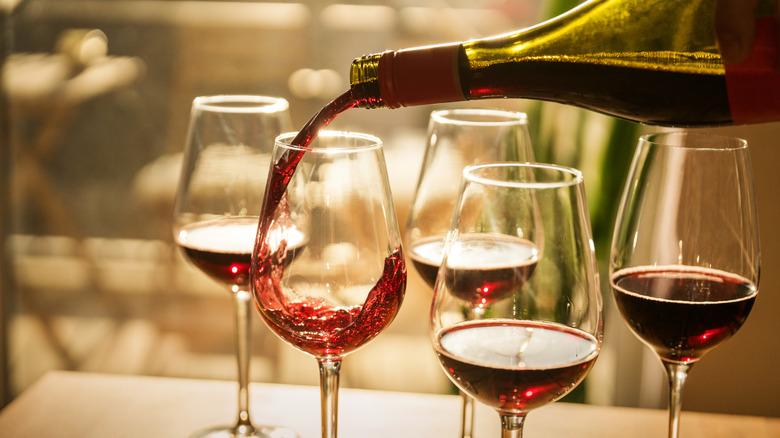
An incredible bottle of red wine doesn't necessarily need an expensive glass to show off its goods — but it certainly doesn't hurt. The shape of your glass really does matter, as it can influence how wine smells, tastes, and feels, so picking the right vessel is no small matter. Luckily, you don't have to shop alone. We asked for advice about the best wine glass shape from Amy Racine, beverage director and partner with JF Restaurants, and an expert in all things wine and glassware.
Her recommendation is a wine glass with a tulip-shaped bowl, which concentrates aromas within the rim, enhancing the taste with every sip. "The bowl is wide, so more wine is exposed to air, which makes the smell come out of the glass, and smell is most of what you think of as taste," Racine explains. "The bowl narrows at the top and funnels aroma to your nose instead of letting it drift away." This explains why drinking red wine from a straight-sided tumbler can feel very different than from a tulip-shaped wine glass. The tumbler offers less room for aromas to gather and direct toward your nose, and you need those to properly taste. When wine people drop buzzwords and tasting notes about the "nose" or "bouquet" of a wine, this is what they're describing.
As for Racine's preferred brand of tulip-shaped wine glass? "Mine is the Spiegelau Hi-Lite Burgundy. It is thin and light but goes through a dishwasher without damage, which is a major reason for me!" Spiegelau is one of Europe's oldest names in glassmaking, with roots tracing back to 1521. Its crystal glasses are made in Germany, and Hi-Lite series products are, well, particularly light.
A wine glass with a tulip-shaped bowl is versatile
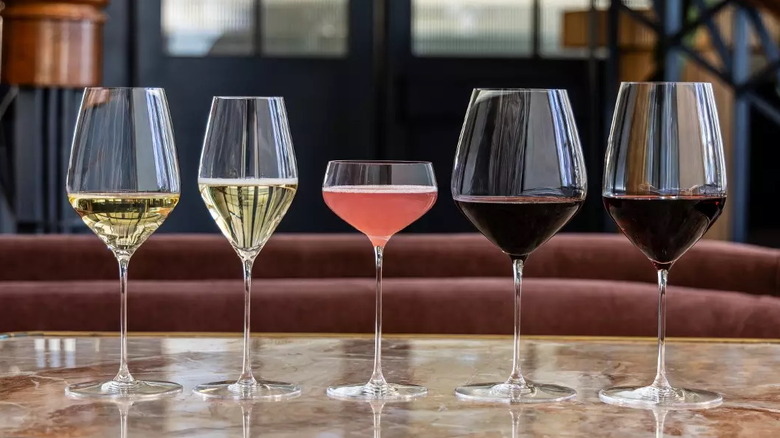
There are more than 20 types of wine glasses, but luckily, you don't need to buy all of them. A tulip-shaped wine glass, with a relatively generous bowl and a narrowing rim, works well for both red and white wines. Its shape is a diplomatic compromise of sorts: spacious enough for aromatic reds, but not so oversized that lighter wines get lost in it. And there are plenty of brands that produce well-regarded universal wine glasses that also happen to be dishwasher-safe, including Glasvin, Schott Zwiesel, and Stölzle Lausitz. While the latter two are Old World and German-made (a country particularly known for high-quality wine glasses), Glasvin is a newer, New York-based stemware company.
Of course, if you'd like to pick up a few additional glass styles, Amy Racine has some suggestions. "A wide bowl is built for lighter, high-acid reds," she explains. "For Cabernet or a big Syrah, a narrower bowl is better, because a wide one only funnels in the heat of alcohol more, so you don't really need that space here." Fuller-bodied, high-alcohol reds generally benefit from taller, more tapered glasses that create more distance between the wine and your schnozz.
While you don't need to know the differences between Burgundy and Bordeaux wine glasses to enjoy your vino, it can certainly enhance your next flight at the wine bar. But at the end of the day, the best wine glass is the one that makes you want to pour another round.