

The Wines You Should — And Shouldn't — Pair With Spicy Food
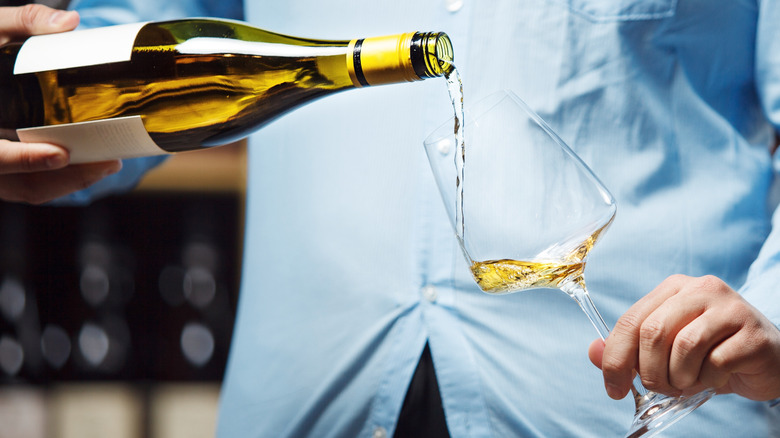
No matter what's on the menu, a solid wine and food pairing should complement the flavors of the dish without overpowering them. When spicy foods are on the menu, however, finding that balance can be a little more challenging. To help find the right pairing, we talked to David Kravitz, beverage director for The Group Hospitality, on his tips for the best styles of wine to serve with spicy foods.
To nail a flattering accompaniment, he tells us, foodies should keep both balance and contrast in mind. "With spicy food you can either complement the heat or play against it," says Kravitz. "If you want to lean into the spice, a red like Blaufränkisch or Grenache work[s] really nicely. If you want to soften the heat, you can pair a sweeter wine with the meal."
According to Kravitz, there are two solidly reliable bottles for the job: Riesling and Champagne. "A classic pairing is usually a Riesling, which provides some residual sugar that helps balance spice," he says. Residual sugars are natural sugars left over from grapes that don't get fermented into alcohol during the fermentation process. As a general rule, sweetness helps temper heat, making a semi-sweet or off-dry Riesling a standout match for palate-inflaming dishes like Korean kimchi jjigae or Chinese mapo tofu.
"When in doubt, Champagne goes with everything!" Kravitz says, making the bubbly an especially good match for traditional spicy Thai and Indian dishes. Its relatively mild flavor won't overpower the complex combination of spices and aromatics found in these cuisines, from lemongrass and garlic to turmeric, ginger and galangal. Its effervescence also adds another dimension to the pairing, enhancing the sensation of spiciness across the tongue.
Avoid high-tannin, high-ABV wines with spicy foods
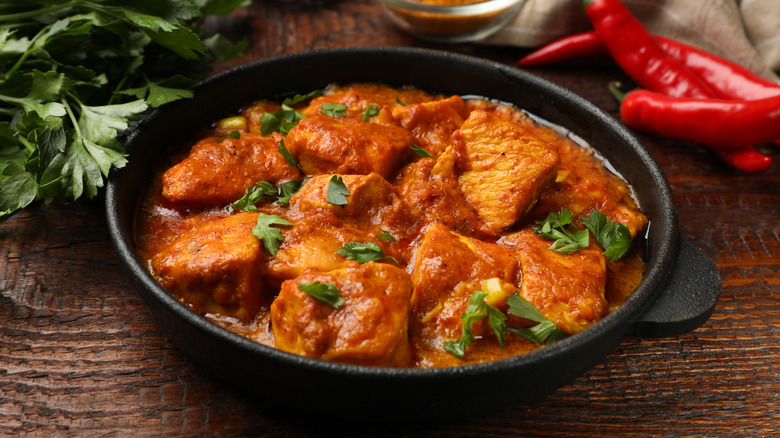
But what wines should never be paired with spicy food? Generally, bold, full-bodied wines are an absolute no-go, particularly those that are high in tannins or alcohol. High-tannin wines can clash with the physical sensation of spiciness on the palate, with a firm tannic structure intensifying the palate-burning sensation of capsaicin heat, adding an unflattering bitterness to the mix. In other words, no Cabernet Sauvignon or Nebbiolo. And "high tannin" isn't just a descriptor for red wines, either. The firm tannic structure of an oaked Chardonnay (or any oaked wine) can make it an equally lousy pairing for spicy dishes because its oakiness can clash with the bold, heavy flavors already at play.
High-alcohol wines can similarly rev up the impact of spiciness, intensifying both the physical perception of heat and any bitter flavors in the dish. Since alcohol can make that burning sensation linger on the palate, a higher-ABV wine can make an already spicy dish feel even hotter. To play it safe, steer clear of wines with an ABV of 14% or higher.