

5 Disadvantages Of Using Cast Iron Cookware
We may receive a commission on purchases made from links.
Cast iron cookware carries a legendary reputation into any kitchen it graces. With proper care, a workhorse skillet can last for generations, moving seamlessly from cooktop to oven or even outdoor grills. Whether cast iron takes the form of a Dutch oven, griddle, wok, bakeware, or any number of other configurations, it is known for versatility, resilience, and solid heat retention. Moreover, it's hailed for affordability and naturally seasoned coatings. But that doesn't mean it's perfect in every way.
Owning classic cast iron cookware can require some extra time, care, and attention. You won't be quickly popping that Old Faithful pot, pan, or skillet into a dishwasher after dinner. Plus, rust prevention will likely be needed at some point. Cast iron also heats slowly, cools off slowly, and the sturdy handle gets as sizzling-hot as the rest of the pan.
Those types of drawbacks can be a nuisance or a dealbreaker, depending on perspective and the chef's commitment to traditional cooking techniques. When searing, frying, baking, and for any dish that thrives with steady heat, cast iron can be hard to beat. If you're on the fence, or need an honest look at the bigger picture, following are five disadvantages of cast iron cookware to consider.
Cast iron cookware is heavy and cumbersome
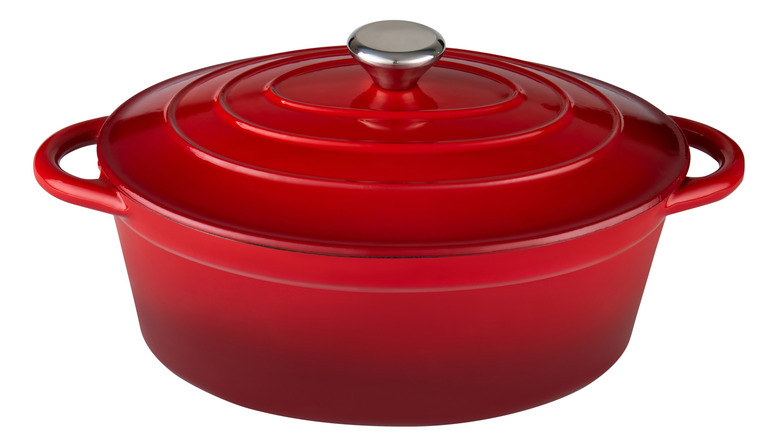
There's no getting around one of cast iron's most obvious disadvantages: This cookware can be extraordinarily heavy. A 12-inch Lodge cast iron skillet, for example, weighs about 7.7 pounds before adding any food to the equation. That may not sound extraordinary until you're plopping in several chicken breasts, a roast, or a skillet full of cornbread, and then wrangling the grand finale out of a piping-hot oven.
The extra weight can also make everyday cooking a bit more awkward, especially when it takes place on a stovetop. Things like pouring pan juices or transferring a hot skillet from one burner to another can be tricky, while carrying any kind of cast iron vessel to the dinner table could easily be a two-handed endeavor. Larger cast iron Dutch ovens become even heavier once filled with food or liquid.
That density and mass can matter when you're storing cast iron cookware as well. Pulling a hefty skillet from a high shelf isn't particularly convenient, while stacking multiple pieces in a cabinet can make access cumbersome at best — and hazardous when in a rush. In kitchens with glass-top stoves, scratching can occur when sliding cast iron pans off the burner, so it's best to lift those heavy hotties instead. Of course, all that mass does contribute to one of cast iron's biggest advantage: excellent heat retention. But for anyone with limited hand, wrist, or arm strength, the substantial weight consideration could well be a reason to choose something lighter.
Cast iron requires more maintenance and can rust
Cast iron isn't necessarily troublesome to care for, but it does ask more from you than other types of pans. Traditional cast iron relies on seasoning, which is essentially layers of oil that have been heated until they form a hardened coating. It helps food release more easily and protects the metal from moisture and corrosion. Many modern cast iron pans come pre-seasoned, and continual cooking solidifies that coating. Nonetheless, it's advisable to re-season from time to time or as needs dictate.
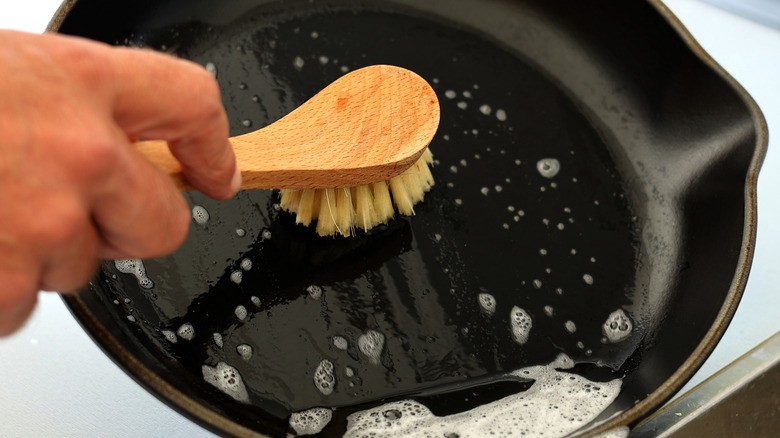
Other than that, the extra maintenance mostly comes into play when cleaning. One old-fashioned rule you can largely ignore, as noted in our look at the truth about cast iron, is the idea that soap must never touch cast-iron cookware. Modern guidance generally allows a small amount of mild dish soap, but only if the pans are washed by hand and dried promptly and thoroughly, followed by a small amount of oil. Soaking is never a good idea, nor is putting the pan into a dishwasher, since the extra water exposure can compromise the seasoning or lead to rusting.
Surface rust can usually be eliminated with a bit of scrubbing, but be prepared or another round of re-seasoning. Compared with lighter, modern cookware that you can wash, casually air-dry, and put away without a second thought, cast iron unquestionably takes more tender, loving care.
Cast iron heats slowly and responds slowly to temperature changes
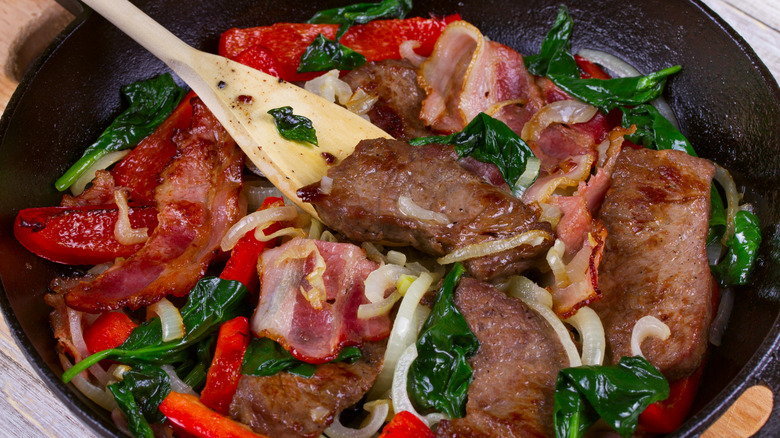
Cast iron cookware is renowned for holding heat, but it's not particularly quick about getting there. Since it isn't the best conductor, heat spreads relatively slowly through the pan. This potentially makes the section directly over a burner much hotter than the outer areas while preheating. Instead of blasting a cold pan at the highest heat setting, you'll need to avoid hot spots by allowing several minutes for a skillet to warm gradually.
That famous heat retention can also become inconvenient when you need temperatures to change quickly. Once a heavy cast iron pan has stored a significant amount of heat, simply turning down the burner doesn't instantly cool the pan's surface. This makes cast iron super useful for jobs such as searing meat. However, it's less convenient for delicate foods or cooking methods needing fast temperature adjustments, such as stir-frying or sautéing vegetables.
The solution mostly lies in learning how these nuances interact when cooking in your own kitchen. You'll be factoring in preheating times, using a burner that's pretty close to the same size as the skillet, and making temperature adjustments before the food gets fully heated, not after. Once you acclimate to using cast iron, that slower response can start feeling familiar and comforting — but it does take some recalculations in timing and technique.
Acidic foods need extra care in cast iron cookware
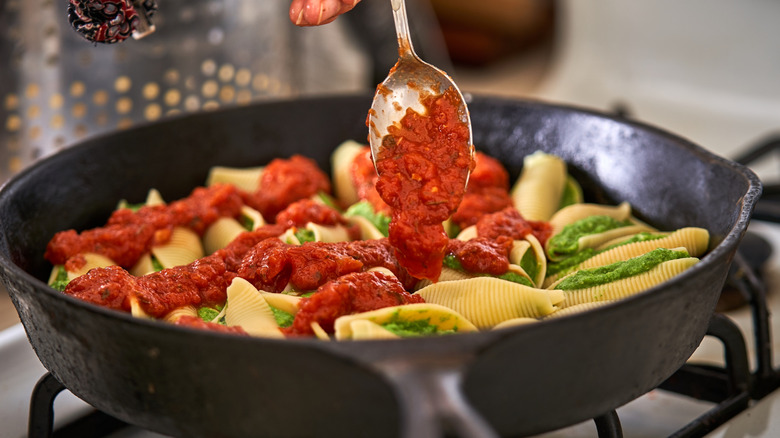
The common warning to never cook tomatoes, wine, citrus, vinegar, or other acidic ingredients in cast iron is an exaggeration, but nonetheless carries some genuine considerations. You can definitely cook acidic foods in cast iron if it's been well seasoned, but the condition of the seasoning and the amount of time the food stays in contact with the pan matter. Acidic foods, especially juicy ones like tomatoes, can gradually break down the seasoned coating you so carefully nurtured, meaning you'll be re-doing it more often.
That doesn't make it a given that acidic foods other than tomatoes carry the same kinds of issues, at least not in the same way. Timing is everything, with shorter exposure in a very well-seasoned skillet eliminating some of the problems compared to slow cooking tomatoes into a sauce. Using a splash of wine, adding a squeeze of lemon juice, or briefly cooking something with chopped tomatoes is likely just fine. So acidic foods aren't forbidden in a traditional cast iron skillet, but they do require a little more thought than with other types of cookware.
As noted in our 13 facts to know about cast iron cookware, acidic foods can also wear away the metal in the pans, sometimes causing rust to form or leaving a metallic taste in your food. It's worth noting that enameled cast iron sidesteps many of the issues with acidic foods, since the coating is nonreactive and separates food from the bare iron beneath.
Cast iron handles and surfaces can get extremely hot
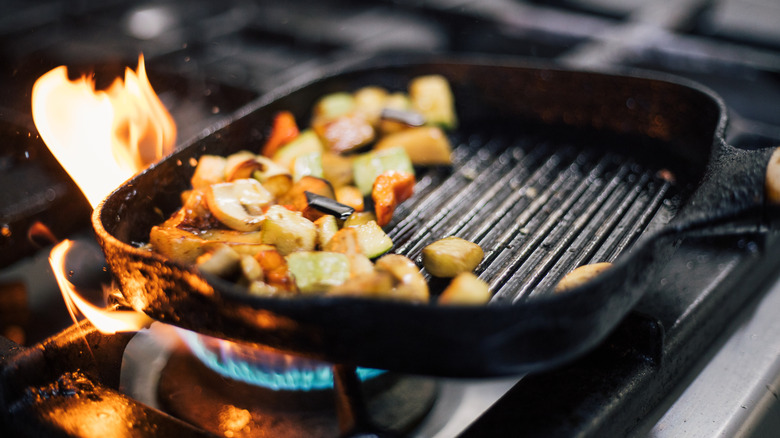
A cast iron skillet's ability to go from stovetop to oven is one of its most admired features, but there's a very apparent downside when making a migration like that. It's easy to forget, in the mesmerizing process of cooking, that when an iron pan gets hot, the handle gets hot as well — extremely so.
Those handles are just as sturdy and practical as the rest of the pan, but when they get hot, you better be using hot pads, oven mittens, or a dedicated handle cover for moving them. That goes double for dual-handled cast iron skillets or pots. Aside from the handles alone, the rest of the pan deserves the same caution. Since cast iron does retain heat exceptionally well, it can remain very hot even after removing it from an oven or cooktop. That lingering heat helps keep food warm while the troops gather for breakfast or dinner, but it also requires developing precautionary habits when sizzling up all that cast-iron goodness.
If you're ready to take the plunge into more cast iron cooking, despite potential disadvantages, here's a look at five tips for choosing the best cast iron skillet. They include things like checking the weight, scouting for longer handles, considering various sizes, and more.