

How To Organize Your Fridge Like Marie Kondo For Lower Stress In The Kitchen
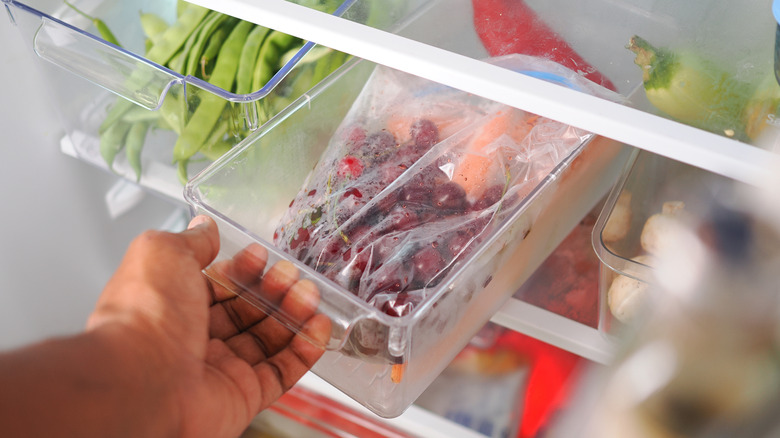
We may receive a commission on purchases made from links.
Learning how to sear a steak or cut chives with precision are handy kitchen skills, but more often than not, the thing that will make your life easier and your food better has little to do with cooking techniques and more to do with cleanliness, organization, and structure. Enter the fridge, that black hole in the kitchen where produce and leftovers go to die until one day we suddenly wake up with the irresistible urge to do better and begin the culling.
It shouldn't have to be this stressful to sort through expired meals and wilted herbs, and it's a lot more expensive than we think. According to a report from the United States Environmental Protection Agency, the average person wastes roughly $728 worth of food every year.
A properly organized fridge will cut down on waste and make meal prep more streamlined. It will allow you to clearly see what you have available and what needs to be used up. You'll be less likely to realize mid-recipe that you're out of a crucial ingredient or to forget about leftovers, which will reduce stress. But if the prospect of getting it all sorted itself feels daunting, give the KonMari method deep refrigerator clean a try.
A tidier fridge that sparks joy

More than a decade has passed since Marie Kondo became a global sensation with her book "The Life-Changing Magic of Tidying Up," in which she taught us about decluttering and getting rid of the things that don't spark joy. But her methods remain just as effective. In her online guide on how to organize a refrigerator, the author and organizing guru breaks down the process into seven steps for the perfect fridge.
The first step is to get rid of any expired items. That salad dressing that's been there for over a year is probably past its best-before date, so check every label. Once you've narrowed it down to foods that are safe to consume, you can move on to step two: Performing the famous joy check. Maybe there's a jar of jam in there that's still safe to eat, but you don't really love its texture. Chances are that's not going to change anytime soon, and it's best to let it go.
Kondo advises that this is also a good time to check on your lifestyle goals and make sure the food you keep on hand aligns with them, saying, "Take it upon yourself to part with food products that do not support your current goals or well-being. Thank them for their service and move forward." Give your fridge a thorough clean. Once you have a clean slate your stress levels should already have started going down and then you can organize what's left.
Give every item a home
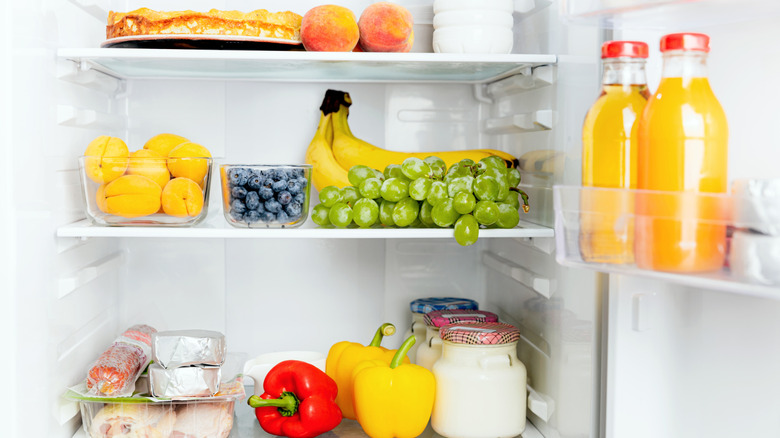
After decluttering, it's time to decide where everything belongs. Group similar things such as dairy products together and stack them by height so everything is easy to spot. Being able to scan the contents of your fridge at a glance makes it easier to grab what you need and keep track of what's running low.
Store items in the correct area of the fridge. Keep long-lasting staples such as condiments, pickles, and jams on the door shelves, as this area is most prone to temperature fluctuations, and you shouldn't use it for highly perishable items. Vegetables should go in the crisper drawer, and fruit should be stored separately.
When it comes to leftovers, store them in small, stackable, see-through containers. Don't forget to label and date them so you can keep track of when they need to be used. Make the most of your freezer by saving vegetable scraps, herb stems, and bones in a labeled bag and use them to make stock, which can be frozen in small portions using an ice cube tray.
Last but not least, the KonMari method recommends that you avoid overstocking and buying in bulk. Aim to keep at least 30% of your fridge empty when grocery shopping. While you may need to shop a litle more often with this method, it'll pay off in the long run. If you're able to maintain it, you'll save money, waste less food, lower stress levels, and avoid having to do a tedious deep clean as often.