

The Best Pan Temperature For A Deep-Golden Grilled Cheese
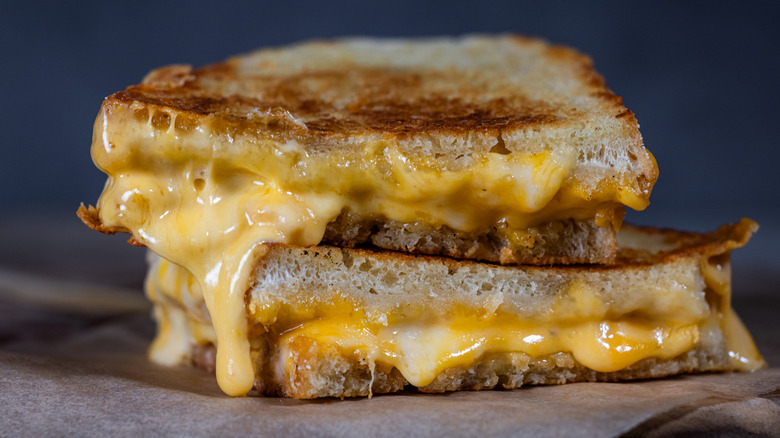
You only need cheese, bread, and butter to make a grilled cheese. So why do they go wrong so often? You may be cooking your grilled cheese at too high a temperature. Take it from me, a cheese expert who's worked at Murray's Cheese in New York City for four years and appeared on live television discussing exactly this: The do's and don'ts of making the perfect grilled cheese.
A grilled cheese's texture is what makes it so craveable. It's the contrast of the crust's crunch (perhaps with some bubbly, browned pieces of cheese leaking out of the edges) and the interior of soft, gooey cheese that makes a grilled cheese so special. If you don't have that textural variety, you may as well be making a cheese sandwich (which is not the same thing!).
One of my most important tips is going as low and slow on the heat as possible. Start the grilled cheese in a cold pan and keep the stovetop's temperature between low and medium. Starting in a cold pan will give the entire sandwich a chance to warm up, and give the cheese time to melt before the bread gets burnt.
Put the buttered sandwich down on the cold pan, set the flame to medium low, and let it sit for a few minutes, until the butter creates small bubbles on the corners of the bread and the cheese begins to seep through the cracks. Once this happens, you can flip the sandwich and cook the second side.
Other tips and tricks for a great grilled cheese
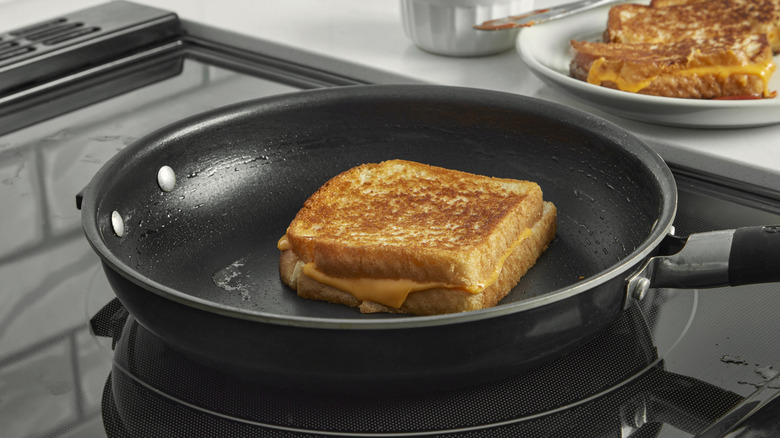
Is grilled cheese a simple sandwich to make? Yes. But it doesn't take only two or three minutes to make a great one. You'll need 10, so be patient and don't walk away. You may be tempted to leave the kitchen during the first few minutes of cooking — but that's a recipe for burnt grilled cheese.
Remember, grilled cheeses aren't precious. It's ok to flip the bread back and forth to achieve the perfect golden hue. The bread won't fall apart if you flip it a few times. You can even press it with a spatula to get the cheese to spill out the sides. This will result in pieces of cheese bubbling and browning in the pan and giving that extra crunchy, salty bite around the sandwich's edges.
The final texture you're looking for depends on the level of low, slow toasting you achieve in the pan, as well as the type of bread you use. Before you assemble your grilled cheese, ask yourself what texture you're looking for. Do you prefer a more pillowy bite or a chewy one? If it's the former, classic white sandwich bread or Texas toast will get you that diner-style sammy you're looking for. If it's the latter, opt for a thicker sourdough or a "peasant-style" bread. And remember to have fun with it. A grilled cheese can be as simple as you'd like, or as complex as you can dream up. Take a look at the best grilled cheeses in every state for inspiration on flavor combinations.