

Why You Should Salt Mushrooms Later Than You Think
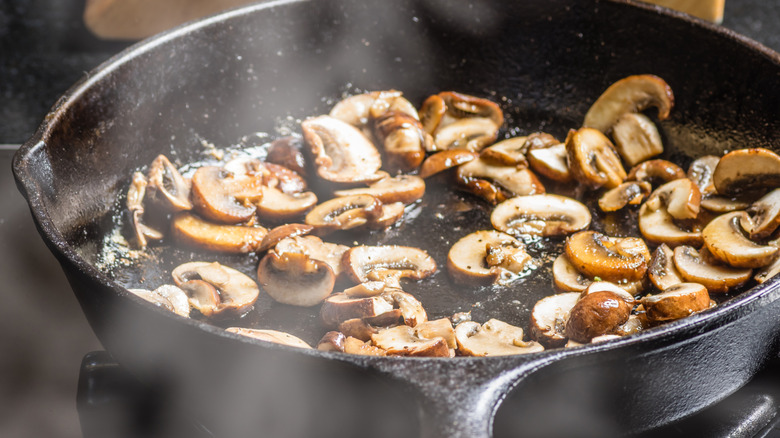
Sautéing mushrooms is a deceptively tricky business, with easy potential mistakes lurking in wait for all but the most attentive cook. Even if you've ensured that you haven't overcrowded the pan or allowed your butter or garlic to burn, one all too common seasoning error can still invite ruin on your fragrant fungi. The truth is, you should be salting later than you probably think.
Adding salt early in the cooking process will draw out the mushrooms' natural moisture faster and inhibit their browning. That abundant liquid — fresh mushrooms are roughly 85-95% water — will have nowhere else to go until it has evaporated, meaning that it will fill up the pan and before you know it, your sautéed mushrooms have become an inadvertent stew. Until this moisture has steamed off, they won't be able to achieve that prized, crispy caramelization you're looking for, and even then will leave them with an unpleasant, rubbery texture. You want to control the amount of liquid in your pan as much as possible, whether its a glug of wine for white wine sautéed mushrooms, or a splash of soy sauce for an umami-rich flavor-booster (both steps that should also be done only once they are browned).
Salting at the beginning of cooking will affect taste as well as texture, as the mushrooms will not reduce as well as they otherwise would, meaning their distinct, mushroomy flavor will be less concentrated. Conversely, salting too early can result in them being far too salty.
When to salt your mushrooms and other mistakes to avoid
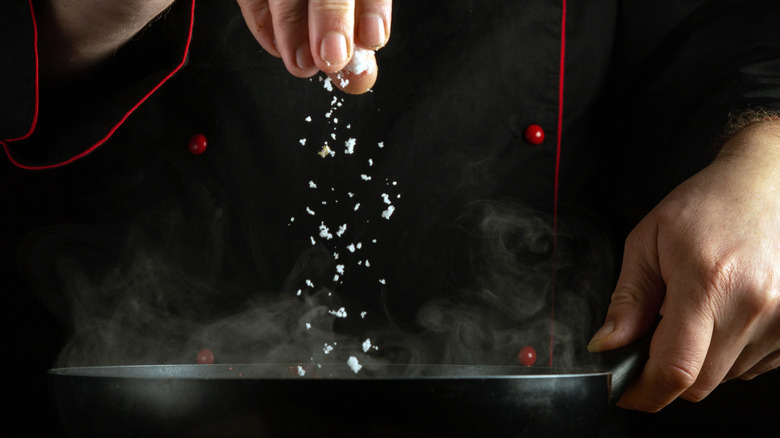
So exactly when should you add salt to mushrooms?
Once the moisture has cooked off and the mushrooms have started to grow dark around the edges with a nicely developed sear, they will begin to give off their unmistakable, savory perfume — this is when you should add the salt. Don't add it only after cooking, however, as the seasoning may not fully penetrate (though if you feel your mushrooms still under-seasoned, you can always resort to some finishing salt). It should be noted that salting too early will have a similar impact on other water-dense vegetables, so you should bear this rule in mind if you are tackling a recipe that involves not just mushrooms, but veggies like onions or bell peppers.
Unfortunately, there are many other mistakes everyone makes when cooking mushrooms. When frying up these moisture-heavy fungi for a mycological mealtime, one is over-agitating the mushrooms, which is why less stirring is the key to perfectly browned mushrooms. Another mistake is overcrowding the pan, which will make it more difficult for the moisture to steam off.