

Why Red Wine Makes Beef Stew Taste More Luxurious, According To A Chef
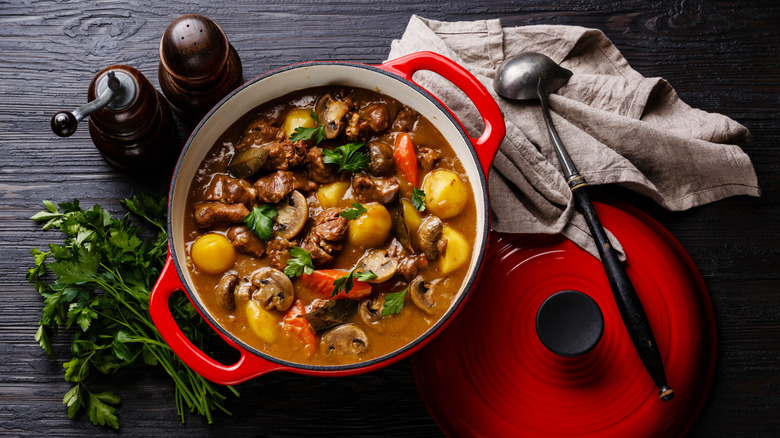
Old-fashioned beef stew is both simple and luxurious. It stretches expensive ingredients into dinner for a crowd, and transforms humble flavors into something noteworthy. Onions and garlic do their part to enhance the meaty beef broth as the stew braises — but it's red wine that truly puts it over the top. Tasting Table spoke to Dagan Lynn, executive chef for "Beef. It's What's For Dinner." about why red wine is the go-to choice for fabulous stew.
Dry red wine "adds a rich, savory flavor and subtle acidity while complementing the hearty slow-cooked beef," said Lynn. He provided the example of a recipe from "Beef. It's What's For Dinner" that "uses dry red wine as part of the braising liquid, where it works alongside beef broth, tomatoes and herbs to build a robust, well-rounded flavor base." What type of red wine is best for cooking beef stew? A French Pinot Noir is a great choice.
"A dry red wine adds fruit and herbal notes that enhance the beef's natural flavor, and it pairs particularly well with common beef stew ingredients such as onions, garlic, herbs and potatoes," Lynn said. More savory flavors will enhance the umami flavors of the beef and tomato, while opting for a less-fruity bottle will keep your stew from tasting too jammy.
What is the best way to add red wine to a beef stew?
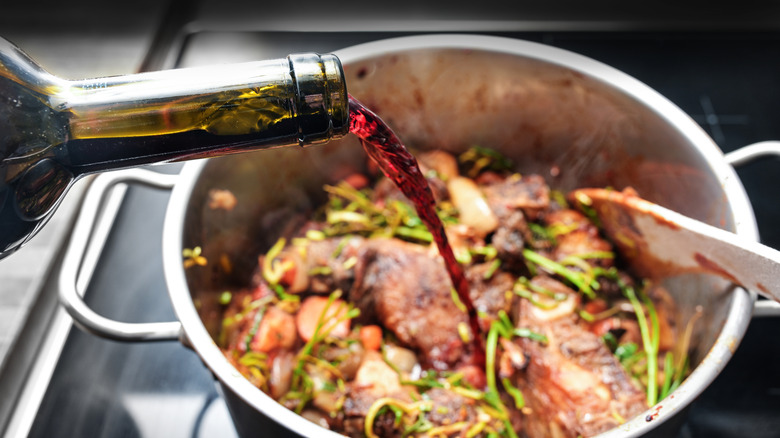
When choosing the wine for your beef stew, consider the ingredients you'll be using and vice versa. Check the wine's tasting notes for herbal flavors that complement your recipe. Look for woody herbs like rosemary and thyme, which are common beef stew ingredients. You can also take that wine flavor even further with the chef-approved method for elevating your beef stew: marinating the meat in red wine before cooking. This allows it to really infuse into the meat and add extra depth to your stew. Grab a second bottle to serve alongside the stew itself to continue building on those layers of flavor.
Adding the wine at the right time is equally as important as choosing the right varietal. "Add the wine after sautéing the onions and garlic and use it to deglaze the pot before adding the broth and other ingredients; this helps incorporate the flavorful browned bits from the bottom of the pot and creates a richer stew," instructed Dagan Lynn. After browning the beef and sautéing your aromatics, pour in a bit of wine and use a wooden spoon to scrape up the fond from the bottom of your pot to build your stew's flavor.