

Butter Vs Margarine: Which One Is Actually Healthier?
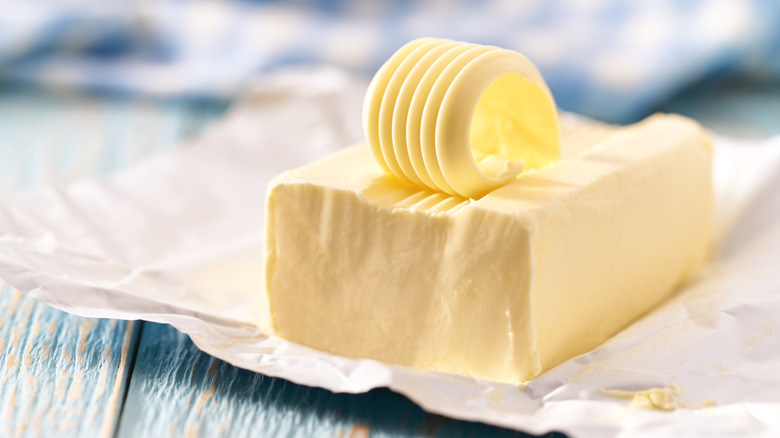
Butter or margarine? The answer used to seem obvious: butter was the familiar staple, while margarine was the cheaper alternative with a questionable reputation. But that reputation was shaped in part by the ingredients used in older margarines, and nutritional advice around both products has changed considerably over the years. Today, the choice is less straightforward, with margarine offering a way to get less saturated fat, depending on the type you choose.
To explore the subject on a deeper level, we reached out to registered dietitian Angel Luk. "I choose margarine because it has lower saturated fat and can be made with healthy oils like olive," explains Luk. If that's surprising to hear, it's likely because of margarine's complicated history. Old-school butter alternatives routinely contained partially hydrogenated oils (PHOs), a major source of artificial trans fat, which raises LDL cholesterol (the bad kind) and increases the risk of heart disease. The FDA eventually determined PHOs were not Generally Recognized as Safe (GRAS) for use in food. Manufacturers could no longer add PHOs to foods for most uses after June 18, 2018, although certain petitioned uses were given an additional year to comply.
That helps explain the change in today's margarines, as well as Luk's viewpoint on their benefits relative to butter. "Compared to hard fats like butter, shortening, palm kernel oil, or even coconut oil, it has less saturated fat, making it a heart-healthy option," she notes. Modern-day consensus among major health organizations is that soft, nonhydrogenated margarines made with unsaturated vegetable oils can be a better choice than butter, as long as you choose the right kind and don't eat too much of it.
Margarine options and a case for real butter
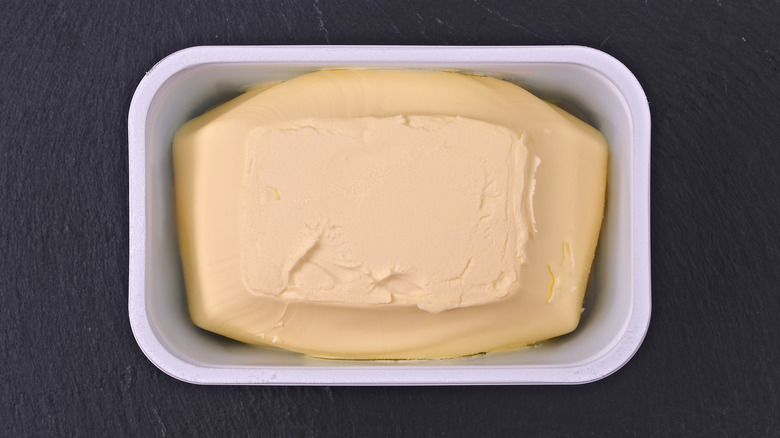
Margarine, reportedly created in 1869 for a competition launched by Emperor Napoleon III, varies widely by brand and ingredients. Softer or liquid margarines are generally a better choice than harder sticks, which tend to contain more saturated fat, while checking the Nutrition Facts panel can help you keep an eye on saturated fat and sodium levels. Beyond nutrition, butter and margarine have some important differences, particularly in flavor and texture.
When it comes to margarine options, Angel Luk has a preference of her own. "I've used Becel margarine for many years and have really appreciated their different varieties, such as light (water added, horrible for baking but good for toast) and vegan." Becel says its soft margarines are non-hydrogenated and free of trans fat, while containing relatively little saturated fat.
It's hard to deny that real butter is a beloved ingredient, and there's no need to banish it entirely. Its flavor and texture are what make certain baked goods, sauces, and other dishes taste appealing, so using a modest amount is often worth it. Luk takes a similar viewpoint on butter. "I think its flavor profile and texture is really amazing," she says. "And in the world of nutrition, sometimes I think we downplay how important it is to love and enjoy the food we eat, and look beyond nutrients."