

Small-City Pizza Styles That Rival New York And Chicago
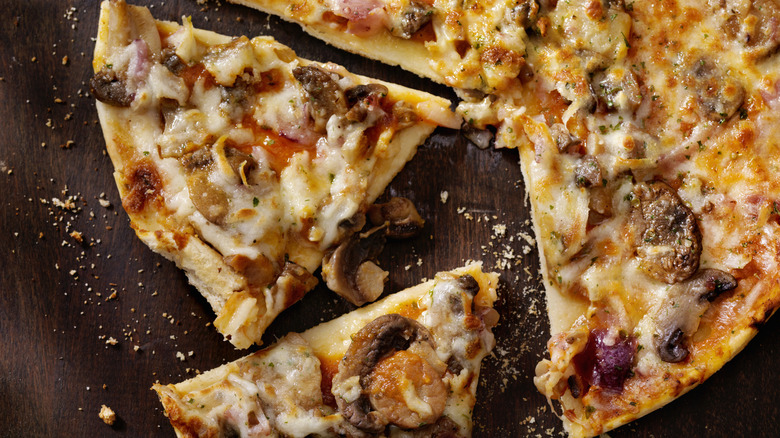
Everyone has an opinion on which city has the best pizza, and more often than not these conversations are dominated by comparisons between the two powerhouses of New York and Chicago. One's thin, the other's thick; one is foldable, the other is more like a casserole; yada, yada, you know the rest. But once you're done sampling these two mainstream pies, why not branch out and try some pizza styles from smaller cities?
If you thought there were only a few ways to assemble a pizza, you'd be wrong — there are so many variables at play in such a seemingly simple recipe. Many regions throughout the United States have developed their own niche method of pizza-making over the years, all of which are distinguished by their choice of crust, sauce, cheese, and toppings. And while not every regional style is worth a road trip (looking at you, Altoona), these four styles can easily go toe-to-toe with what's made in New York or Chicago.
Detroit
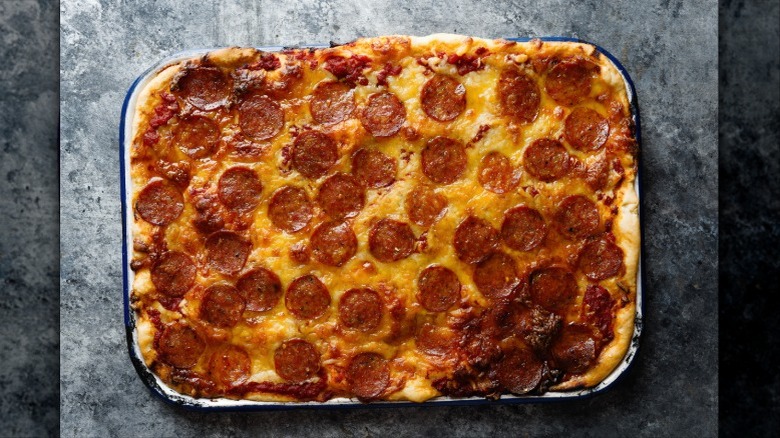
Detroit-style is probably the trendiest pizza outside of New York- and Chicago-style, and it's not uncommon to see it offered outside of Michigan. It had a moment in the spotlight as a capital-T trendy food in the mid-2010s and even Pizza Hut had a limited run of Detroit-style pizza back in 2021. Trendiness aside, it's a great slice. It has the deep dish factor of a Chicago pie without all the soupy ingredients.
What makes Detroit-style pizza unique is primarily its crust, sauce arrangement, and cooking method. The crust is hardly crusty at all; it's fluffy yet chewy, somewhat similar to focaccia bread, and has a sizzled edge around the perimeter thanks to the Wisconsin brick cheese that caramelizes beautifully against the hot steel pan. That crispy edge where the cheese and crust meet is a crucial element. The pie is baked in a steel pan (originally repurposed from an auto parts factory, according to legend) and the sauce is added after the cheese, not before. The final result is cut into squares and traditionally eaten with a fork.
New Haven
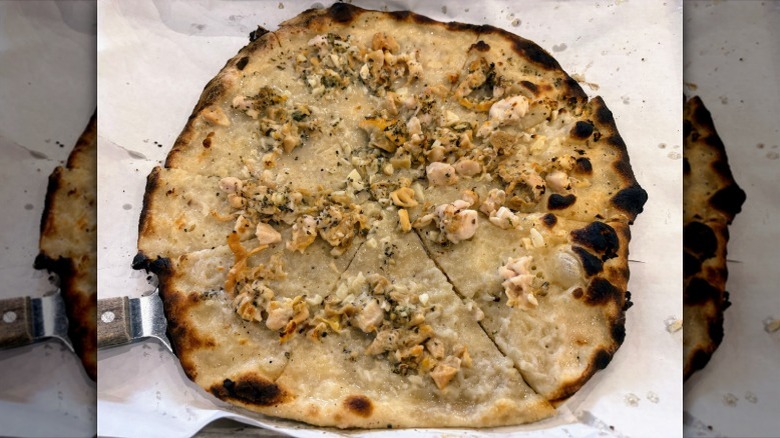
New Haven's unique style of pizza is so distinct that it's not even called pizza like it is elsewhere in the country. Instead, it's spelled "apizza" and pronounced "ah-beetz" — the way immigrants from Naples originally pronounced it. That should set the tone for how seriously New Haven takes its slices.
The most distinguishing feature of New Haven-style pizza is the polka-dot charred pattern on the bottom. Apizzas are cooked at high temperatures in coal-fired ovens (an old-school rarity in this day and age), which gives them a smoky taste and a thin, chewy crust. While the crust is a close cousin of New York's, it's g more char to it.
You have the choice between red and white apizza. The former is topped only with a tangy tomato sauce and a dusting of grated cheese and herbs. White, on the other hand, is topped with grated cheese, garlic, and oregano. (One of the most popular variations on white also adds littleneck clams.) Those are the classics, anyway, but additional toppings are often available and encouraged.
Buffalo
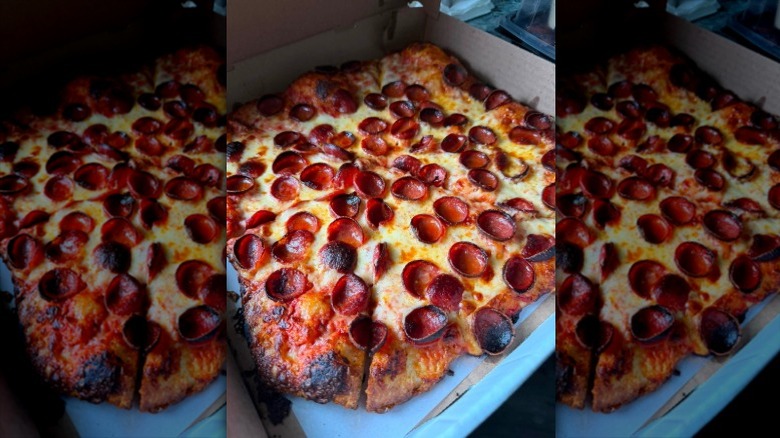
Buffalo has certainly earned its place in culinary history thanks to Buffalo wings, but its reputation as a top-tier pizza city is less well-known. Even still, ask anyone from the area about what makes Buffalo-style pizza special and you'll soon be eager to try a piece for yourself.
Think of it as a sort of hybrid between the Detroit and New York City styles. It has a fluffy, focaccia-like crust on the bottom, cheese piled extra-thick from edge to edge, and a rich, sometimes spicy tomato sauce cutting through the middle. But the highlight is the pepperoni, which are small, thick slices that curl into little cups as they bake. Somewhat resembling octopus suction cups, these little grease-filled pepperoni might not sound like anything special, but they are truly the crème de la crème of pizza toppings. These pizzas are traditionally cut into squares, making it easy to share with the whole family.
St. Louis
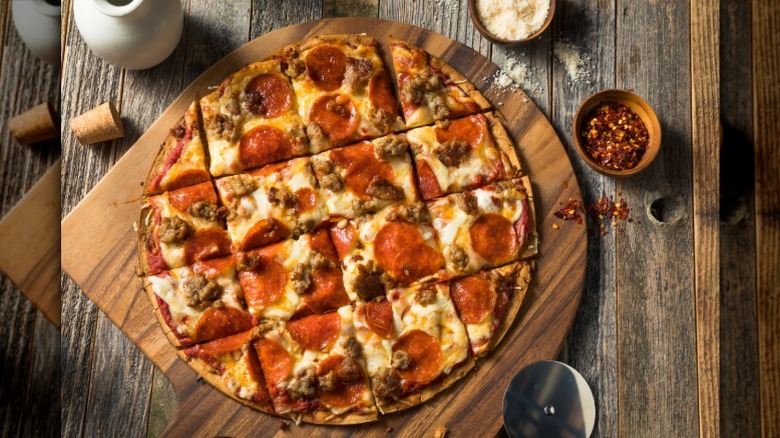
St. Louis-style pizza is perhaps the most unique style of the bunch due to its distinctive crust and cheese. It may also be the hardest to compare to New York or Chicago, as it doesn't resemble either. To start, the crust is cracker-thin. So instead of the chewiness you'd typically expect from pizza dough, you get something closer to a loaded nacho chip as the base. It's certainly rigid enough to support plenty of cheese, sauce, and toppings; and these slices are covered from edge to edge with just that.
Another unique trait of St. Louis-style pizza is the type of cheese used to cover the pie: Provel cheese, which was invented right there in St. Louis back in 1947. It's a blend of cheddar, Swiss, and provolone which gets deliciously melted and gooey when baked on top. Lastly, this circular pie is also cut into squares, making it perfect for sharing with lots of people — or perfect for shoveling slices into your mouth one after another.