

The 4 Steps Everyone Can Take To Prevent Salmonella In The Kitchen, According To The CDC
From salmonella to cyclospora, foodborne illnesses are really having a resurgence in 2026. Raw chicken is one of the main culprits behind salmonella infections, but cut melons, raw doughs with uncooked flour, raw sprouts, and unpasteurized foods like raw milk and unpasteurized soft cheeses are also all at higher risk of carrying salmonella. Luckily, there are ways to keep you safe. According to the U.S. Centers for Disease Control and Prevention, better known as the CDC, the four important food safety steps to follow to prevent salmonella infection are clean, separate, cook, and chill.
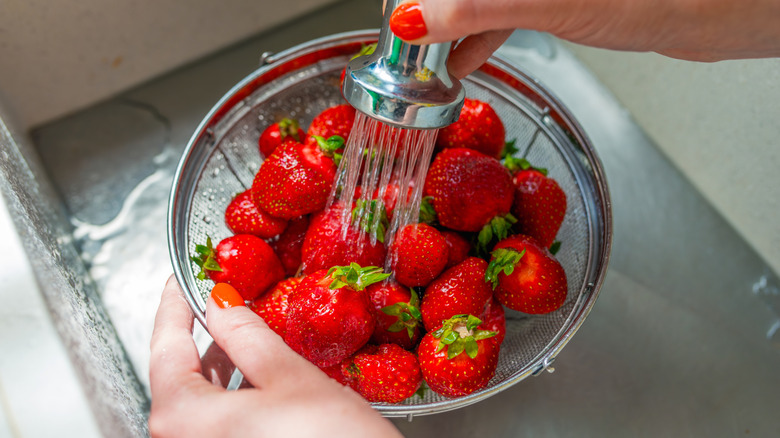
Regarding cleaning, it's imperative to not only wash your hands, but also to keep your kitchen and work surfaces free of bacteria. Washing your hands thoroughly both before and after touching any raw meats is incredibly important to help prevent the spread of salmonella and other foodborne illnesses. Fresh produce should also be washed with running water before consumption or storage. Use hot water and soap to wash cutting boards, knives, and the surrounding surfaces. However, you should never rinse raw chicken, as it can splash and contaminate other areas of your kitchen.
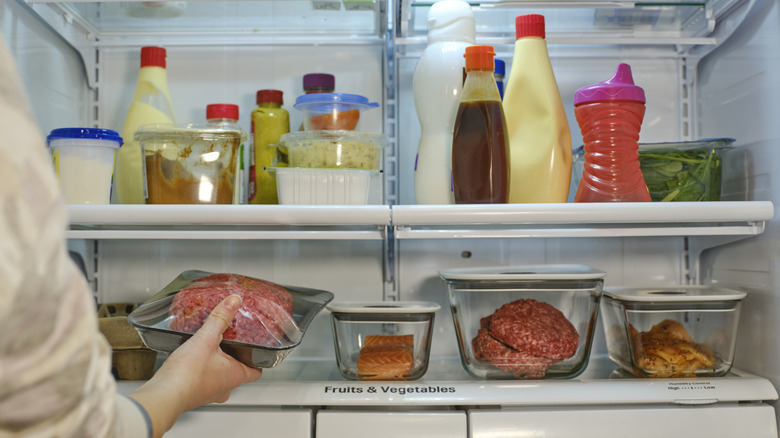
Separation is a key step, as it's crucial to store foods properly in your refrigerator. Raw meats, including seafood and poultry, should all be kept separately away from other foods, ideally on the bottom shelf of your refrigerator in a sealed container. Even when grocery shopping, it's best to keep raw meats separate from fresh produce in your shopping cart.
Simple steps to keep yourself safe
Cooking food to its safe internal temperature is essential to kill salmonella. Chicken and other poultry should be cooked to an internal temperature of 165 degrees Fahrenheit. Whole cuts of meat, like beef, lamb, pork, and veal, as well as finned fish should be cooked to an internal temperature of 145 degrees Fahrenheit, while ground meats like lamb, pork, and beef needs to be cooked to 160 degrees Fahrenheit. An instant-read thermometer is a perfect tool to test internal temperature with.
Your food must also be properly chilled after cooking within a certain time frame. You may have heard of the "danger zone" – the range between 40 and 140 degrees Fahrenheit in which bacteria thrive. Perishable foods need to be refrigerated within two hours to keep them out of this danger zone, and cooked foods that won't be eaten immediately need to be chilled and stored in the refrigerator as soon as possible. Let foods cool slightly before transferring them to proper storage containers and chilling them in the refrigerator completely. Keeping your refrigerator at or below 40 degrees Fahrenheit and your freezer at or below 0 degrees Fahrenheit is crucial for keeping foods safe to eat.