

Why You Should Ditch The Pan For Extra-Charred Roasted Peppers
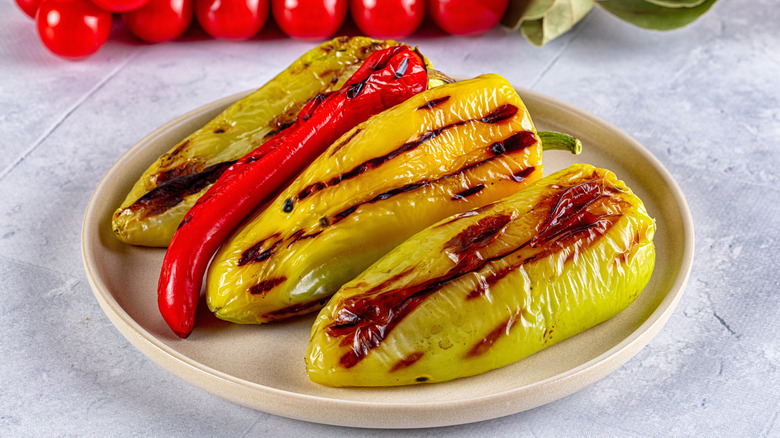
While a fine cut of steak gets a nice, charred crust from a searing hot pan, roasted peppers are another story. Sure, you can sear peppers into charred oblivion, but there are better methods that will instill both a solid char and added flavors. With that in mind, we spoke with Chef Billy Parisi about why you might want to forgo the pan in favor of another method that will produce extra-charred roasted peppers.
The ideal way to char peppers is with an open flame, making the grill the best appliance for the job. The grates are searing hot and yet they also allow an open flame to leap through for the ultimate char. According to the chef, the grill does take a certain finesse. "It's kind of twofold on a grill," Parisi notes. "Watch it closely so you don't scorch and overcook it, but also be patient and let it char and roast up. You definitely want some flames coming through the grates to touch the pepper."
The grill will ensure efficient charring, but it also allows you to char multiple peppers at the same time. Plus, you can also grill main course proteins or other veggies simultaneously. However, if a grill isn't available, a gas stove can also supply the open flame you seek. "The other way I do this is right over an open burner on my stovetop," Parisi adds. "Let it sit right in the fire and turn it as needed. The only problem is, you're for sure going to need to wipe down your cooktop."
Other charred pepper cooking tips
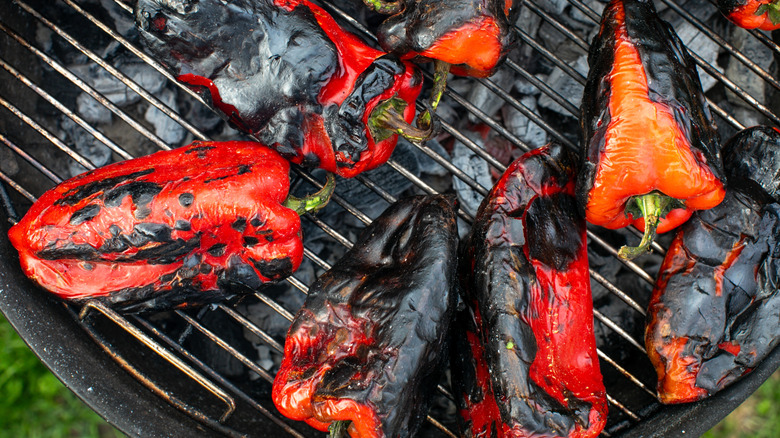
An open-flame charring method is best achieved on the grill, although the flame from a gas burning stove will work on a smaller scale. However, if you're looking for the same heat and space that a grill top provides (and without the mess it'll create over the stove), use your oven's broiler instead. "You can absolutely do it under the broiler on high heat using one of the racks towards the top," Parisi recommends. Just like on a grill or stove-top, you'll need to rotate the peppers every minute or so to char them on all sides.
"No matter the cooking method," says the chef, "I always coat the pepper in oil to help it char quicker and more evenly." Since you'll be using ultra-high heat to char your peppers, look for a type of oil with a high smoke-point. Avocado or safflower oil are options that won't interfere with the flavor of the charred pepper. To that effect, Parisi explains why charring benefits a pepper's flavor: "The char will for sure increase the pepper's natural sweetness. It also creates a smoky flavor, which complements the pepper, making it more umami."
The final step to charred peppers is placing them in a plastic bag to cool before scraping the majority of the dried out char off. Don't worry, even when removing those overly burnt pieces, you will still get the sweet roasted pepper and flecks of smoky char, whether you're making homemade, oven-roasted chili rellenos, stuffed bell peppers, or this smoky romesco sauce.