

15 Foods Passengers Ate On The Titanic
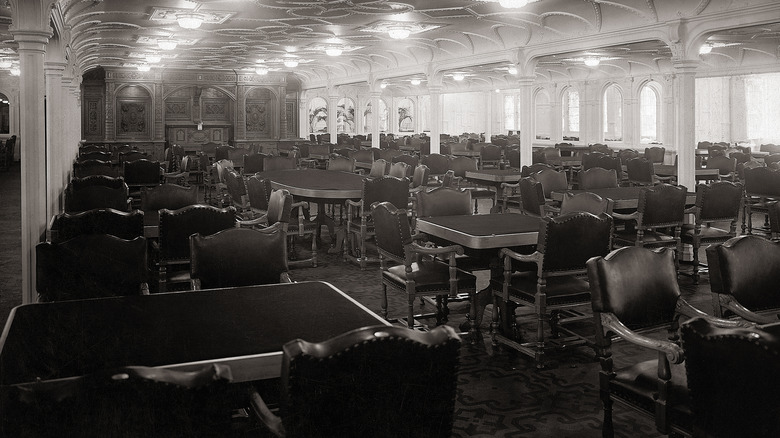
Even if you haven't seen the 1997 classic movie, you probably know all about the Titanic and its ill-fated voyage in 1912. It is arguably one of the most famous tragedies of all time, and to this day, people are still fascinated by the White Star Line ship and its wreck at the bottom of the Atlantic Ocean — including what passengers may have eaten in its luxurious dining room.
For four full days before the ship collided with an iceberg, people lived in varying states of luxury. They played squash, swam, relaxed in libraries while enjoying live music, and they ate a lot of food. These passengers barely had a break from eating — especially in first class.
Here, we take a closer look at some of the foods that people ate on board the Titanic. From the most sophisticated French cuisine to American comfort food and literal gruel, it seems like there was every type of food on board the Titanic.
Quaker Oats
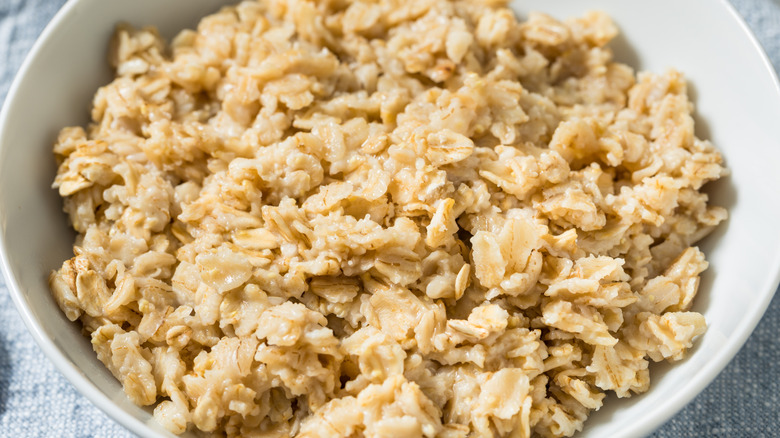
Thanks to surviving dining hall menus from the Titanic, we know a fair amount about what passengers ate while they were on board. For example, on April 11 (the day the ship made a quick pit stop in Queenstown, Ireland, to pick up and drop off passengers before making its way to New York), first-class passengers were served a breakfast banquet. There were stewed prunes, baked apples, fresh herrings, and grilled ham, and passengers could also order omelets and sirloin steak. But if they weren't in the mood for anything extravagant, they could opt for a humble bowl of Quaker Oats.
The breakfast cereal company was founded in the UK in 1899, 13 years before the sinking of the Titanic. Before this, in England, oats were seen as a food of the poor, tarnished by their association with prison and workhouse breakfasts. But as this first-class menu can attest, Quaker Oats helped to transform their image to the point where they were an acceptable breakfast for some of the richest people in society. According to the Titanic museum in Belfast, Quaker Oats was a common sight on transatlantic steamers at the time.
Cornbread
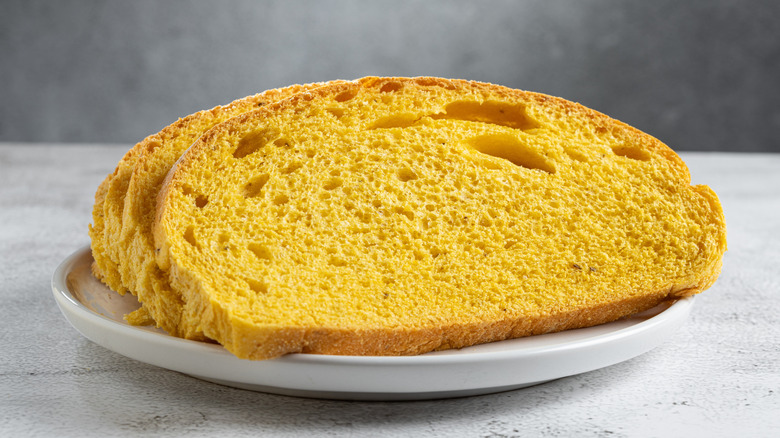
Cornbread was another breakfast staple available to first-class passengers. For many of the American passengers on board, this would have been a perfectly normal way to start the day. But for Brits used to wheat bread, cornbread was probably a novelty. That is, unless they traveled a lot, as cornbread was another common sight on transatlantic steamships at the time.
There isn't much information available about how cornbread was served to Titanic passengers, and we don't know if it was sliced or cut into squares or wedges. However, we do know that it is listed on the menu alongside Narbonne honey, and it would make sense for this to be the primary spread offered. To this day, honey and honey butter are popular cornbread pairings. Interestingly, cornbread doesn't appear on the second- or third-class menus, despite it being easy and cheap to make.
Oxford marmalade
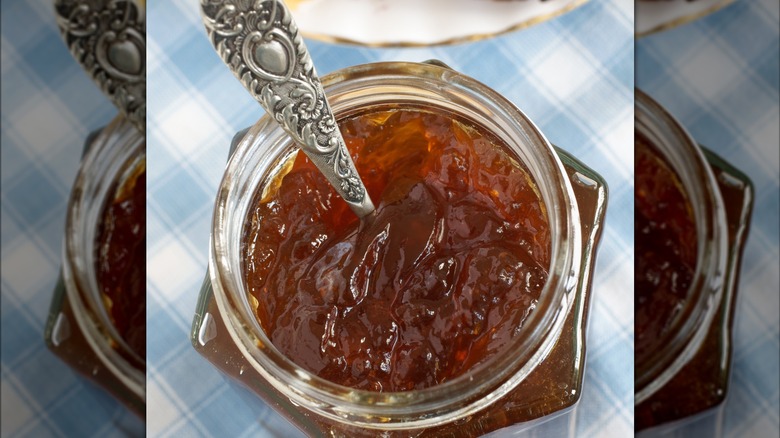
They might not have been familiar with cornbread, but the English passengers of the Titanic would likely have been well acquainted with another offering on the breakfast menu: marmalade. All classes were served this sticky orange spread for breakfast, but only the first-class passengers were offered Oxford marmalade.
Produced by Frank Cooper Ltd, this marmalade was (and still is) considered an upmarket version of the spread. First created in the 1870s and based on a recipe by Sarah Jane Cooper (Frank Cooper's wife), the spread is traditionally made with imported Seville oranges, which are boiled down with sugar to make a dark, thick, caramelized, bittersweet substance. Other, non-Oxford versions of marmalade were typically made with quince at the time. Fun fact: Oxford marmalade was actually a key selling point for White Star Line and was even used to advertise its liners in the 1920s.
Strangely, Titanic isn't the only tragic story associated with Oxford marmalade. It was also famously left behind by Captain Robert Falcon Scott, who, just a few years before the Titanic left Southampton, perished on his return home from Antarctica after becoming the first British explorer to reach the South Pole.
Narbonne honey
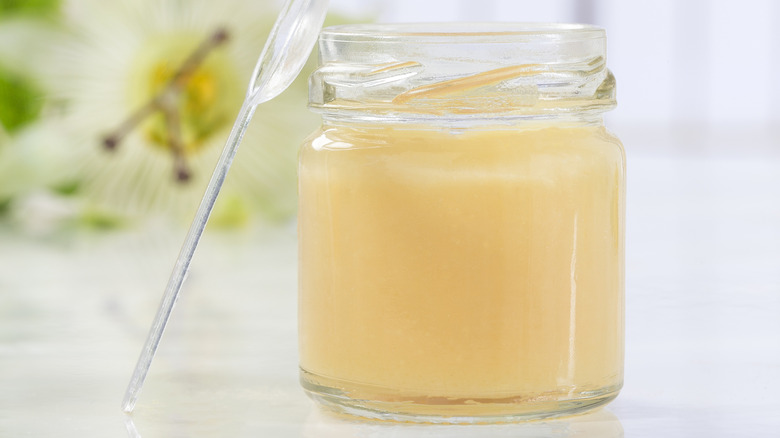
If first-class passengers weren't marmalade fans, they had other options. They could also spread their rolls and scones with blackcurrant conserve or opt for the aforementioned Narbonne honey. Again, as with the Oxford marmalade, this wasn't just any honey, but a particularly expensive variety from the Aude département of southwestern France. It's known for its light, almost white color and unique herbaceous flavor, interestingly, because the bees that make the honey only gather their pollen from local spring flowers, like rosemary and thyme.
According to the Titanic museum, Narbonne honey was a rarity on steamers during this era, so the Titanic passengers were lucky to have it on their breakfast menu. And, of course, it was only offered on the first-class menu. Second-class passengers made do with just plain conserve, marmalade, and maple syrup (with buckwheat cakes), while third-class passengers were offered marmalade as their breakfast spread, alongside butter (served with fresh bread).
Hominy
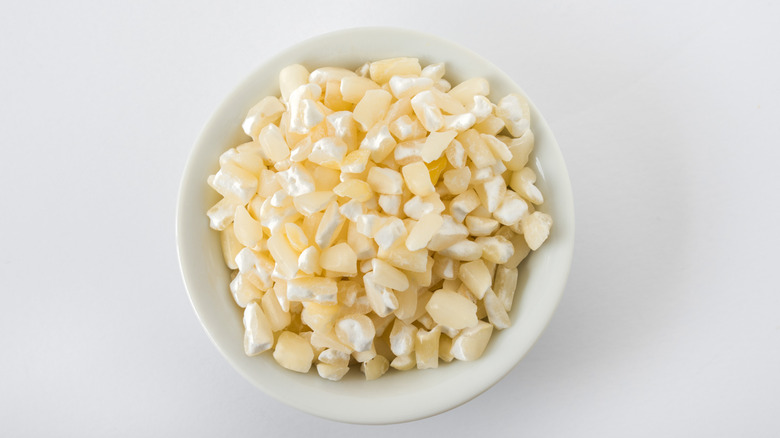
Another dish served for breakfast to both first- and second-class passengers on the Titanic was boiled hominy, which is basically boiled, soaked corn kernels. Although, unlike with the marmalade and the honey, it seems that all passengers were offered a very similar version regardless of class.
Again, boiled hominy is an American dish, and the British passengers on the Titanic probably wouldn't have been as familiar with it. Still, they might have developed a liking for it, considering it was served with an appetizing mix of condensed milk, vanilla, and nutmeg.
Today, you're more likely to come across boiled hominy in Mexican pozole (hominy is an indigenous crop in Mexico and the U.S.), but some still make porridge with it. In fact, cornmeal porridge (made with ground cornmeal rather than whole kernels) is popular in Jamaica, where it's also often served with milk, cinnamon, vanilla, and nutmeg. Perhaps the Titanic chefs took inspiration from the Caribbean?
Grilled ox kidneys
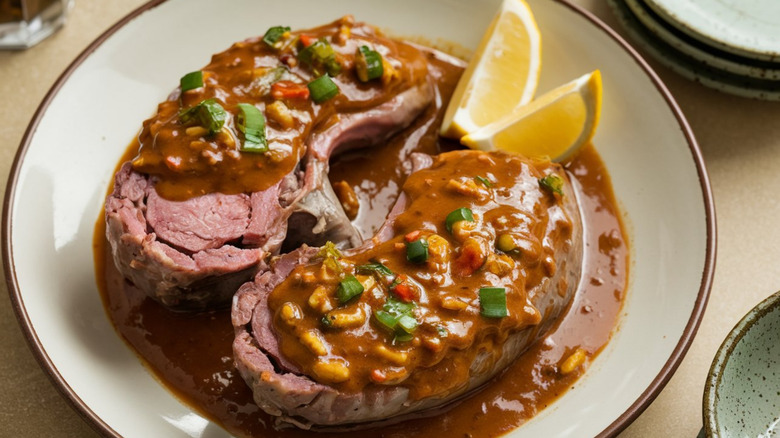
If you were in second class on the Titanic, you weren't treated to the same elaborate breakfast as first class, but you still had quite the spread available to you. Again, a menu from April 11 reveals that the second-class passengers could choose from a range of cooked and continental options, including fruit, scones, rolled oats (no Quaker this time), fried potatoes, fresh fish, and grilled ox kidneys with bacon.
Grilled ox kidneys might sound like an odd breakfast choice to many people now, but offal was incredibly common during the Edwardian era, so it's not surprising that it turns up on a Titanic menu. Many members of the middle and upper classes would be used to eating kidneys for breakfast, although, granted, they would often have been deviled rather than grilled.
First-class passengers were also served kidneys with bacon for breakfast, alongside smoked salmon, vegetable stew, and grilled sausages. Offal was one of those foods that united classes, with the rich, poor, and everyone in between often turning to organ meat for nutrition during the Victorian and Edwardian eras.
American dry hash au gratin
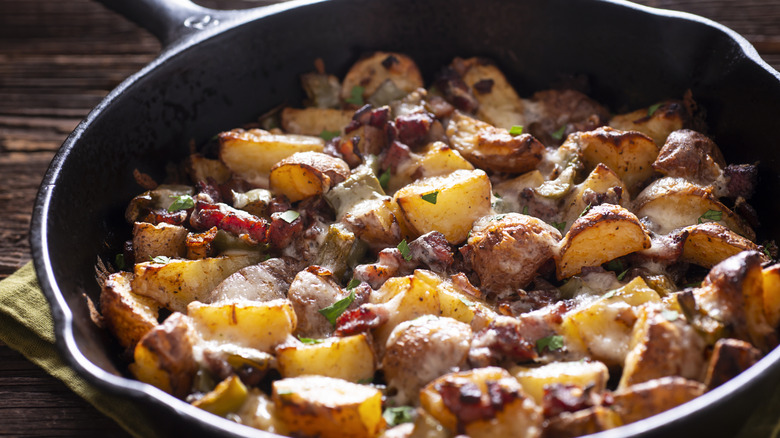
Just like on the first-class menu, the second-class breakfast options were a mix of British and American foods. For example, after a starter of rolled oats, tea, and conserve, second-class passengers could tuck into a dish called American dry hash au gratin. When you think of American-style hash, you probably think of a mix of crispy potatoes with vegetables like bell peppers and onions, and maybe some eggs and chopped bacon. And this dish was probably pretty similar, but maybe with a few differences.
A 1904 cookbook called "The Single-Handed Cook," written by English journalist and writer Constance Dorothy Evelyn Peel, lists a recipe for American dry hash. Peel instructs the reader to mix cold, minced corned beef with mashed "moist" potatoes, salt, pepper, and paprika, then bake the mixture in a shallow pan and serve with poached eggs.
Given that the Titanic sailed just eight years after this recipe was published, it was likely a pretty similar dish. That said, the menu does specify "au gratin," indicating the hash was served with a layer of cheese and breadcrumbs, too.
Oysters
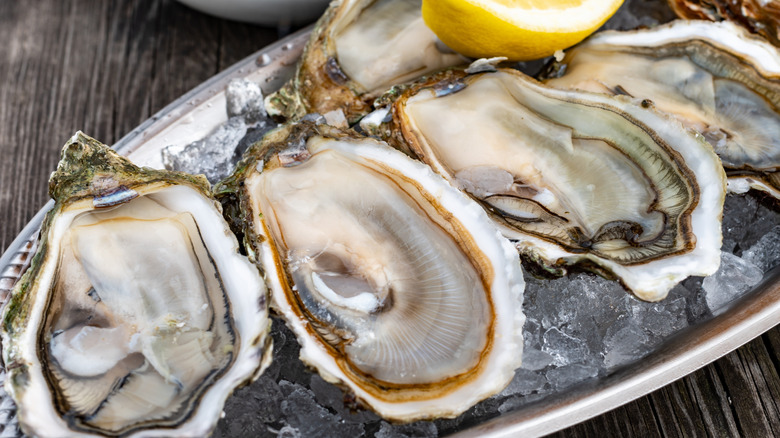
The evening before the Titanic struck the iceberg, it was business as usual in the restaurants and dining rooms onboard. First-class passengers would have dressed in their finery (think elegant gowns for the women and swallowtail coats for the men) before sitting down to yet another banquet — served on delicate china plates and silver platters, of course. And one of the first dishes offered to first-class diners on April 14 was oysters.
Serving the richest passengers on board the Titanic oysters makes perfect sense to us today. After all, the shellfish is luxurious and expensive. But, actually, back in the Edwardian era, oysters weren't all that premium. In fact, they were readily available, cheap, and widely farmed. The rich still ate many of them because they enjoyed the taste, but their widespread availability meant that the lower classes could access them, too, in both Europe and North America.
On the Titanic, though, it seems that any lower-class passengers hoping to enjoy oysters would have been disappointed. The surviving menus only show them as an option for the wealthiest passengers; they are decidedly absent from the other dining hall menus.
Filet mignon lili
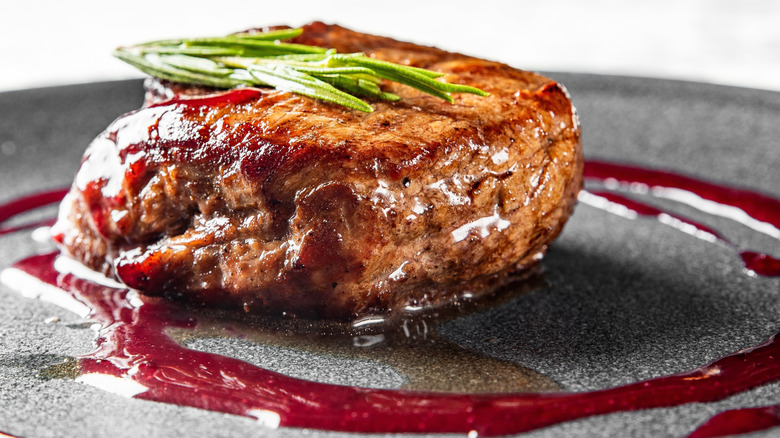
On April 14, first-class passengers started with oysters and hors d'oeuvres. After that, they moved on to their next course, which included options such as salmon with mousseline sauce and cucumber, chicken lyonnaise, roast duckling, stuffed marrow, and steak, served as filet mignon lili.
Making filet mignon lili is a delicate operation. It starts with a bed of pommes Anna (a buttery, crispy cake made with waxy potatoes). This is then layered with artichokes, a slice of foie gras (French liver pâté), filet mignon, truffle slices, and a rich, creamy wine sauce. The whole operation is fiddly and time-consuming, and the final dish is sophisticated, expensive, and the height of class, which makes it perfectly suited to the elite passengers of the Titanic.
Filet mignon lili wasn't the only steak option available to the richest guests on April 14. They could also choose sirloin of beef, served with sides like green peas, creamed carrots, and chateau potatoes. Steak doesn't feature on the second-class or third-class dining room menus because, unlike oysters, this particular dish has always been on the pricey side (although some members of the middle class would have access to it at home).
Foie gras
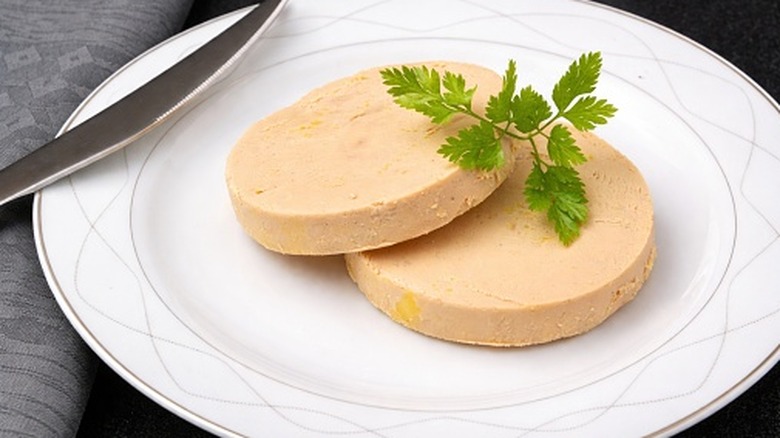
While breakfast seemed to consist of traditional American and British foods, first-class dinner on the Titanic was French-style. This was, after all, the Belle Époque age, and many things associated with France were seen as aspirational. To Edwardians in England, French cuisine, especially, was très chic. And foie gras? Well, that was the height of class.
As well as featuring in the filet mignon lili, foie gras was also served to first-class diners on its own in aspic. For the uninitiated: Aspic is a clear, gelatin-based jelly, used to encase meats, vegetables, eggs, and, in this case, liver pâté.
Just as it is today, foie gras in the Edwardian era was made with the liver of a goose or duck that had been fattened through force-feeding. This practice, known as gavage, is incredibly controversial (and has long been considered so, even during ancient times), and is often criticized on animal cruelty grounds. However, like much of high society during the Edwardian era, many first-class Titanic passengers probably wouldn't have concerned themselves with the ethics of foie gras. To them, it was merely the height of sophistication.
Punch Romaine
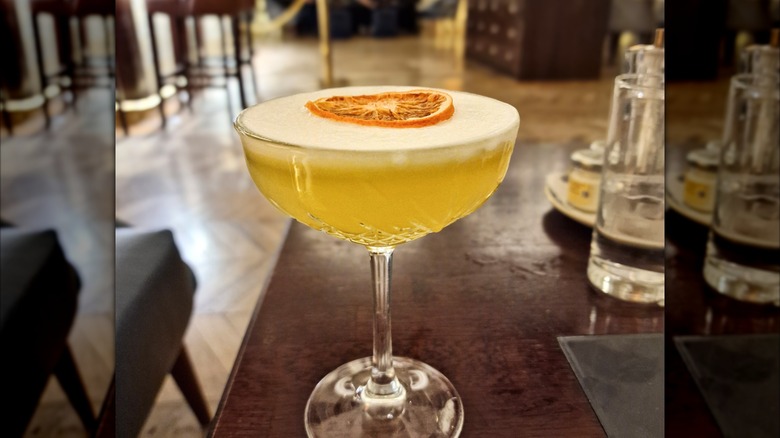
When the Titanic struck the iceberg just before midnight on April 14, many first-class diners would have been heading to bed to sleep off their many courses and all the booze served with them. There were hundreds of bottles of wine, Champagne, and spirits on board the ship, some of which would have been used to make cocktails, like Punch Romaine. In fact, during the first-class dinner on April 14, Punch Romaine was even served as a palate cleanser between meals.
Some recipes for the cocktail palate cleanser, inspired by French culinary pioneer Auguste Escoffier, combine Champagne with syrup and the zest and juice of oranges and lemons. Everything is left to infuse before it's frozen and served as a palate cleanser (or dessert). However, according to the Titanic museum, that's not the type of punch that passengers would have had on April 14. Instead, they were served a version of the punch made with whipped egg whites, rum, and lemon.
Scottish chicken and leek soup
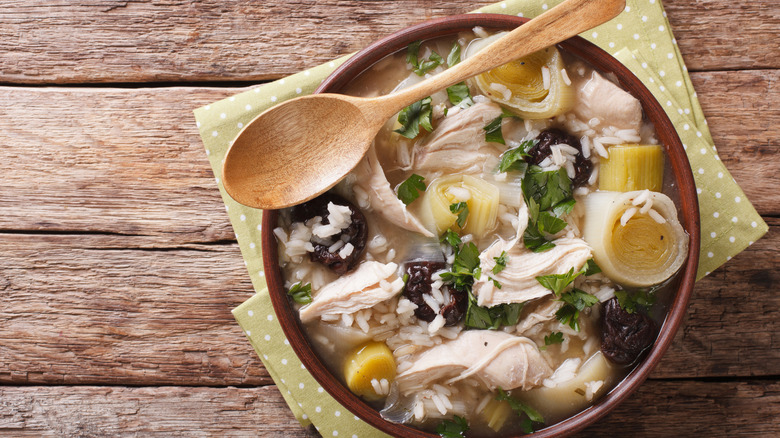
If you've ever been on a cruise liner, you'll know that most of the day revolves around food. It was the same for passengers on the Titanic — well, the first-class ones, at least. Not only were the richest guests treated to an elaborate breakfast and dinner spread, but they also had an impressive lunch selection, too. Another surviving menu from April 14 shows that first-class passengers could enjoy a plethora of lunch options, including Scottish chicken and leek soup.
The soup is listed as c*ckie leekie soup on the menu, but it is also often traditionally referred to as c*ck-a-leekie soup. And while it was served to the elite on the Titanic, the dish actually has pretty humble origins. Made with leeks, prunes, and chicken, it most likely originated as a peasant dish, developed in Scotland sometime before the 1500s. Though evidently the hearty, comforting, flavorful soup, which is now a Burns Night favorite, transcended class boundaries enough over the centuries to land on the first-class Titanic menu in 1912.
Chicken à la Maryland
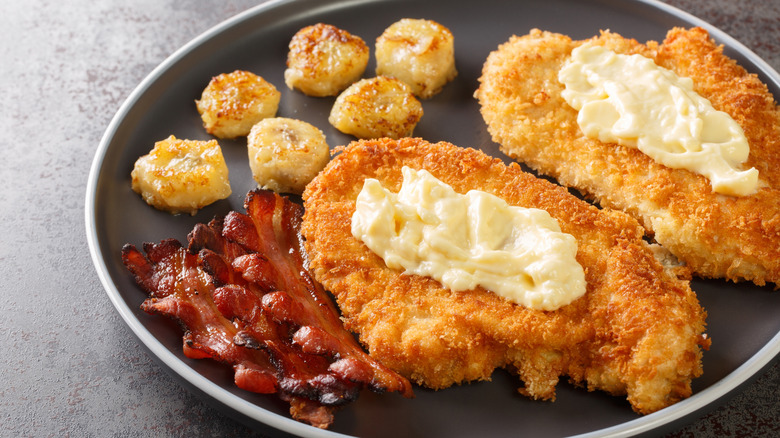
If passengers weren't served with the buffet or the grill options, they could also order chicken à la Maryland for lunch. While this dish, consisting of fried chicken, gravy, and, interestingly, bananas, sounds French, it actually has American roots. In fact, there's a chance White Star Line added the à la part just to sound fancy. That said, the French were certainly interested in the dish, and Escoffier published his own version in the 1930s in "Ma Cuisine."
According to BBC Travel's World's Table series, it probably stems from the kitchens of (surprise, surprise) Maryland, where fried chicken was often cooked and served to the rich by enslaved women. If this is the case, then the banana element makes sense, as the fruit was once one of Baltimore's biggest imports.
It's not known exactly when chicken Maryland spread across the U.S., but it did, as it appears on the Titanic menu in 1912 and in Fannie Farmer's renowned work "The Boston Cooking School Cook Book," published in 1896. Farmer's version, though, called Maryland Chicken, is banana-free and made with just fried chicken and cream sauce.
Gruel
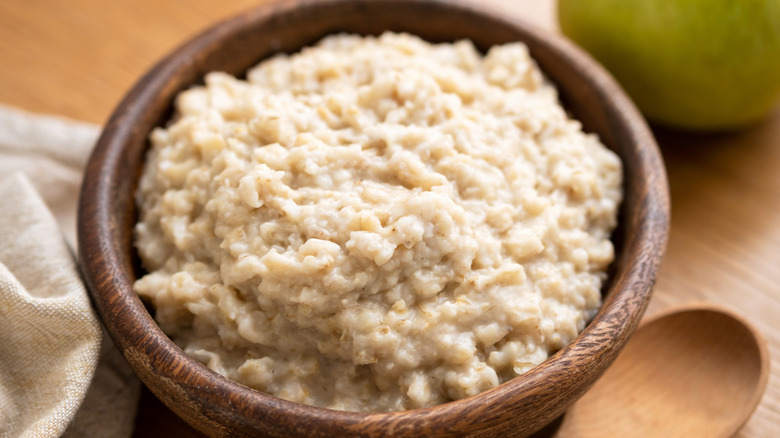
The meals served to third-class passengers were strikingly different from those given to the first-class guests on the Titanic, but they didn't go hungry. For example, on April 14, third-class passengers were served gruel for supper.
Okay, before you start picturing the food of poor Victorian orphans, it's important to note that gruel isn't quite as bad as it sounds. It's essentially just a thin porridge, made with oats and water. Sure, it's not fancy, and likely not a patch on the Quaker Oats up in first class, but it isn't that offensive either. Some older recipes add treacle and salt for extra flavor, while others opt for onions instead.
If they didn't like gruel, third-class passengers had plenty of other choices. Oatmeal porridge with milk was offered for breakfast, and they also had access to foods like smoked herring, ham, and eggs. For dinner, they had roast beef with gravy and fresh bread. While having tea, they had dishes such as cold meats and stewed figs with cheese and pickles.
Cabin biscuits
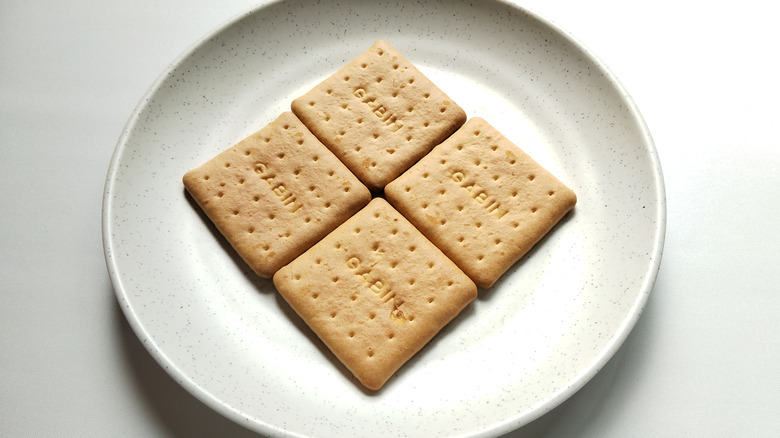
As well as gruel, Titanic's third-class passengers were also given cabin biscuits and cheese for supper. These biscuits were nothing like American biscuits. They weren't soft, fluffy, or flaky, but they had a hard, cracker-like consistency, made with just a simple mix of flour and water.
Cabin biscuits aren't fancy by design, and they weren't unique to the Titanic, either. Also known as ship biscuits, these very simple, affordable, long-lasting, and easy-to-store crackers have sustained crews on long journeys for centuries. In the early 19th century, for example, British Royal Navy ships were loaded with enough biscuits to last sailors for months at sea.
On the Titanic, the third-class passengers weren't the only ones to snack on cabin biscuits. Crew members probably would have also eaten them, and they might have even been offered to higher classes to mitigate seasickness. And don't worry, while they sound like eating cardboard, cabin biscuits could be significantly improved by dunking them in milk, tea, or soup.