

A 90-Year-Old Food Giant Is Closing 2 More Plants As Its Beef Business Struggles
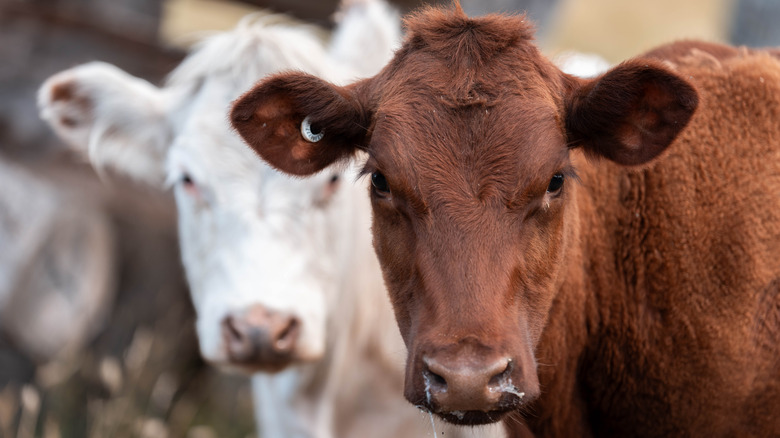
In an official press release on August 13, Tyson Foods — the largest meatpacker in the U.S. — confirmed the closures of its Joslin, Illinois, and Eagle Mount, Utah, plants, as well as the company's pursuit of the sale of its facility in Pasco, Washington. This follows the January closure of Tyson's beef plant in Lexington, Nebraska, which employed approximately 3,200 workers, as well as cuts to corporate and leadership roles in 2023. The press release characterized the latest closures as "strategic changes" intended "to position the company for long-term success."
Going forward, Tyson Foods' beef business will revolve around three "strategically located" facilities in Dakota City, Nebraska, Holcomb, Kansas, and Amarillo, Texas. Tyson Foods argued that these plants have considerable capacity for growth, with the company pledging that it will ramp up a second shift at its Amarillo plant as soon as more cattle are available. "Collectively, these changes will allow the company to maintain a similar level of cattle harvesting across a more efficient and modern network," the statement added.
The press release highlighted recent USDA cattle inventory data suggesting that constraints on the beef supply are likely to remain, and acknowledged the impact closures were likely to have upon Tyson Foods employees and their communities, emphasizing the company's commitment to aiding its team members in applying for positions at remaining Tyson facilities.
America's appetite for beef persists, despite historic cattle shortage
Tyson Foods is no stranger to difficult economic environments, having been founded 90 years ago amidst the Great Depression. Nevertheless, Tyson has faced numerous challenges in recent years, including the COVID-19 pandemic, a recall of over 93,000 pounds of Tyson Foods ground beef in 2022, and now a shortage that is rocking the beef industry of the nation which produces the most beef in the entire world.
According to USDA data, as of the first day of 2026, domestic producers held 86.2 million heads of cattle, the lowest number since 1951. In a 2025 report, the USDA's Economic Research Service predicted that low supplies throughout 2026 would drive beef prices to record highs, but would begin to fall back through 2031, with U.S. cattle inventories expected to reach 91.6 million head by 2034. The ongoing livestock shortage has been attributed to a combination of causes, including drought, rising costs, international competitors, mounting consolidation throughout the cattle industry, and a drop in the number of American farmers and ranchers.
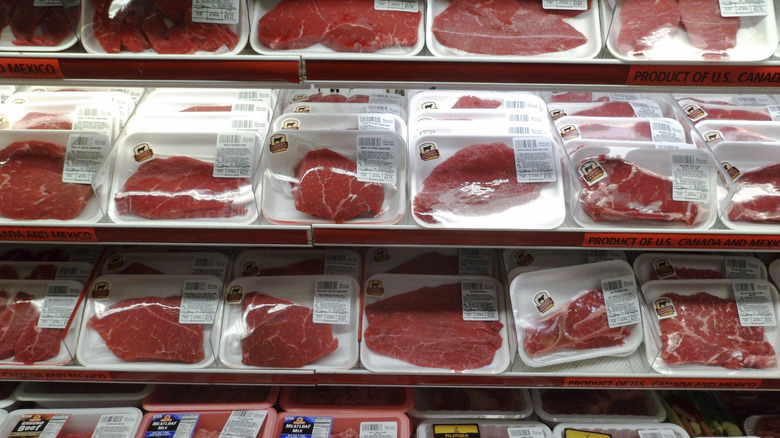
This accounts for why U.S. beef could be harder to find at the grocery store in 2026, and why you're paying so much when you do find it. Despite the average retail price for beef reaching a record high in April at $9.64 per pound — an increase of roughly 13% from the previous year — America's appetite for it has continued to grow. According to the annual "Power of Meat" report from the Meat Institute and the Food Industry Association, meat sales reached a record high of $112 billion in 2025.