

Quote Of The Day By Samin Nosrat: 'For As Long As I've Been Cooking, I've Had A Complicated Relationship With...'
We may receive a commission on purchases made from links.
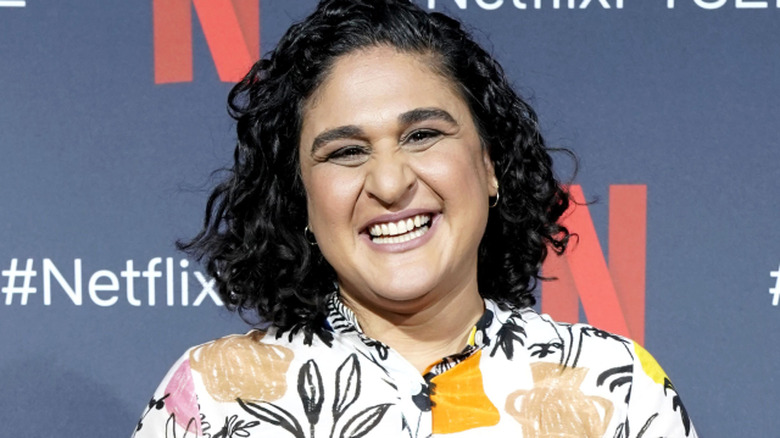
Born in San Diego, California in 1979, Samin Nosrat is an Iranian-American chef who graduated from UC Berkeley with a major in English. However, she missed her own graduation ceremony to make her shift as a busser at the legendary Chez Panisse. After college, Nosrat worked her way up from busser to chef, learning how to cook and other precious lessons from Alice Waters and the entire community that Waters built at Chez Panisse.
After many formative years at Chez Panisse, Nosrat worked in Italy with chefs Dario Cecchini and Benedetta Vitali, then returned to California to eventually run the kitchen at the now-shuttered Eccolo in San Francisco. Nosrat studied journalism with author and professor Michael Pollan, and then began writing for Bay Area publications and eventually became a food columnist for New York Times Magazine for five years.
Nosrat's first cookbook, "Salt, Fat, Acid, Heat: Mastering the Elements of Good Cooking", was wildly successful. Published in 2017, it won both a James Beard Award and an IACP Cookbook Award and was named one of the best books of the year by The Washington Post, NPR, and others, and has remained a New York Times bestseller. The following year, Netflix released "Salt Fat Acid Heat," a limited series based on Nosrat's cookbook, where viewers watch Nosrat travel to Italy, Japan, Mexico, and back home to California, and each episode covers an element in the title: salt, fat, acid, and heat.
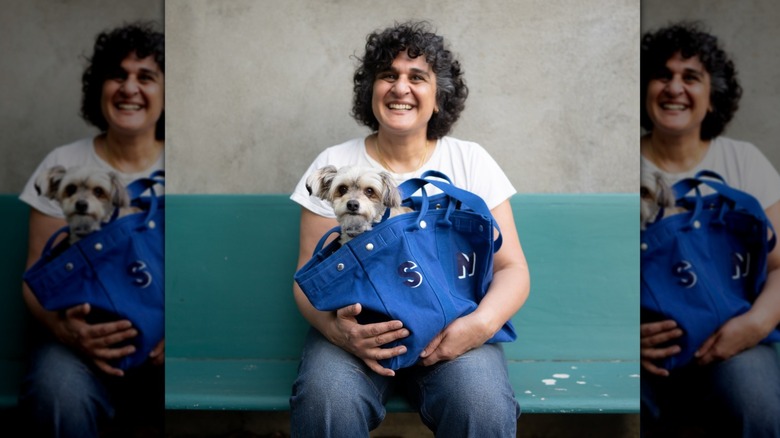
Later, Nosrat started a podcast called Home Cooking with her friend Hrishikesh Hirway, and also released a second cookbook: "Good Things: Recipes and Rituals to Share with People You Love." She currently lives in Oakland, California with her dog Fava, and continues to write, cook, and teach all things food.
Quote of the day by Samin Nosrat
"For as long as I've been cooking, I've had a complicated relationship with recipes — I could never escape the feeling that each was an attempt to capture, quantify, and define the ineffable."
This quote comes from Samin Nosrat's second cookbook, "Good Things: Recipes and Rituals to Share with People You Love." In the book's introduction, Nosrat writes about her lifelong struggle with written recipes, despite having written two cookbooks and continuing to publish recipe ideas as well as essays and notes on her Substack, A Grain of Salt, although she refers to the recipes as "un-recipes."
While it's usually implied that home cooks should follow recipes exactly when cooking, Nosrat has a hard time agreeing with that sentiment. While it does include some traditional recipes, her first book, "Salt, Fat, Acid, Heat," is meant to be more of a guide for home cooks to learn how to not rely on strict recipes but rather on basic principles and techniques. "Good Things" is a book in the same vein. It does contain more traditionally written recipes, but it also includes much more than that, with almost 80 pages dedicated entirely to individual types of seasonal produce and how to approach them. In "Good Things," Nosrat hopes to impart the feeling of recipes becoming rituals that are practiced, that evolve, and are eventually shared with loved ones.
The deeper meaning of Samin Nosrat's quote
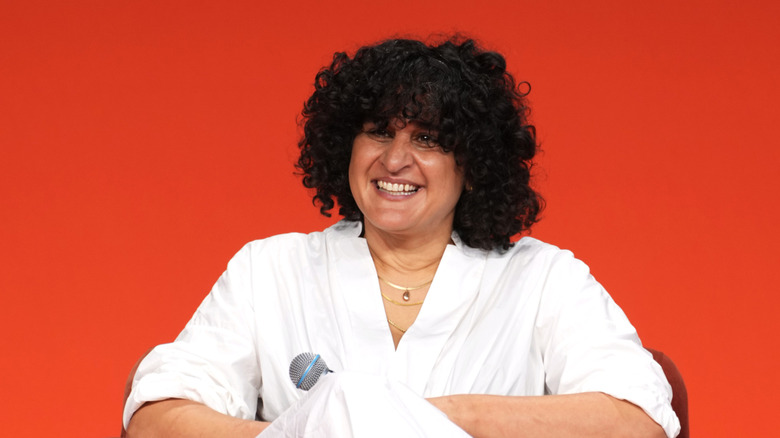
After the success of her first cookbook and Netflix show by the same name, Samin Nosrat found herself struggling with the aftermath of such public acclaim, eventually falling into clinical depression, about which she speaks openly and candidly. This experience, however, led her to eventually find her way back to herself through cooking, and through the realization that time is a precious resource to be spent thoughtfully and as a reflection of your values. Additionally, this long period of reflection and self-work brought Nosrat back to cooking. She finds that time spent being present and aware of what you're doing contributes to a good life, especially in the kitchen.
In this sense, a recipe can almost take you out of this mindset, where you may spend more time worrying about following a recipe exactly rather than being focused, present, and in-tune with the ingredients and cooking process. Nosrat notes that due to inherent differences in almost everything — like differently calibrated ovens, metals or thicknesses of pots and pans, and brands of ingredients — no recipe can ever be perfectly replicated as the author intended.
To Nosrat, this isn't a bad thing, but rather an impetus to approach cooking and recipes (or un-recipes) with nuance, openness, and most importantly, joy. If you don't already have a copy of "Good Things" available, start this approach with our tips to help you cook recipe-free at home.
More quotes from Samin Nosrat
"Above any other way of identifying, like above race or religion or anything — or nationality — I identify as a Californian. This way that I've gotten to spend so much of my life outside, in different landscapes, has absolutely affected me. Agriculture has affected me. The way there are so many different kinds of people from all over the world — I'm so, so grateful for that." — Interview with The New York Times
"We've learned to expect all the wrong things from recipes. We've been trained to believe that if we just follow what's on the page, word for word, we'll get the same result every time. But good cooking isn't about mindless repetition. It's about being completely present with an experience as it unfolds." — Introduction of Nosrat's "Good Things" cookbook
"If people have all the time to write all these thinkpieces about my one show and my one body and my one self, then we need more of this. How desperate are people for something different and new?" — Interview with The Guardian