

Quote Of The Day By Michael Pollan: 'The Shared Meal Elevates Eating From A Mechanical Process Of Fueling The...'
We may receive a commission on purchases made from links.
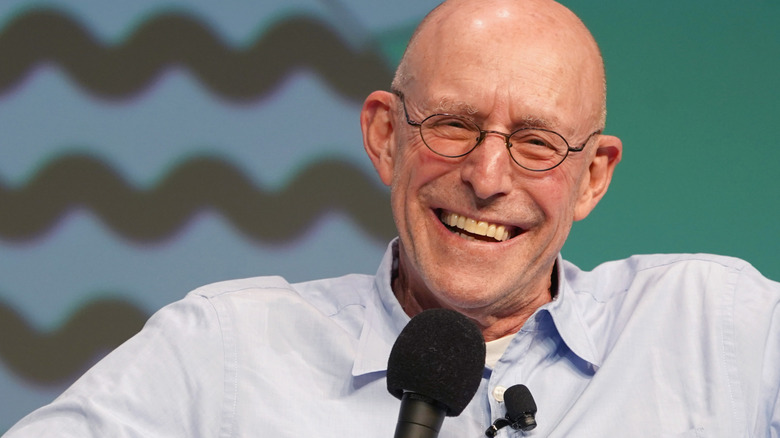
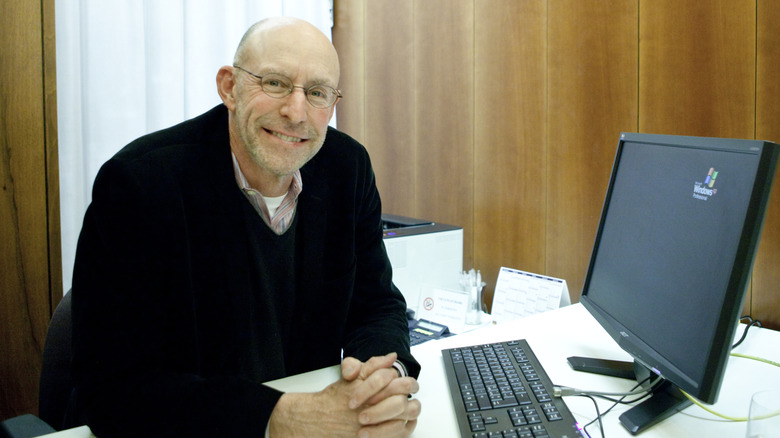
Michael Pollan is a veteran journalist with a 30-year career authoring articles and books that illustrate the historic connections between humans and nature in relation to food, health, industry, and politics. After a long career as the executive editor of Harper's Magazine, Pollan left his post to embark on a writing career that explores environmental connections to food systems. He is also a professor who has taught at Harvard University and UC Berkeley.
Pollan is the author of eight books, and the recipient of the California Book Award and the James Beard Award for food writing. In addition to penning bestselling books, Pollan is a longtime contributor to The New York Times Magazine and has published articles in The New Yorker, Harper's, and Mother Jones. His essays have been reprinted in anthologies including, "Best American Essays" and the "Norton Book of Nature Writing."
Pollan is influential for his role in breaking down the complex relationships between humans, nature, and society, and helping readers gain a deeper understanding of how their food choices affect physical and mental health. He has long been an advocate for adopting a more holistic, natural diet, urging people to eat whole, real foods rather than processed products. He issued a resounding call to action to his readers to think more about where their food comes from. Pollan wants people to consider how the industrial food chain functions and profits, to steer them away from relying on fast, cheap, and convenient meals. This mission has greatly supported the local, sustainable, and organic food movements. Pollan's ability to synthesize and translate overwhelming and often conflicting advice on nutrition and the ethics of food in a way that makes sense to readers is why his words are the quote of the day.
Quote of the day by Michael Pollan
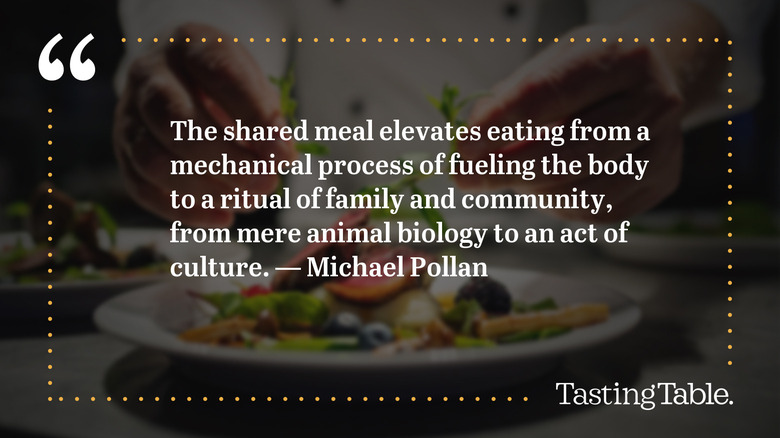
"The shared meal elevates eating from a mechanical process of fueling the body to a ritual of family and community, from the mere animal biology to an act of culture."
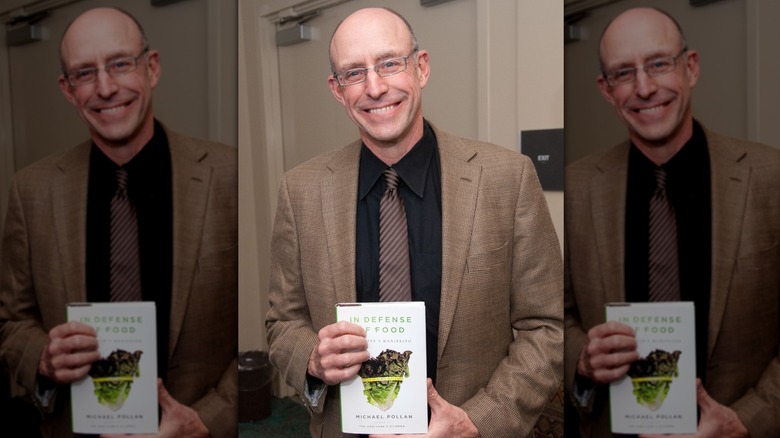
This quote comes from Michael Pollan's fourth book, "In Defense of Food: An Eater's Manifesto." Published in 2009, it is a passionate manifesto in support of the whole food movement. Its ideas were initially conceived in Pollan's essay "Unhappy Meals," which was published in The New York Times Magazine in 2007. In his book, Pollan advises readers to become more informed about the origins of their food, warning us that much of what we eat isn't coming from nature. Instead it comes from laboratories funded by mega corporations driven by profit with no real interest in keeping our society healthy.
The drive to improve health by taking a more balanced, knowledgeable approach to eating is at the heart of "In Defense of Food." Rather than eating less, Pollan suggests eating whole, healthy, unprocessed food (mostly plants) in moderation. At the center of Pollan's book is the constant battle between the origin, profit, ethics, and politics of American food. By eliminating much of the noise, misdirection, and confusion imposed on consumers by a for-profit food industry, he hopes to help Americans worry less about nutrition as it's defined in industry terms and more about understanding the origin of the food we eat.
Deeper meaning of Pollan's quote: Food isn't purely fuel
Pollan's quote reminds us that the earliest humans saw food as purely a means of survival, fueling their bodies with the calories needed to sustain movement. Meals were not relaxed social affairs and food was not for pleasure; instead, humans were acting on animalistic instincts. There is evidence that hunters would celebrate a successful outing with a feast, but there was no daily ritual of shared meals. As humans evolved in the Americas, indigenous North American tribes practiced communal eating and hosted ceremonial feasts like harvest festivals and potlatch; however, many of these traditions were displaced by the arrival of European colonists who disrupted food systems.
As colonial American societies developed, they were less focused on the constant threat of danger and more focused on family and community life. Meals now became a bonding ritual that connected people. Farming families would share meals made from the latest harvest, and households gathered for a communal midday meal. At the end of the 18th century, a shared evening meal become a daily ritual, which became embedded during the Industrial Revolution, when more people worked outside of the home.
Now we understand that sharing a meal fosters closeness, encourages conversation, and strengthens trust. Although humans still have worries, preparing and eating a meal together lets us slow down and practice mindfulness, truly taking in the taste, aroma, and texture of each element. Rather than seeing food as simply biomechanical fuel or the sum of its calories and nutrients, we should aim to restore and maintain the communal joy and humanity of sharing a meal.
More quotes from Michael Pollan
"He showed the words "chocolate cake" to a group of Americans and recorded their word associations. "Guilt" was the top response. If that strikes you as unexceptional, consider the response of French eaters to the same prompt: "celebration." — From "In Defense of Food: An Eater's Manifesto" via Goodreads
"Cheap food is an illusion. There is no such thing as cheap food. The real cost of the food is paid somewhere." — From 2009 documentary "Fresh"
"The decline of everyday home cooking doesn't only damage the health of our bodies and our land but also our families, our communities, and our sense of how our eating connects us to the world." — From "Cooked: A Natural History of Transformation" via PBS, which Tasting Table reviewed in 2013
"Avoid food products containing ingredients that are A) unfamiliar B) unpronounceable C) more than five in number or that include D) high-fructose corn syrup." — From "In Defense of Food: An Eater's Manifesto"
"Cooking is probably the most important thing you can do to improve your diet. What matters most is not any particular nutrient, or even any particular food: It's the act of cooking itself." — From the 2016 Netflix documentary mini-series "Cooked," which Tasting Table reviewed in 2016
"Much of our food system depends on our not knowing much about it ... cheapness and ignorance are mutually reinforcing." — From "The Omnivore's Dilemma: A Natural History of Four Meals" via Goodreads, which Tasting Table revisited in 2016 on its 10-year anniversary