

These Frozen Items Have A Shorter Freezer Life Than Most People Realize
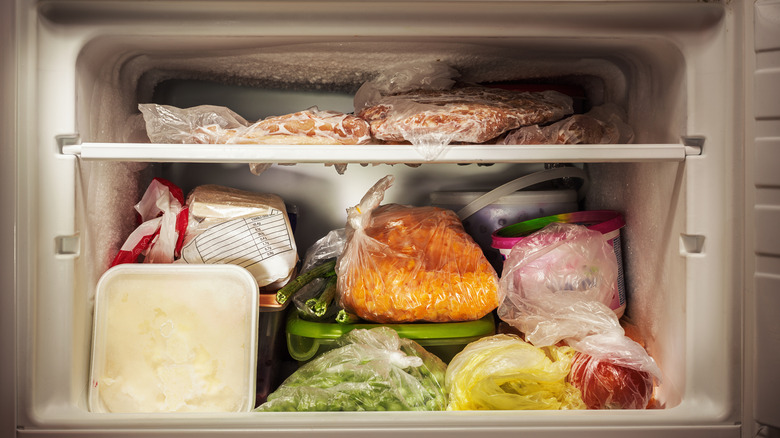
This probably sounds familiar: You bring home a bunch of delicious, fresh fruit, only to miss that all-too-brief window when it is at its ripest and juiciest. Trying to find a way of preserving fruit at its best is therefore understandably tempting, and throwing it in the freezer would seem to be the obvious solution. While you can opt for this, be warned — once frozen, some fruits with a high water content have a shorter freezer life than most people might realize.
Unlike some fruits, which can last for 8 to 12 months in the freezer in either their original packaging or an airtight, freezer-safe container, watermelon and cantaloupe should be used within six months of freezing. Unfortunately, the key problem afflicting water-rich fruits like cantaloupe, watermelon, or strawberries — which are 90%, 91%, and 91% water, respectively — is the change in texture and consistency that will occur once they are defrosted. Because they are primarily composed of juice, the water inside these fruits will expand, causing their cells to rupture. The result of freezing these foods is that the fruit will remain highly nutritious once defrosted, but will become mushy once it comes out of the freezer, even if it was frozen at peak ripeness.
In the case of strawberries and other berries, cellular damage can be somewhat minimized by thawing them slowly, overnight in the refrigerator (be sure to read up on the key to freezing strawberries for later first). On the other hand, because of their fibrous nature, pineapple and papaya can be thawed more quickly while still largely keeping their structure.
What to do with water-dense fruit before freezing
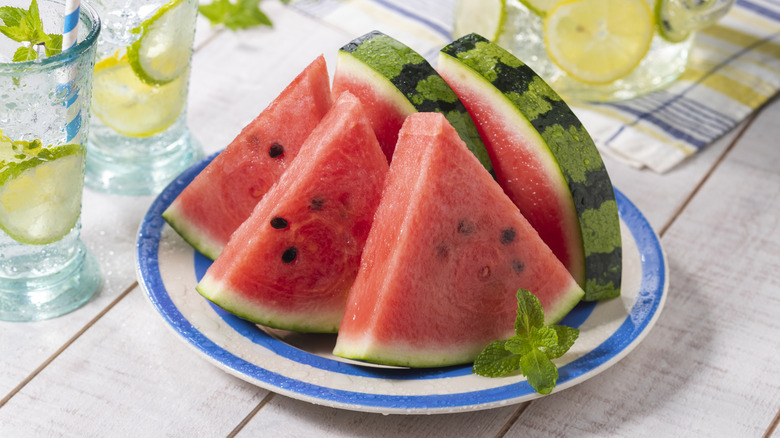
Even if you can't expect the cantaloupe or watermelon you've taken out of the freezer to have exactly the same bite and feel as when it was in its summer prime, don't despair — there are ways to get the most out of frozen, water-dense fruits, particularly if you're feeling creative. You can chop these fruits up and seal the chunks in an airtight container or zip-lock bag, as melon cubes will better maintain their cell wall integrity after defrosting. The smaller frozen pieces can be used in their frozen state to cool down a drink or be blended up into a creamy frozen watermelon cocktail.
Another solution is to take advantage of how much liquid these fruits contain and purée the fruit before freezing it. This will provide you with an ever-ready ingredient for a host of refreshing, flavorful desserts, popsicles, smoothies, and cocktails (like our recipe for an even better mojito with puréed fruit in the mix). To purée almost any fruit, once you have removed the skin or any large seeds as necessary, cut the fruit up and blend it into a food processor. Once it has reached your desired consistency, pour the purée into ice cube molds, freeze, and transfer into zip-lock bags for long-term storage in the freezer, where it will stay ready to use for months to come.