

What Happens When You Eat Watermelon Seeds?
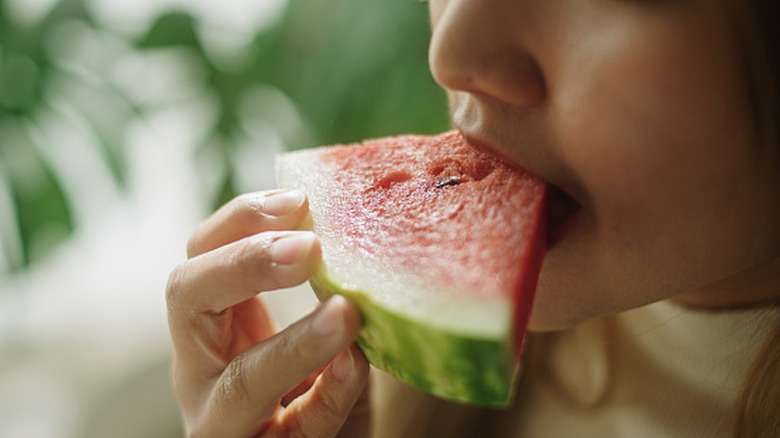
It's the possibly the most frightening, can't believe your luck, and "what's going to happen to me?" type-of-thing that can happen to you in summer. You've swallowed a watermelon seed. Your mind instantly starts to think that in no time at all, a garden will be growing inside you. Crawling vines first, then ripe melons spilling from your ears and belly button.
Even though eating the seeds can make your mind race to the worst possible outcome, watermelon seeds actually won't even make you sick. When you eat a watermelon seed, you get a bit of added nutrition because watermelon seeds are a safe, healthy, and nutritious food that contains several important minerals.
There are a lot of benefits to eating the seeds of this ancient fruit. That said, we less regularly associate watermelon seed with being beneficial, considering how much more popular seedless watermelon varieties are than all other types. Watermelon fruit is loaded with fiber and polyphenols that feed gut microbes, while watermelon seeds contain zinc, iron, and magnesium. They play their own roles in digestion, cell regeneration, and the function of our nerves, muscles, and heart.
How these added minerals benefit your body
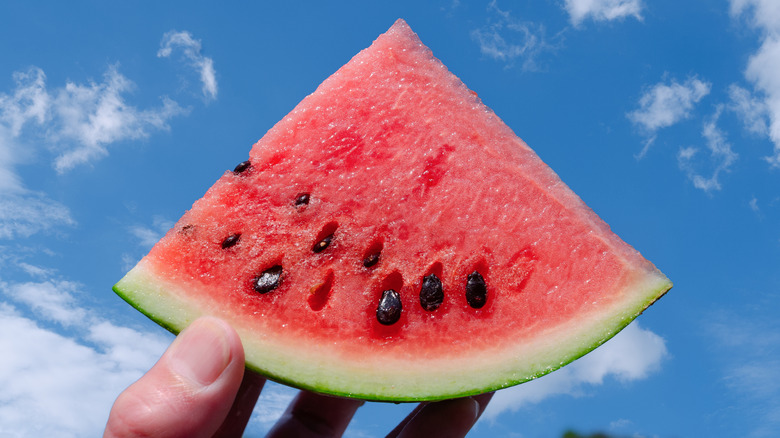
The minerals found in watermelon seeds provide numerous health benefits. Iron is important for making hemoglobin, the material that carries oxygen through blood, while magnesium is the stuff of metabolic functions. Zinc is good for all sorts of complicated biological processes from facilitating our senses of taste and smell to aiding the digestive tract. Watermelon seeds contain 1½, 5, and 4% of the recommended daily value of these minerals, respectively.
Alongside these well known minerals, watermelon seeds also contain rich compounds that are more difficult to quantify in terms of benefits; polyphenols, tannins, flavonoids, and oxalates. Watermelon seeds also contain phytates, which inhibit the absorption of iron and zinc especially.
If you plan to eat watermelon seeds, it's best to roast them. Research suggests that roasting watermelon seeds can greatly diminish the power of the an antinutrient called phytate, which bonds with iron and zinc and makes it more difficult to absorb those minerals in the body, that is contained in the seeds. Additionally, keep in mind that the same benefits and considerations differ between white and black watermelon seeds.