

Don't Write Off Sauvignon Blanc Until You Try This Italian Style
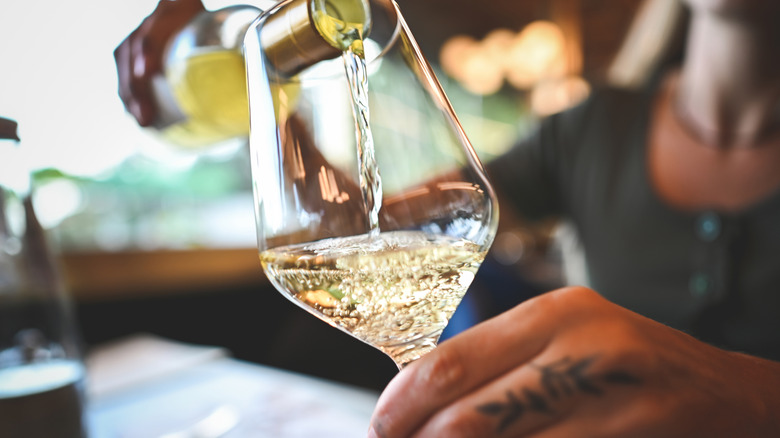
Sauvignon blanc is one of those wines that is particularly divisive (we're also looking at you, chardonnay). It's a ubiquitous, by-the-glass offering — usually from France, where the most sauvignon blanc is produced globally, or New Zealand, where the majority of vineyard space is devoted to the grape — and it has its share of both rabid fans and haters. If Sauvy B (as it's often called) hasn't won you over, it may be time to give another country's version a try and seek out sauvignon blanc from Italy.
There is a difference between sauvignon blanc from France, New Zealand, and other regions. While French sauvignon blanc is crisp and mineral, with a light body and high acidity that's paired with notes of honeydew or grapefruit, New Zealand's sauvignon blanc is more expressive. The island nation exports wines that lean greener and more tropical, with notes of grass and green pepper alongside passionfruit and kiwi. There's less minerality, so fruitiness are more pronounced. It's quite the range of flavors and drinking experiences, and it's no surprise that wine lovers tend to choose one over the other — or forgo sauvignon blanc entirely.
Sauvignon blanc from Italy is a different animal. If you head to the mountains of Northern Italy, you'll find the regions of Trentino-Alto Adige and Friuli-Venezia Giulia. The sauvignon blanc grown and produced here has a beautiful balance that's widely appealing. These wines are aromatic and fruity (think: white peach and lemon, plus herbal notes), but also have an acidity that comes from the cool temperatures and mountainous, mineral-rich terroir. If you're not convinced by French or New Zealand sauvignon blanc, you may find the Italian interpretation is just what you're looking for.
What makes Italian sauvignon blanc so unique?
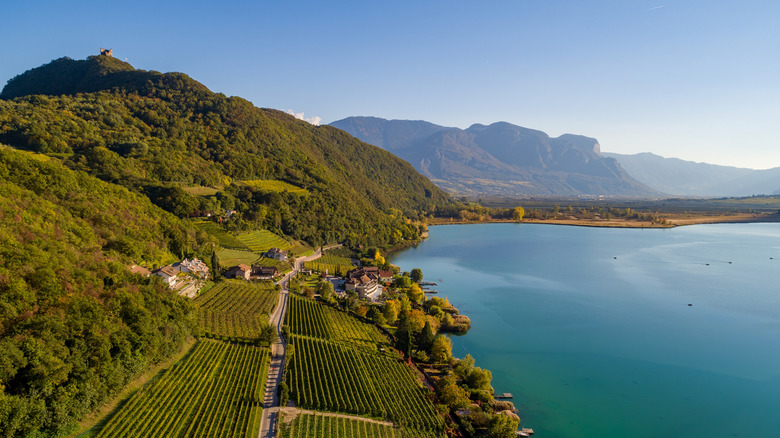
As with any wine, the difference between Italian sauvignon blanc and other versions comes down to terroir and production methods. Even within Italy, wines will vary greatly depending on the geographical region, so it's worth trying a few to find your niche.
Wines from Trentino-Alto Adige and Friuli are all heavily influenced by geography and climate. Trentino and Alto-Adige (two provinces that make up one region) flank the Dolomites to the south and north, respectively, meanwhile Friuli is to the southeast, bordering Slovenia and the Adriatic Sea. All three areas have a cooler climate, whether from elevation or from proximity to the coast. In Trentino and Alto Adige, the growing season sees warm days and cool nights that allow the grapes to ripen at a slower pace. However, both soil and altitude vary from plot to plot, allowing for massive diversity within a single wine-making region. Wines from lower altitudes are softer and more fragrant, while those grown higher up are more bracing. In Friuli, the combination of foothills and coastal plains provide a variety of terroirs to impact the growing and production of sauvignon blanc. Some wines are mineral as the region stretches north, while others are crisp and saline, thanks to the sea breeze — that same breeziness is also key in producing a wind-dried Italian ham that's absolutely worth seeking out.
It's the combination of rocky soils and sunshine that make sauvignon blanc from this part of Italy particularly appealing, and set them apart from the grape's birthplace in the Loire Valley and its adopted home of New Zealand. It may not look like Tuscany's rolling hills covered with a corduroy of vines, but the mountains of Northeastern Italy are producing sauvignon blanc (and many other wines) that deserve a moment in your glass.