

The Ideal Oven Temperature For Tender Baked Brisket
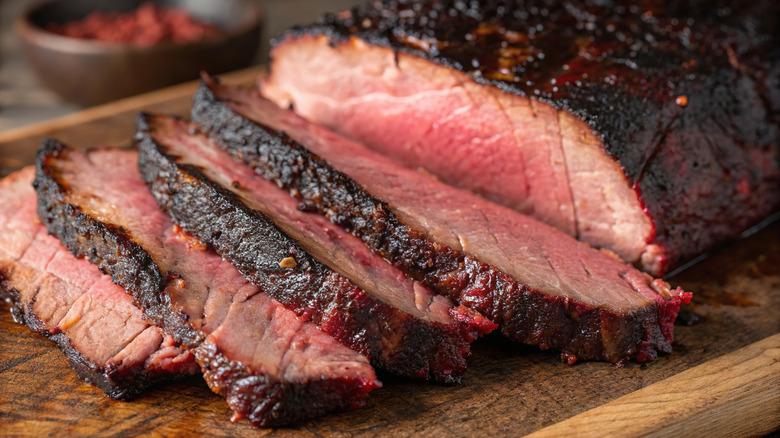
Brisket may come from a tough hunk of meat, but if you cook it right, it practically melts in your mouth. For barbecue lovers, we have smoked brisket recipes and a slow cooker brisket for a lower-maintenance recipe, but both methods are low and slow. Unsurprisingly, that same strategy also applies to achieving tender baked brisket. We spoke with Chris DeLisle, the carnivore-cuisine advocate behind Chris Cooking Nashville whose new cookbook debuts in October 2026, who recommends baking brisket at 250 degrees Fahrenheit.
"It's the sweet spot where the connective tissue has plenty of time to slowly break down into gelatin without the outside drying out before the center becomes tender," DeLisle reveals. "This controlled breakdown of collagen is the key to great texture and flavor." A quick sear may work on ultra fatty, tender steak cuts, but brisket needs time and patience. The connective tissues and collagen cause brisket to be a tough leathery consistency if they don't break down properly.
However, a low and slow cook, says DeLisle, "slowly [transforms them] into rich gelatin, which is soft and juicy, over time. That's what gives properly cooked brisket its signature tenderness and juicy mouthfeel." There are no shortcuts to take with brisket, but the juicy, fall-apart result of low and slow oven baking is well worth the wait. At 250 degrees, brisket takes between an hour and an hour 15 minutes per pound to cook. A five-pound brisket will take between 5 and 6 hours.
Mistakes to avoid with baked brisket
A low and slow bake will result in tender, juicy, and flavorful brisket, but DeLisle has even more tips to ensure the tastiest results. "One mistake people make is cooking to time or even temperature instead of tenderness," he adds. Not all briskets are built alike. Some cuts contain more connective tissues and collagen than others. So, DeLisle recommends gauging doneness and tenderness less on temperature and more on feel.
"Rather than watching the clock or insisting on an exact internal temperature, cook until a probe slides into the thickest part of the meat with almost no resistance, similar to inserting it into softened butter," says DeLisle. "It's irrelevant if that's a longer or shorter time than you expected, or whether it hits 198 degrees or 207 degrees when that happens. What matters most is the brisket telling you it's tender, juicy, and ready." Covering the brisket while it cooks will keep those juices from evaporating.
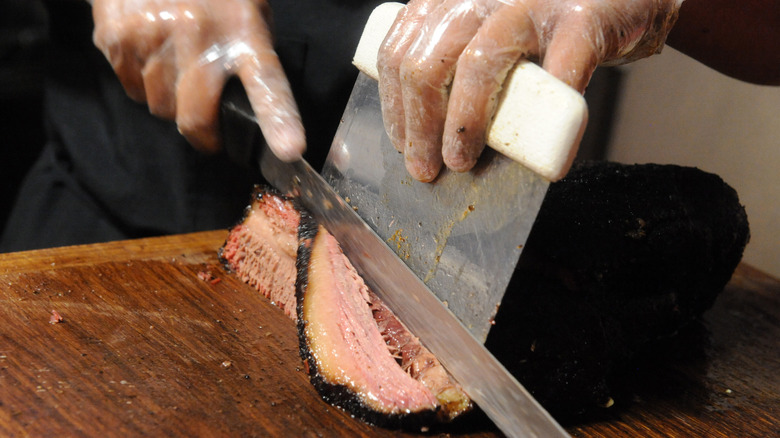
Another post-bake tip from DeLisle is to rest the beef brisket for an hour. "Resting allows the juices to redistribute throughout the meat instead of ending up on the cutting board," he notes, "and it helps relax the muscle fibers further before slicing and eating." To keep it moist and flavorful, the absolute best way to cut brisket is to slice against the grain. This will ensure the juiciest results.