

Extra Dry Vs Brut Champagne: What's The Difference?
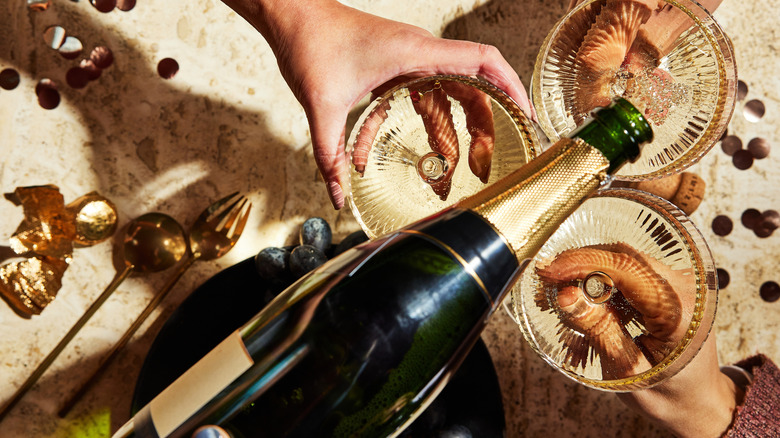
There are many different types of Champagnes, not to mention other types of bubbles like Prosecco, Cava, or other sparkling wines. A true Champagne must come from the Champagne region of France, and must be made in a traditional and regulated manner. Even if you do speak a bit of French, navigating the labels of various Champagne bottles in a store can be daunting, with so many terms you might be unfamiliar with. Among those bottles, you'll probably see Brut and Extra Dry.
"Brut" translates to "raw," "unrefined," or "dry" in French, so you're likely to come to the logical conclusion that Brut Champagne is dry. Meanwhile, you would naturally assume that Extra Dry is, exactly as it sounds, even drier than Brut. But in an unfortunate and confusing twist of words, Champagne falling into the Extra Dry category is actually sweeter than Brut Champagne. Levels of sweetness in Champagnes are classified based on the dosage, a blend of sugar and wine that's added to the bottles before they are sealed with a cork.
Brut Champagne is extremely commonly produced these days, and it's the most popular category of Champagne in the world. It's not the driest of all Champagnes, but rather a dry Champagne with just a touch of sweetness due to its added sugar content, which must fall between 0 and 12 grams of sugar per liter of wine. Champagne falls into the category of Extra Dry when the dosage reaches between 12 and 17 grams per liter.
Don't rely on your translator app for the naming conventions

Brut Champagnes are well-balanced with crisp flavors of green apple, pear, and citrus, which are rounded out with subtle almond notes over time. Compared to Brut, Extra Dry has more honeyed and fruity notes like apricot, as well as a bit of floral aromas. Extra Dry Champagnes have a richer finish on the palate from the higher dosage, while Brut tends to be a bit lighter.
Brut Champagne has an even drier sibling known as Extra Brut, but be sure not to conflate it with Extra Dry Champagne when you're browsing labels at the store. The former allows for even less sugar per liter of wine, falling between 0 and 6 grams. If you're seeking the most bone-dry Champagne possible, look for Brut Nature or Brut Zero, which has no added sugars whatsoever.
Nevertheless, Extra Dry is not an overly sweet sparkling wine and is well balanced. Sec Champagne is the next level of sweetness above Extra Dry, and has a definite and noticeable sweetness to it. In another confusing translation, "sec" means "dry" in French, despite being the name of a sweeter Champagne. From there, Demi-Sec is even sweeter, while Doux is the sweetest and most sugary of all Champagne categories.