

Ditch Bagged Popcorn: A Smarter Way To Make Microwave Popcorn That's Eco-Friendly
We may receive a commission on purchases made from links.
Want to enjoy the benefits (and the fresh taste) of microwave popcorn without dealing with the waste caused by oily paper bags? There's a way to make popcorn in your microwave without having to buy box after box of prepared corn. Silicone popcorn poppers are collapsible, easy to wash, and don't need oil or butter to start the process. That means you'll avoid the oils many manufacturers use to get each bag of corn to pop. They also definitely won't waste as many paper products as one-and-done microwave poppers do, since they're multi-use vessels.
The device is simple enough to use; after being uncollapsed, the bowl is filled with popcorn intended for an air popper. A plastic or glass lid is then placed on top, and the popcorn is cooked for the amount of time recommended by each popper's instructions. The device uses hot air to pop the corn into shape. Then you can pull it from the microwave, elevate the popcorn by seasoning it to taste, and serve. For the best possible results, be sure to use the recommended setting on your microwave's power controls to avoid either burning kernels or ending up with a lot of unpopped ones. Since popcorn is made with its own special kind of corn, don't treat it like you would any regular corn on the cob. As with all microwave popcorn, keeping an eye on it — and keeping your nose open for that distinctive burnt popcorn smell — is the key to victory.
Silicone popcorn popers are fairly inexpensive to buy
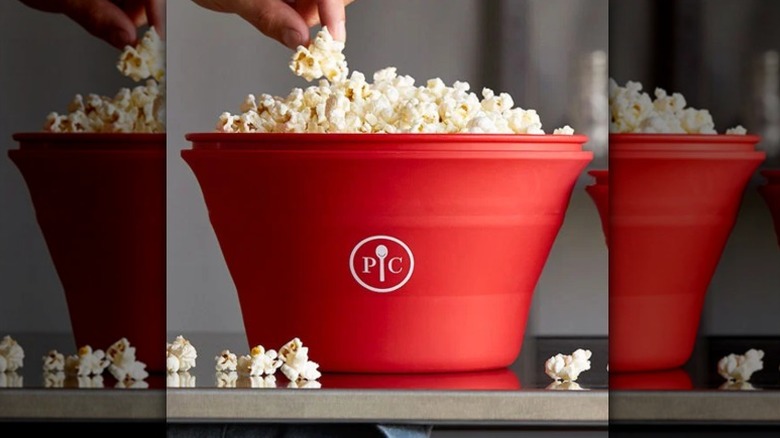
For those keeping an eye on their wallets, most silicone popcorn cookers only cost $7.99 to $8.99 on Amazon, which means they won't hurt consumers' wallets. You can even use it as a serving bowl. Most models are also dishwasher safe, so cleaning them is a breeze. When they're dry, they can be stored and then reused over and over again.
Amazon reviews suggest that using silicone popcorn poppers can be a breeze, but if you go for an inexpensive model, you risk burnt popcorn, ill-fitting lids, and a popper with weak side walls that could collapse before the corn is ready. The ultimate key to making the best popcorn seems to involve how closely each model's top fits and locks into the bottom vessel. If the top to your popper doesn't fit well, it's best to return it and grab another at the store — otherwise, you might be setting yourself up for a disappointing night and a kitchen that smells like charcoaled kernels.