

An Expert Says This Is The Most Overrated Way To Cook Steak
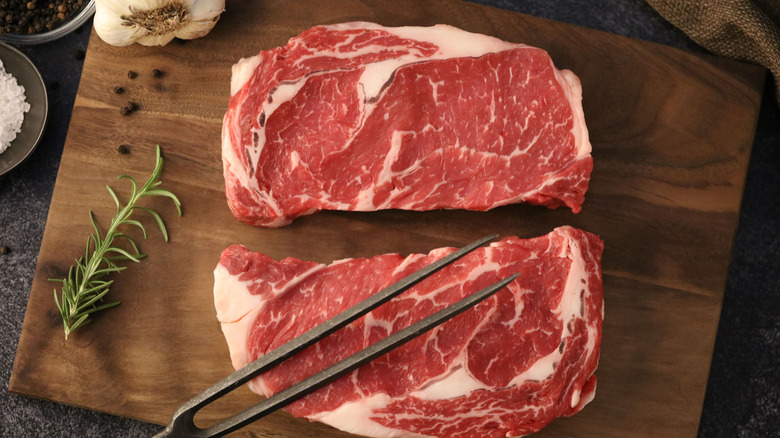
It can often seem that loving a good steak means having strong opinions about how it should be prepared. Pan-fried or grilled? With rub, marinade, or plain? Started with sous-vide, or finished in the oven? If you've ever weighed in on these debates, you probably have at least one steak-cooking method you think is not worth the hype. For one expert, that's the popular reverse sear.
Chris DeLisle, the carnivore-cuisine advocate behind Chris Cooking Nashville and author of the upcoming cookbook "Eat Your Meat, Love Your Life," spoke exclusively to Tasting Table about why he considers reverse searing steak overrated. For those unfamiliar, reverse searing involves slowly cooking your steak at a low temperature before finishing it in a hot pan to develop a crust. Fans praise the method for delivering a more consistent level of doneness. DeLisle emphasizes that reverse searing does work and has some delicious benefits, but he believes it is too often presented as the only "correct" way to cook a steak.
"While it's a valuable technique at times, for many home cooks it adds extra time and complexity without producing results that are dramatically better than a well-executed traditional sear," DeLisle argues. "While it can be useful in some circumstances, it's not necessarily perfect for everything. Your technique often matters far more than the specific method you choose."
Skip the reverse sear and try this skillet-to-oven technique
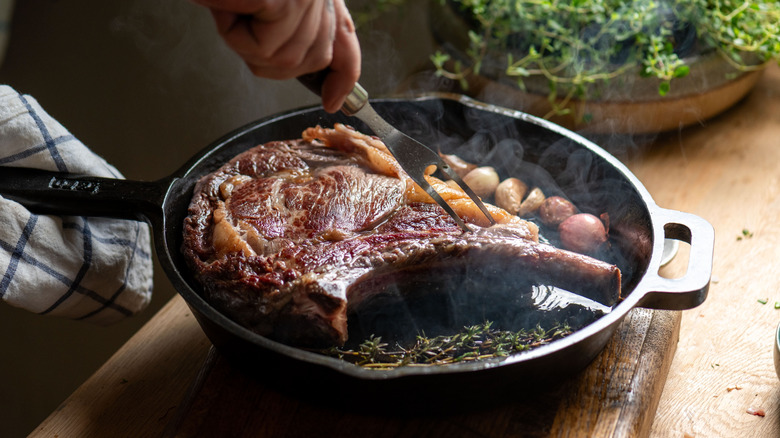
Instead of the reverse sear, Chris DeLisle's preferred method of preparation begins by dry-brining the steak with salt, and leaving it uncovered on a rack in the refrigerator overnight. This dries out the meat's surface to help it achieve an enviable crispiness (an approach similar to that of Alton Brown, whose method for drying steak in the fridge uses a simple household gadget). "It takes 2 minutes to do," says DeLisle, "and gives superior flavor, tenderness, and juiciness."
After the dry-brine, DeLisle explains: "I like to sear it in ripping hot cast-iron skillet to build an incredible crust, and then finish it in the skillet or even the oven if it needs additional cooking. It's simple, repeatable, and produces excellent results without unnecessary steps." DeLisle adds that this method creates "incredible flavor" thanks to the Maillard reaction, while finishing the steak at a lower heat gives you more control over its final internal temperature.