

Tuna Salad Vs Niçoise Salad: What's The Actual Difference?
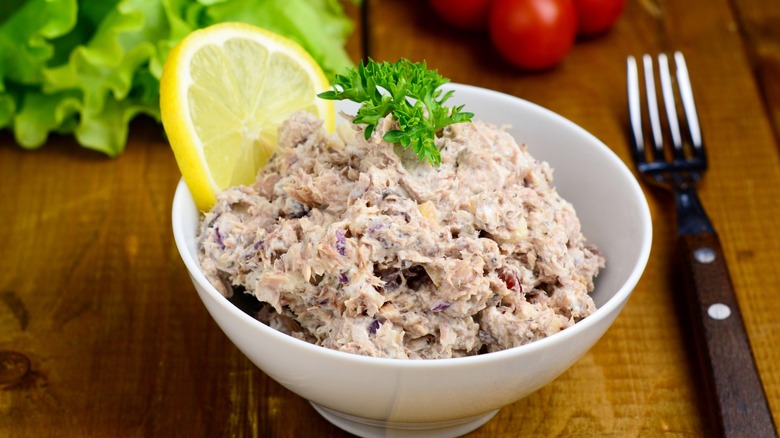
Americans are generally more familiar with tuna salad than Niçoise salad, which makes sense, since tuna salad's origins are here in the United States while Niçoise salad is oh-so-very French. So what are the actual differences (and similarities) between the two? While canned tuna salad is creamy and can sometimes be served on a bed of lettuce, it can also be served in a cold sandwich or hot and open-faced as a tuna melt.
Tuna salad, often associated with bagged lunches and picnic fodder these days, had its origins in the 19th century as a form of food conservation. Born of reworked leftovers, protein from the previous night's dinner (fish, chicken, meats, etc.) was combined with mayonnaise to add moisture and flavor and then served on lettuce as a practical lunch the next day. This sometimes included leftover bits from the relish tray, like celery and pickles, providing a crunchy element in contrast to the creamy mayo. While this recipe hadn't evolved to include tuna fish yet (more likely white fish, trout, or salmon, which were common at the time), its future was on the horizon, and eventually the convenience of canned tuna was introduced.
Later, as women joined the workforce, tuna salad graduated from lettuce to sandwich-hood for eat-on-the-go. Its basic incarnation still consists of canned tuna, mayonnaise, and a crunchy element like celery, red or green onion, green pepper, or sweet pickle. Today, this versatile salad can be kept simple or you can spruce up tuna salad with a few simple additions, like carrot, cucumber, egg, Dijon mustard, and a little sriracha to take it to a whole new level. Enjoy it on its own, on crackers, salad greens, or in romaine boats.
Niçoise salad
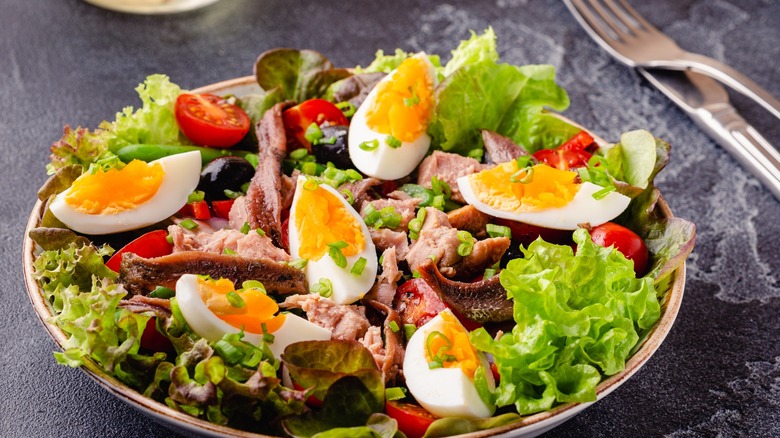
Tuna Niçoise salad, on the other hand, is quite literally a salad featuring chunks of high-quality tuna, vegetables, and a light dressing. Order Niçoise salad from a restaurant expecting something similar to tuna salad and you might be disappointed (or maybe have your mind blown). The most glaring of differences — a Niçoise salad doesn't include mayo.
Originating from Nice on the French Riviera, this classic French salad has several things in common with American tuna salad, including humble beginnings in the 19th century. Like tuna salad in its earliest and simplest incarnation, Niçoise did not include tuna, but instead used anchovies with just tomato and olive oil — no salad greens. Over time, this light but filling salad grew, eventually including enough components to constitute a full meal. Notable additions (some not without controversy) include high-quality canned or jarred tuna (not fresh), greens such as arugula, mesclun, or butter lettuce, boiled potatoes, blanched green beans, boiled eggs, Niçoise olives, and fresh herbs.
Although some versions dress all of these elements together, Salade Niçoise is considered a "composed" salad (plated ingredients are kept separate, allowing the eater to mix and match flavor combinations in each bite). Sometimes each individual element is tossed in the dressing, which is kept simple — usually the flavorful oil the tuna came packed in, any additional olive oil needed, salt, a dash of vinegar, a sprinkling of pepper, and maybe a bit of Dijon. Whereas the tuna flavor in American tuna salad can be obscured by mayo, it's the star of the show in a Niçoise salad, making a splurge for jarred or gourmet tinned tuna well worth it. While tuna salad feels casual and kid-friendly, a colorful Niçoise salad's vibes are decidedly elevated, Instagram-worthy, and grown-up.