

Salmon Vs Tuna: Which Fish Has More Protein?
We may receive a commission on purchases made from links.
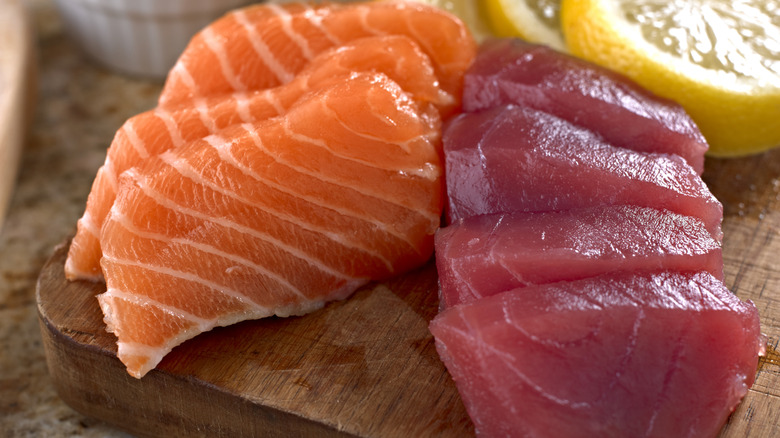
Salmon and tuna are the undisputed heavyweights of the seafood aisle. They're both among the most protein-dense options, but if you're chasing grams per bite, the numbers lean toward Team tuna. A crucial fact of comparing the two fish is that there isn't just one species of tuna or salmon, and depending on the type, their protein readings will differ slightly.
If you look at raw yellowfin tuna, its protein content is 6.9 grams for a 1-ounce, boneless serving. Meanwhile, raw bluefin tuna is a touch lower at 6.6 grams of protein per ounce. Salmon isn't far behind — but it's still behind. Wild coho salmon contains 6.1 grams of protein per ounce. An ounce of farmed Atlantic salmon contains 5.8 grams of protein.
No matter how you slice it, tuna's protein content is going to edge past salmon on an ounce-for-ounce basis. The differences aren't huge, nor is there a significant variance in the protein levels of wild-caught salmon or tuna compared to farm-raised. Unless you're calculating your intake down to the fraction, salmon is just about as good a protein source as tuna.
Cooking or canning won't have much effect on the fish's protein content
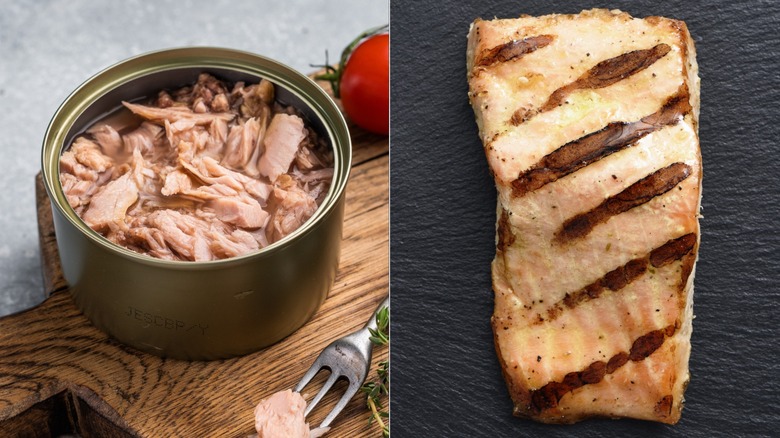
If you're worried that tossing your salmon on the grill or grabbing a can of tuna off the shelf is shortchanging you on protein, the good news is: neither cooking nor canning significantly impacts the amount of protein per serving. Heat and canning change the texture and flavor, but the amino acids doing the heavy lifting in your diet are mostly preserved.
Canned tuna and salmon undergo a thorough cooking process prior to packing. While this causes much of the fish's moisture to be lost, the remaining nutrients within become more concentrated. A pouch of light tuna or tin of salmon still delivers protein numbers close to what you'd get from a fresh fillet, minus the cost and the cook time. A can of oil-packed white tuna has 7.5 grams of protein per ounce, whereas canned sockeye salmon is slightly lower at 6.7 grams per ounce.
The same logic holds for grilling, baking, or pan-searing fish. Cooking causes proteins to denature, meaning that their shape changes in the heat. It sounds a little scary, but in these new forms, proteins actually become easier to digest. Once you understand that the total amount of protein in both fish essentially stays the same when cooked, you're free to consider how other factors, such as portion size and the ingredients you pair them with, impact the nutritional value of a salmon- or tuna-based meal.
Getting the most protein out of your fish of choice
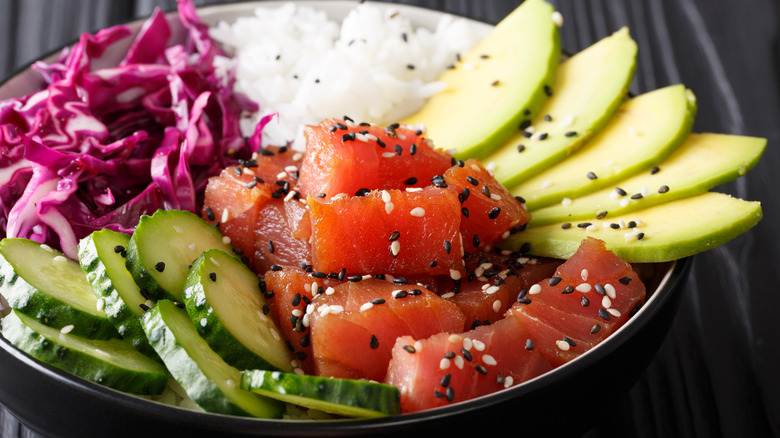
Found the fish that you like? Now comes the fun part: figuring out what to do with it. Tuna and salmon are both workhorses (or rather, work fishes) in the kitchen, and there's no shortage of interesting recipes that let their protein shine. Fans of sushi and sashimi can put together an Ahi tuna poke bowl with rice and fresh produce for lunch. A can of tuna or salmon mixed with light dressing tastes great folded into a green salad or piled on whole-grain bread for a simple yet refined tuna sandwich.
For dinner, consider something warm and wholesome, like combining canned salmon with breadcrumbs, egg, and seasoning, to make pan-fried salmon croquettes. Serve a stack alongside vegetables or as an appetizer to a grilled tuna steak or seared salmon fillet, and you'll have an easy, protein-packed evening meal that leans almost entirely on one of your favorite fish. If you want to bring some carbs into the mix, flake salmon or tuna on top of pasta, then toss everything together with olive oil, garlic, and greens. However you choose to prepare it, rest assured that either fish can help you hit your desired protein numbers without overthinking in the kitchen.