

9 Of The Unhealthiest Canned Soups You Can Buy At The Store
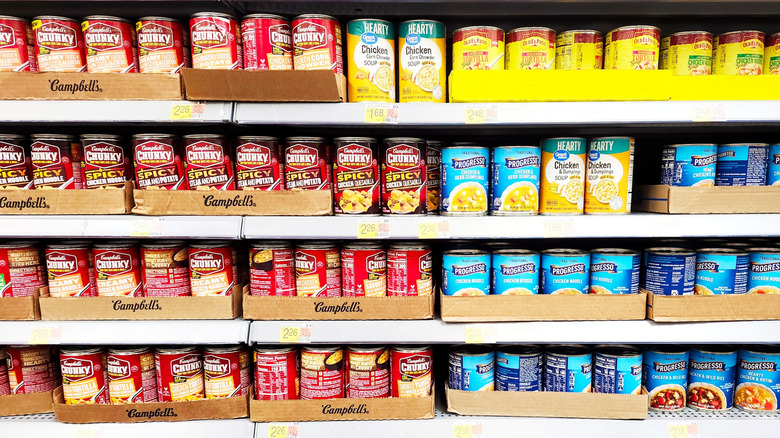
Nothing warms the body and satisfies the soul more than soup. Ask your friends and family to name their favorite soup, and you'll likely get a swarm of passionate answers. Food manufacturers appreciate our love for soup and realize most of us don't have the time or desire to make it from scratch, at least not regularly. That's why retailers shelve lengthy aisles with ready-to-heat potage. Whatever you fancy in the soup realm — smooth, chunky, vegetables, meat — there's a soup with your name on it.
I understand that prepared soups are a mainstay for many people. Whether it's a convenient lunch or easy weeknight dinner, ready-to-eat soup is often a regular part of the rotation. For that reason, I've decided to point out some less-than-optimal choices.
I've been a nutritionist for over 25 years, and I've seen dietary advice change as often as the wind on a sailboat. That said, a few things haven't budged, including monitoring overall intake of calories, fat, and sodium. The soups I've listed below are mostly fine calorically, but some are high in fat, and all are too high in salt. Note that I'm not picking on specific brands here; I'm simply pointing out examples. With luck, you will take this information to the store and use it as a guide. I firmly believe that no food should be off limits. Use the stats below to make informed choices and enjoy soups that are higher in fat and salt in moderation.
Cream of anything
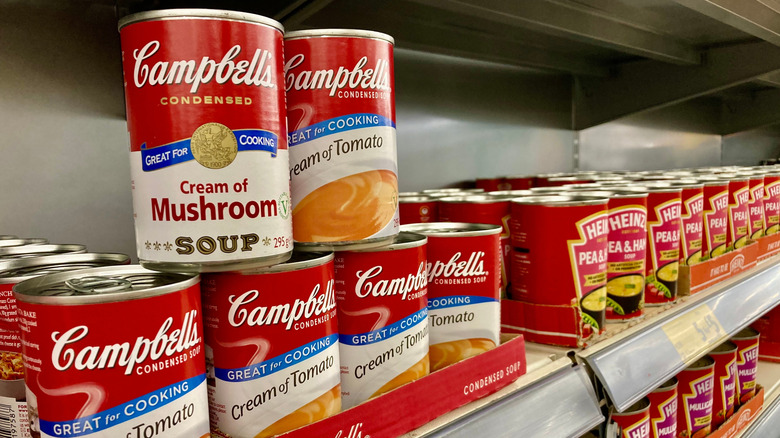
This might surprise you, but I chose cream-based soups not because they're high in fat, but because most are outrageously high in sodium. For example, Walmart's Great Value cream of chicken soup contains 840 milligrams of sodium in one ½-cup serving. Even when the condensed soup is diluted with ½ cup water, it's still a tremendous amount of sodium per 1-cup serving.
The American Heart Association recommends adults consume no more than 2,300 milligrams of sodium per day, with the preferred max capping at 1,500 milligrams. Slurp ½ cup of Great Value cream of chicken soup and you'll consume more than half the optimal daily limit in one fell swoop. I'm also not wild about the fat content here, as this soup delivers 9 grams of fat per ½ cup serving. Let's be honest, most people will consume the entire 10.5-ounce can (2.5 servings) and down 22.5 grams of fat.
The same is true of Campbell's 10.5-ounce can of cream of chicken soup, which has 8 grams of fat and 870 milligrams of sodium per ½-cup (condensed) serving. Rather than swigging from a spoon, find ways to use cream of chicken soup in recipes to catapult flavor, moisture, and texture. If you think you'll dodge fat and sodium by eating a creamy vegetable soup, think again. Panera's creamy tomato soup delivers 13 grams of fat and 500 milligrams of sodium per cup, and Rao's creamy tomato soup has 10 grams of fat and 820 milligrams of sodium per 1-cup serving.
Cheese, including broccoli cheese
Not surprisingly, soup made with cheese isn't the finest option. Again, it's not entirely about fat; certain cheeses are notoriously high in sodium, so, in turn, cheese soup is as well. For example, cheddar cheese is inherently high in salt, and it's used in every soup listed below.
Old El Paso chicken cheese enchilada style soup may have just 160 calories per 1-cup serving, but each cup also packs 10 grams of fat and 670 milligrams of sodium. The brand's cheesy beef taco-style soup contains just 180 calories per 1-cup serving, but that cup also has 9 grams of fat and 770 milligrams of sodium.
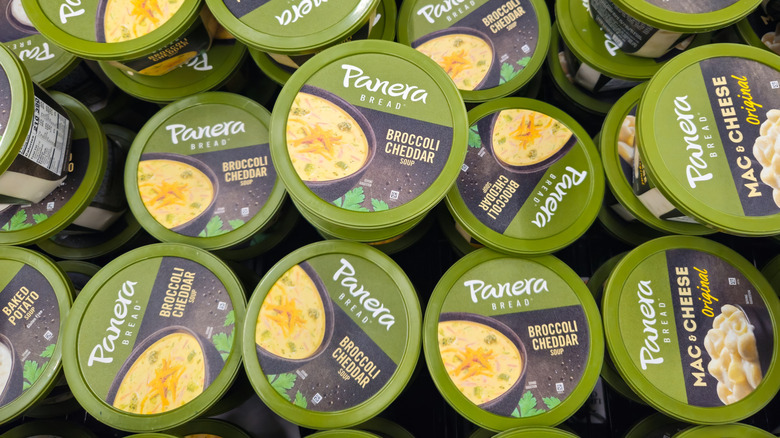
Choose one cup of Panera's broccoli cheddar soup and you'll down 14 grams of fat and 990 milligrams of sodium (that's almost an entire day's worth of salt in one cup). Progresso fans should note that the brand's traditional broccoli and cheese soup may contain just 160 calories, but it also packs 11 grams of fat and 790 milligrams of sodium per 1-cup serving.
I'm thrilled with Campbell's cheddar cheese soup at just 80 calories and 4 grams of fat per ½-cup serving, but that comes with a hefty 820 milligrams of sodium. I suggest you use any of these cheese soups in recipes calling for a cheese sauce, or stretch the serving size by adding cooked chicken, vegetables, rice, beans, pasta, or your favorite whole grain.
Chicken and sausage gumbo
Gumbo is one of the few soup varieties on this list that's devoid of cream. That might be ideal for keeping fat in check, but it doesn't help sodium content. To be fair, many canned products are higher in sodium because salt adds flavor and aids texture, but some varieties are extraordinarily high.
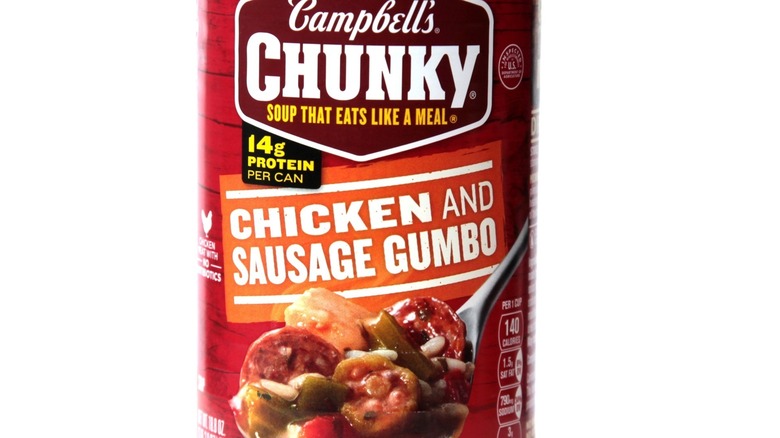
Cajun gumbo is a thick, roux-based stew that features meat, vegetables, rice, and Louisiana-style spices. Ready-to-heat, canned gumbo often contains those same ingredients, plus a heavy dose of salt. For example, Campbell's chicken and sausage gumbo contains 140 calories, 3.5 grams of fat, and 790 milligrams of sodium per 1-cup serving. The calories and fat are fine (even if you eat two servings), but the sodium is excessive. If you consume the entire 18.8-ounce can (which most people are apt to do), sodium shoots to 1,720 milligrams, or more than a day's worth. I like that Campbell's chicken and sausage gumbo is made with chicken meat raised without antibiotics, andouille sausage, okra, and authentic spices, but it's odd that it contains egg noodles instead of rice.
Progresso chicken and sausage gumbo is a tad better nutritionally, clocking in at 110 calories, 2.5 grams of fat, and 680 milligrams of sodium per 1-cup serving. But let's be real — most folks will pour the entire 19-ounce can into a bowl and lick it clean. I suggest you add more white or brown rice to stretch this soup (so it serves more people).
Clam chowder
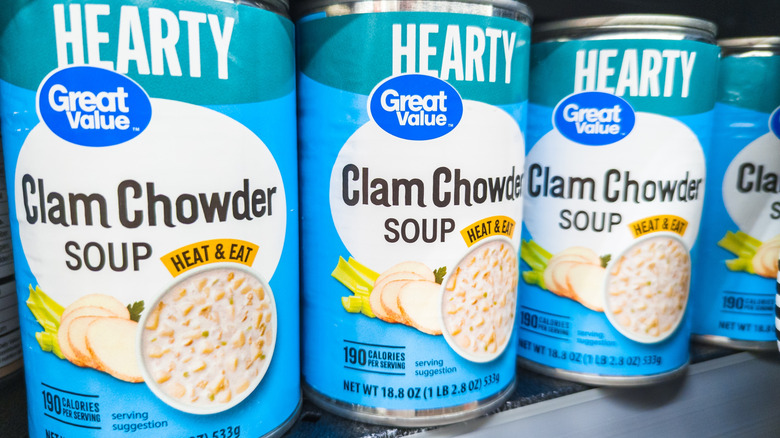
I'm referring to New England-style clam chowder here — a seasoned medley of clams, potatoes, and cream. The clams and potatoes aren't the problem; it's the salty cream base that pushes numbers into the stratosphere. For example, Snow's New England clam chowdercontains 15 grams of fat and 870 milligrams of sodium per 1-cup serving. Consume the 15-ounce can (a plausible scenario) and you'll easily exceed your daily salt recommendation.
Panera's New England clam chowder has 16 grams of fat and 740 milligrams of sodium per 1-cup serving. I appreciate the simple ingredient list of light cream, clam broth, clam meat, and potatoes, but downing half a day's salt allowance in one cup of soup isn't ideal. The same can be said for two other brands. Walmart's Great Value clam chowder has just 190 calories per serving, but that comes with 10 grams of fat and 780 milligrams of sodium. Progresso's New England clam chowder delivers 170 calories, 7 grams of fat, and 760 milligrams of sodium per serving. The good news is, Progresso offers a light version with 100 calories, 3 grams of fat, and 640 milligrams of sodium per serving.
I suggest clam chowder fans choose Manhattan-style, which is typically lighter in calories and fat. Campbell's Manhattan clam chowder has just 110 calories and 3 grams of fat per 1-cup serving. The sodium is still high at 790 milligrams per serving, so if you consume this soup, moderate your salt intake the rest of the day.
Chicken and dumplings
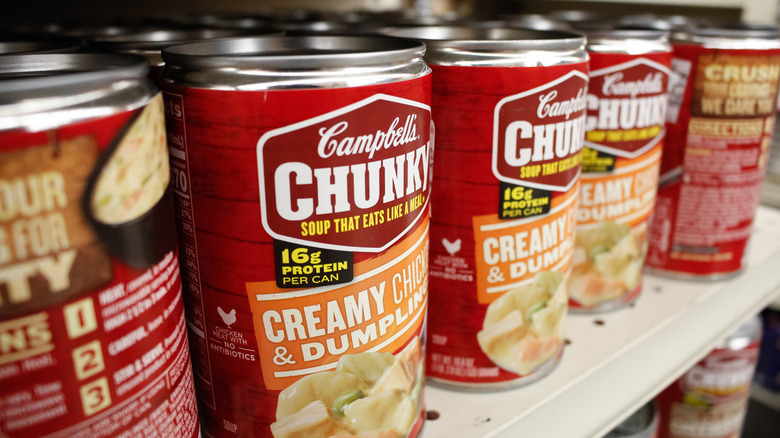
A rich bowl of chicken, potatoes, cheese, and soft dough balls might be heavenly, but it comes at a nutritional cost. Take Walmart's Great Value chicken and dumplings for example. Each 1-cup serving contains 210 calories, 9 grams of fat, and 820 milligrams of sodium. As mentioned, consuming more than half your daily sodium recommendation in one cup of food isn't ideal. Campbell's creamy chicken and dumplings has slightly fewer calories (170 per 1-cup serving), but more fat and salt — 10 grams of fat and 890 milligrams of sodium per serving.
If you simply must have chicken and dumplings from a can, opt for Progresso's chicken and herb dumplings; each 1-cup serving has 70 calories, 0.5 gram of fat, and 640 milligrams of sodium. I'm not sure how calorie and fat numbers can be so low since the soup contains chicken, vegetables, and spaetzle dumplings, but that's what the label promises. If it weren't for the higher-than-desirable sodium content, I might suggest enjoying the entire 18.8-ounce can if that's your desire.
Healthy Choice chicken and dumpling soup is also a fine option, as each 1-cup serving contains 150 calories, 3 grams of fat, and 480 milligrams of sodium. Don't believe the canned food myth about sodium; not all canned products are brimming with salt. Spend a little extra time navigating the soup aisle, and you'll easily find soups that are lower in sodium, including those that are labeled reduced- and low-sodium.
Lobster bisque
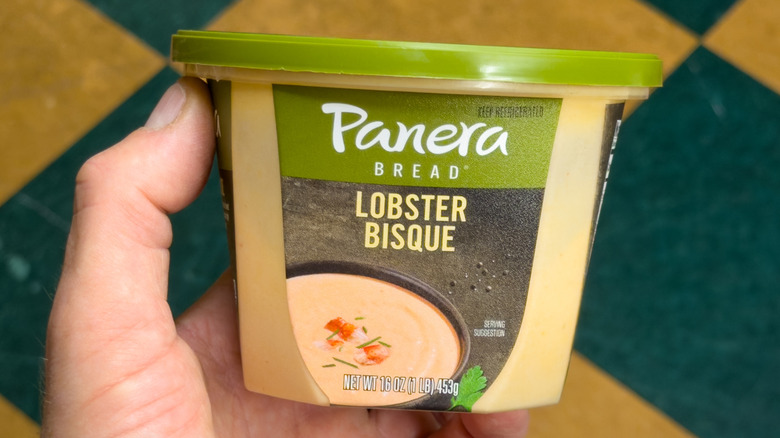
Since lobster is often considered a premium ingredient, I sense rich and creamy lobster bisque is a special occasion soup, not one most folks consume on the regular. Nevertheless, I'm mentioning it anyway, mostly because the nutrition numbers for the canned version are staggering.
One cup of Panera's lobster bisque contains 270 calories, 19 grams of fat, and 920 milligrams of sodium. The ingredient list includes cream, sherry wine, lobster meat, and butter, so those nutrition stats shouldn't be unexpected. They're simply just too high. If you choose Panera's lobster bisque on occasion, that's fine. And if you consume the entire 2-cup container (with 38 grams of fat and 1,840 milligrams of sodium), be judicious about your fat and salt intake the rest of the day (and perhaps the following day, too).
For those who like to buy soup when purchasing a new saucepan at Williams Sonoma, note that the gourmet retailer's lobster bisque contains 240 calories, 14 grams of fat, and 810 milligrams of sodium per 1-cup serving. With ingredients like lobster stock, white wine, and brandy, this is one first-rate soup. It's also a soup that should be enjoyed from time to time, not frequently.
Beef stew
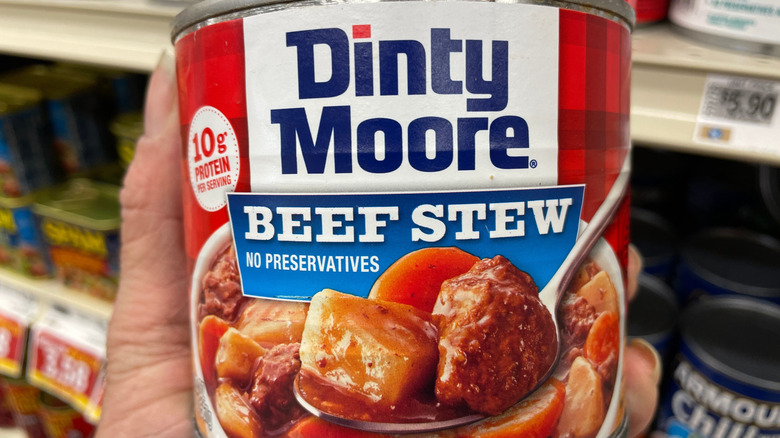
First, let's discuss soup versus stew. Stew is a thicker, chunkier version of soup, so I felt it was important to include it here. Beef stew is a marriage of beef, potatoes, and carrots — which sounds simple enough — but when you consider nutrition, it's clear salt is also a main ingredient.
Dinty Moore beef stew contains 10 grams of fat and 990 milligrams of sodium per serving (serving size is 236 grams, or about 8.3 ounces). One cup of beef stew doesn't sound very satisfying, but indulge in more, and you'll reach your sodium max for the day. Thankfully, Dinty Moore makes a version of beef stew with 25 percent less sodium. Each 1-cup serving contains 10 grams of fat and 740 milligrams of sodium. Sodium is still high (half a day's worth), but it's better than the brand's original beef stew.
Armour beef stew is downright troubling, delivering 13 grams of fat and 1,030 milligrams of sodium per 1-cup serving. In my opinion, a stew with 1,030 milligrams of sodium should serve three people. Or perhaps the brand can create a lower-sodium version like its competitor did. If beef stew is your favorite, try Progresso's beef pot roast with country vegetables. This product boasts everything you crave (beef, potatoes, vegetables, and a rich, savory broth) and has just 110 calories, 1.5 grams of fat, and 660 milligrams of sodium per 1-cup serving.
Chicken pot pie
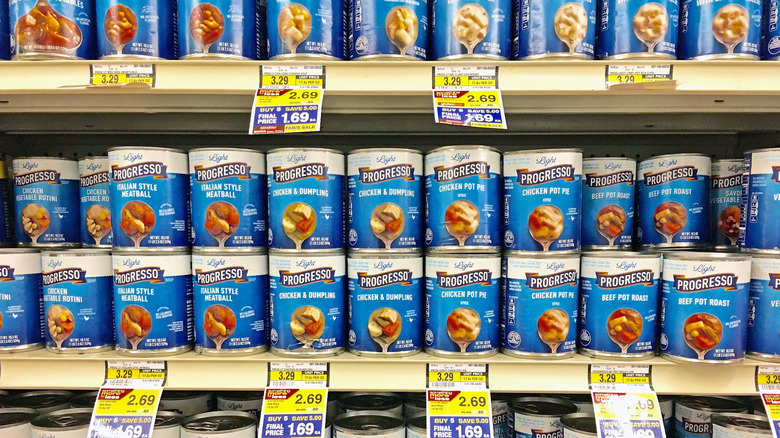
Chicken pot pie in soup form is one of life's greatest pleasures. That is, until you tally the nutrition. I'll be honest, it's not the calories or fat grams that concern me; it's the (yet again) sodium content. For example, Progresso chicken pot pie with dumplings contains just 120 calories and 3.5 grams of fat per 1-cup serving. That's admirable considering the soup contains chicken, vegetables, spaetzle dumplings, and a thick, hearty broth. The problem is that same cup of soup has a whopping 860 milligrams of sodium.
Choose Zoup! chicken pot pie soup and you'll down 9 grams of fat and 740 milligrams of sodium per 1-cup serving. I appreciate that the soup is made with nutrient-dense bone broth, but that's just too much fat and sodium for one cup. Like Zoup!, Campbell's pub-style chicken pot pie soup also contains 9 grams of fat per 1-cup serving, but sodium is a tad higher at 790 milligrams.
Marie Callender's also makes a chicken pot pie-style soup, and each serving dishes up 7 grams of fat and an unforgiving 990 milligrams of sodium. If you must have chicken pot pie soup, choose Progresso's light version with just 90 calories, 2 grams of fat, and 620 milligrams of sodium per cup.
Potato
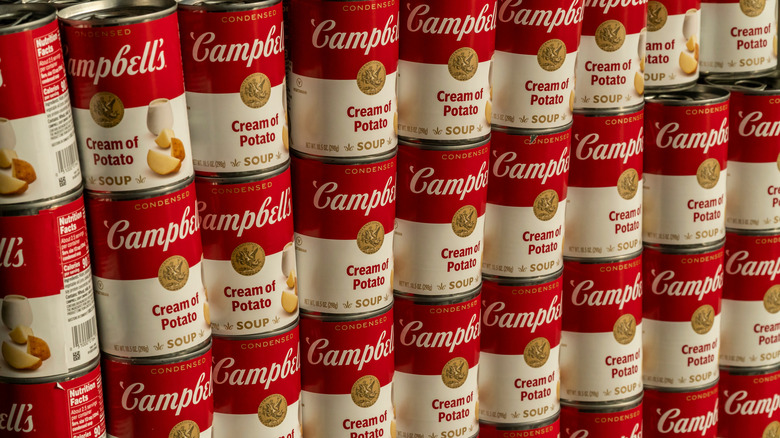
There's something about the commingling of potatoes, cheese, and bacon that just works. That's why loaded potatoes are a popular menu item, and why creamy potato soup exists. The problem is, it's one of the more unhealthy choices in the soup aisle. My issue with loaded potato soup isn't just the sodium (like most of the other soups on this list), but it's also the fat content. When you combine cheese and bacon in a bowl, what else should we expect?
Take Campbell's baked potato soup with bacon — one cup contains 17 grams of fat and 790 milligrams of sodium. The Dietary Guidelines for Americans recommends that we consume no more than 20 to 35 percent of our total calories from fat. On a standard 2,000-calorie diet, that's 44 to 78 grams of fat per day. One cup of this soup contains almost half the daily max of 44 grams and one-quarter of the 78-gram limit.
Campbell's isn't alone. Panera's baked potato soup contains 11 grams of fat and 750 milligrams of sodium per 1-cup serving, and Walmart's Great Value loaded potato soup delivers 9 grams of fat and 820 milligrams of sodium per serving. I wasn't able to find a lower-sodium version of loaded potato soup to recommend, so I suggest you use loaded potato soup as an ingredient in a bigger meal (that serves more people) or, better yet, eat a baked potato.