

The Best Way To Wash Blackberries Probably Isn't Your Go-To Method
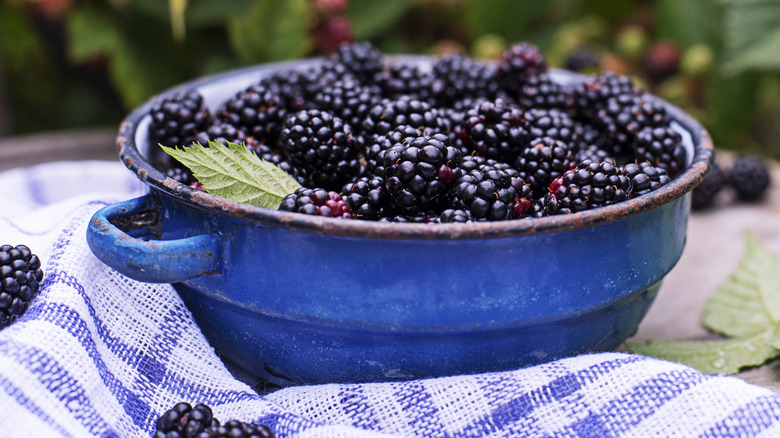
Blackberry season lasts from late spring through early fall, and berry-loving epicures are thankful for the long window. But, getting the most out of your seasonal blackberry harvest has more to do with than just timing. A gentle (yet thorough) washing is needed to clean berries without turning them to mush. When it comes to blackberries, however, rinsing is a popular produce-washing method that may not work as well as you think. A quick rinse alone is not enough to ensure that contaminants like dirt, pesticide residue, and even hidden garden bugs are removed from all those crevices. Instead, blackberries require a proper soak.
To do this, place your berries in a colander or mesh sieve, then rinse them under a stream of cool running water. From there, whip up a solution of water plus one teaspoon of baking soda per two cups of water in a large, shallow bowl, and quickly soak those berries. It must be brief, as if they soak up too much water, those absorbent and thin-skinned blackberries are liable to turning mushy and transforming in taste. Swishing them around gently for roughly 30 to 60 seconds is enough. To make sure dirt and debris stay settled at the bottom of the bowl, lift the now-cleaned blackberries upward using a slotted spoon. To finish, spread your blackberries across a paper towel to air dry for about an hour. Thorough drying will stave off a mushy texture and (more importantly) ensure that they don't spoil prematurely.
Soak blackberries for the most thorough, crevice-cleaning wash
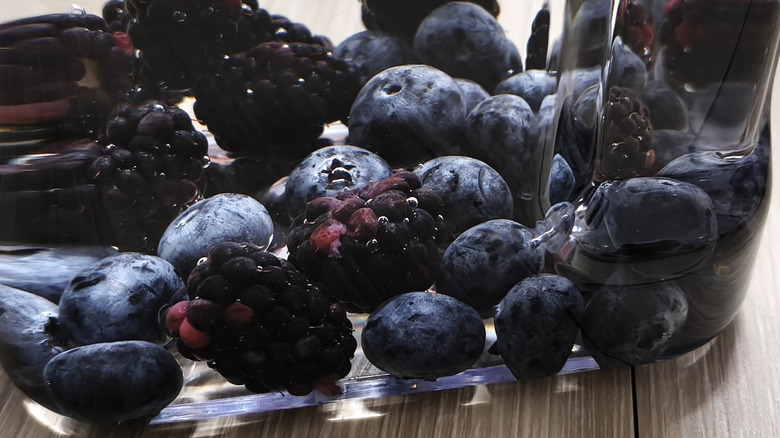
Blackberries are on the Environmental Working Group's 2026 "Dirty Dozen" list for their high levels of pesticides, when sold at the commercial level. This pesticide class can include "forever chemicals," such as neurotoxins, organophosphates, fungicides, and other harmful agents. Opting for organic produce can be a surefire way to avoid excessive pesticides on your blackberries. But, organic or not, all produce should be washed once it's brought home from the grocery store or farmers market. Not only does washing help remove contaminants, it also stunts the development and spread of mold and bacteria, which means a longer period for foodies to enjoy this flavorful berry.
While no specialized produce wash or detergent is necessary, a simple vinegar tip can also help you score longer-lasting berries. In place of a regular soak, another option is to mix one part white vinegar with three parts water, swirl the berries in the solution, then rinse with cold water. This trick will kill mold spores and increase that shelf life even further. As for proper storage afterwards, blackberries fare best when kept in the fridge and, ideally, stored in a breathable container that's lined with paper towel to wick away any excess moisture over time.