

Tomato Plants Thrive When You Follow This Stem-Burying Rule
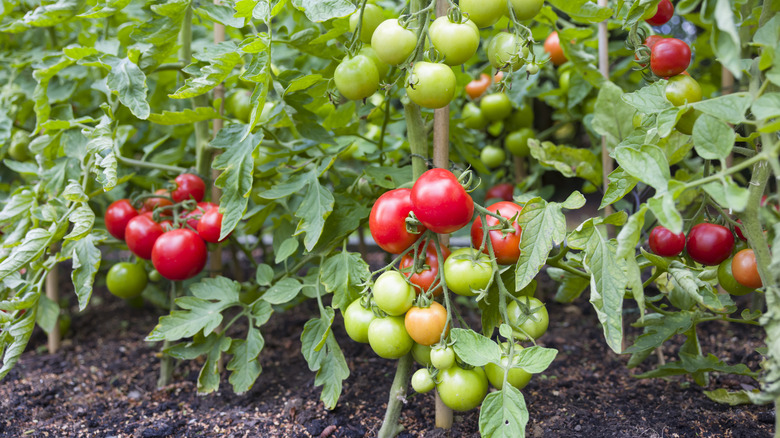
There's nothing quite like a garden dotted with plump, juicy, crimson tomatoes dangling lazily on vines or trellises. But beneath those summertime ladies-in-waiting are a tangle of intricately woven root systems providing sustenance while nurturing them to fruition. How you establish those roots when transplanting from nursery pots to garden spots can make all the difference — and it curiously comes down to something called "burying the stems."
Potted tomato plants may seem ready for instant as-is planting in your garden soil, but doing so at the same depth as the existing containers can cost you in quality, taste, and abundance. Instead, you should bury your tomato plant much deeper so that more than the root ball is covered by soil. Here's why: Unlike many other vegetable transplants, tomatoes can develop new roots along sections of their stems when they're placed deep beneath the soil. Those extra roots, known as adventitious roots, in turn help tomatoes get more water and nutrients. This increases plant growth and helps establish a sturdier foundation as it expands taller and bushier, eventually becoming weighted with heavy fruits (yes, tomatoes are actually fruits, not vegetables).
It's worth noting that burying the stem doesn't automatically guarantee enormous tomatoes or a record-setting harvest. In all types of tomatoes, many factors play significant contributing roles, including planting them where they get six to eight hours of direct sunlight every day. In addition, things like temperature, soil fertility, proper watering, and disease prevention all work in tandem to cultivate those nutritious, delicious tomatoes nestling in your caprese salads, marinara sauces, BLTs, salsas, and untold other dishes.
More tips for helping your deeply rooted tomatoes thrive
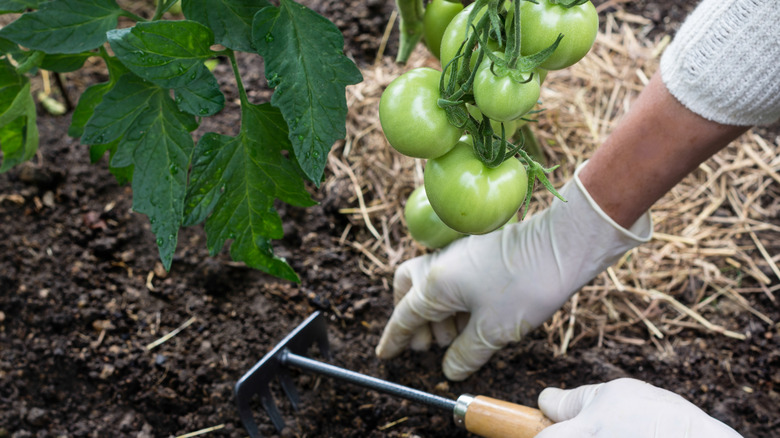
Once your tomato plants are settled deeply in the ground, it's time for a bit of nurturing. Give them a slow, thorough drink to eliminate dry pockets around the roots and the now-buried stem. From there, the watering is really more about consistency than super-soaking the plant every day. Major moisture swings can cause cracked fruit, so aim for keeping the soil evenly moist, rather than letting it become bone dry and then saturating with water. Direct the water toward the base instead of spraying the leaves, which can cause disease to the foliage.
A layer of mulch can make that watering routine a lot easier to manage. Spread organic material, such as straw, shredded leaves, peat moss, or grass clippings, over the surrounding soil, leaving a bit of breathing room around the main stem. Mulch can help slow down moisture loss while also keeping weeds at bay; about 3 to 4 inches is fine for tomato plants. Fertilizers can help as tomatoes continue to grow; follow printed directions when using commercial fertilizers, or use natural alternatives. Finally, don't wait until your plants are sprawling across the garden to think about support. Install a sturdy cage, trellis, or stake soon after planting, when you're less likely to disturb that carefully cultivated and established stem-buried root system.
Tomatoes inhabit a vibrant, well-loved space in the world of gardening and eating, with countless varieties populating endless nooks and crannies of soil and sunlight. To thrive in the global tomato-growing community, check out our 17 absolute best tips and hacks for growing the juiciest tomatoes and the biggest mistakes to avoid when growing tomatoes.