

Why The USDA Says It's Best To Freeze Food As Fast As Possible
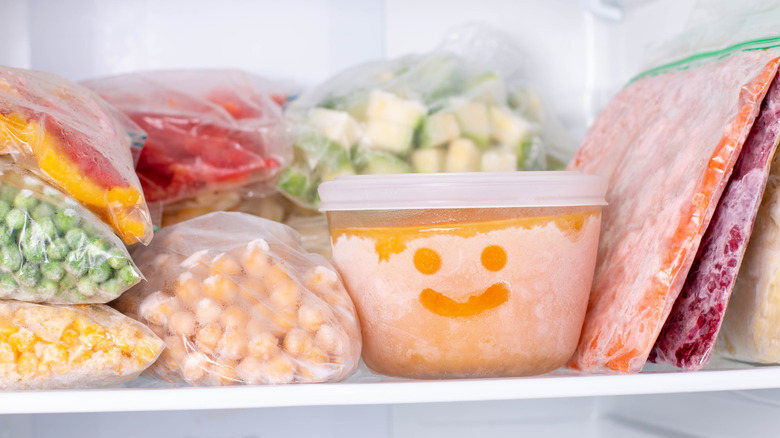
Most of us know that, when it comes to matters of food safety tips and quality, one must never be complacent, but the freezer can often tempt us otherwise. After all, it's easy to think that once you've popped a few steaks or a tub of leftover soup inside and the door is shut, the job's done, right? As nice as it would be if this were the case, there are a few additional precautions always worth taking. One of them, according to the U.S. Department of Agriculture, is ensuring you freeze food as rapidly as possible.
Your food's quality is affected by the rate at which you freeze it. If your food is not frozen quickly enough, large ice crystals can form. These distinctive six-sided snowflake structures damage food cells during the thawing process, breaking down their structure and causing a moisture loss — which can lead to less juiciness in meat. Cream-based emulsions, meanwhile, will separate as they thaw, leaving them with an unappealing curdled look.
While freezing doesn't kill most bacteria or make unsafe food safe, getting your food in the freezer as soon as possible can also help prevent further bacterial growth and preserve both safety and quality. The USDA recommends that any food 2 inches thick should be completely frozen within two hours. The department also advises that you make use of your "quick-freeze" shelf, if your freezer has one. This part of the freezer is designed — just as it says — to cool items much faster.
Here's how to freeze your food as quickly as possible
To freeze your food as speedily as possible, make sure you never stack your leftovers in the icebox, since this insulates the food and causes the freezing process to take longer. Instead, the USDA recommends spreading them out in one layer on each of the freezer's shelves. Only once they are frozen can they be stacked in a more space-saving manner (you should also do a quick run-down of the 13 biggest mistakes you're likely making when freezing leftovers).
To flash freeze, you can use a method called "individual quick freezing," in which foodstuffs are separated into individual portions, frozen on a baking tray or sheet (preferably the rear center of the freezer; usually it's the coldest spot), then transferred into freezer-safe containers or bags. Make sure these containers are airtight and not oversized to prevent "freezer burn," which you may have noticed on food that has been frozen for a particularly long time. Freezer burn does not actually render food unsafe, but it may affect the taste and texture — making your efforts to preserve the quality of your food all for naught. Fortunately, there is an easy way of making sure freezer burn doesn't ruin your food.