

The WWII-Era Spaghetti Your Grandma Ate Was A Very Different Dish
We may receive a commission on purchases made from links.
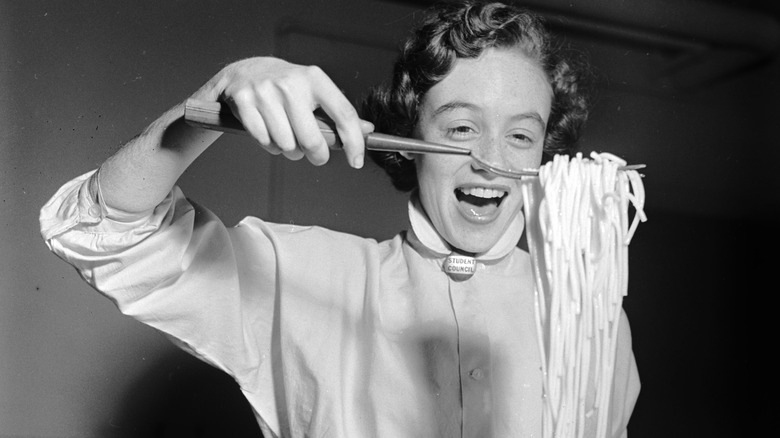
World War II saw many culinary inventions born out of necessity. In 1942, the United States government began rationing foods that were once household staples like meat, fats, and cheese, and as a result, many resorted to imaginative substitutions and new recipes that relied less on ingredients that had become scarce. While some of these stuck around long after the privations of wartime had ceased — boxed mac and cheese, for example, became a national craze during World War II because it required very few ration points — others definitely remain products of their time. A perfect example of the latter is a spaghetti recipe that your grandma might have eaten, but would strike you as thoroughly different from any pasta dish we'd recognize today.
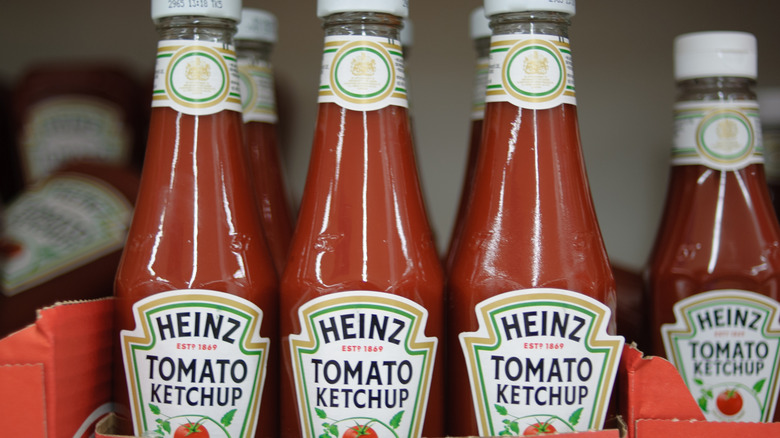
An archived issue of Better Homes and Gardens from 1944 includes a recipe for Victory Spaghetti, made with a "tasty meatless sauce" and containing parsley, pimentos, nuts, and Heinz ketchup. To make the sauce for the spaghetti, ⅓ cup of melted fat is combined with ⅓ cup of flour and then blended with 2 cups of milk. Once it's cooked and thickened, ¼ cup each of finely diced parsley and pimento, 1 ½ teaspoons of salt, a dash of cayenne pepper, and 4 tablespoons of Heinz tomato ketchup are added to the mixture. The sauce is then served over spaghetti and, in a final interesting twist, given an optional garnish of coarsely chopped almonds or pecans. "Used as a seasoning," the recipe promises, "Heinz tomato ketchup adds to your cooking the rich, red color, tempting flavor of vine-ripened, pedigreed tomatoes, sugar, vinegar and world's finest spices."
Combining ketchup with pasta is more popular than you might think
Ironically, while American home cooks were experimenting with dishes like Victory Spaghetti (which would likely be regarded with some dubiousness by most Italians), American forces stationed in Italy during the war were learning to appreciate authentic Italian cuisine, which they much preferred to their military rations. Consequently, World War II helped pizza become a beloved American staple, and returning troops could arguably claim some credit for the explosion in popularity of Italian cooking across America during the postwar period (per Military.com, U.S. oregano sales increased by over 5,000% between 1948 and 1956).
The American presence would in turn influence Italy's culinary landscape. There is strong evidence that the dish that would become carbonara was created by a Bolognese chef who also faced food shortages and utilized ingredients provided by the Americans.
Even if Victory Spaghetti didn't stand the test of time, combining pasta and tomato ketchup still has its fans. Spaghetti Napolitan is a retro Japanese pasta dish in which ketchup is the star, originally created for the American military by a Yokohama chef who had to make do with limited ingredients after World War II's end, inadvertently creating a dish that remains popular in Japan today. More recently, Erik Karlsson, defenseman for the Pittsburgh Penguins hockey team, precedes every game with a meal of pasta with Alfredo sauce combined with meat ragù, hot sauce, raw onion, and a generous drizzle of ketchup. Hey, don't knock it 'til you try it.