

Why You Should Butter Toast Twice
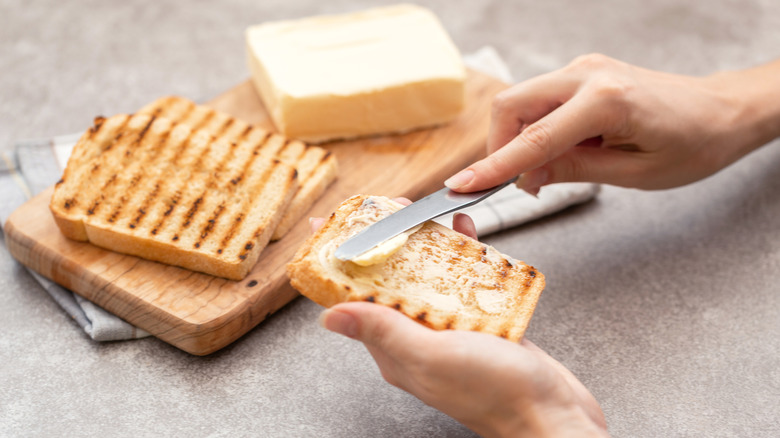
Buttered toast has to be one of the simplest breakfast creations out there. And yet, there are plenty of ways to make it even better. This oh-so-simple technique is embraced by both the British queen of cooking, Nigella Lawson, and Olympian Ilona Maher. By adding butter twice to your toast, you get the best of both worlds: Buttery flavor soaks into the bread, and a luxurious finish sits on the surface. Adding butter twice sounds simple, but it creates a toast that's richer, crispier, and more evenly coated. Considering that Lawson isn't a fan of extravagant dinners, it makes sense she would prefer such a humble snack.
Of course, there's a method to the madness. The first layer of butter should be spread while the bread is piping hot from the toaster or oven. The butter will melt almost instantly, which is what you want for it to seep into the bread's tiny air pockets. This layer slightly softens the bread's interior without making it soggy. It's the same reasoning behind buttering toast before putting it in the oven.
Once that initial layer has melted, it's time for round two. Spread another layer of butter over the warm, but not hot, toast. Since the bread has cooled just enough, this second round melts much more slowly. What'll you get is a lumpy, buttery coating that sits on top, creating a silky mouthfeel that's much more satisfying for your taste buds.
Compound butters can add an extra layer of flavor
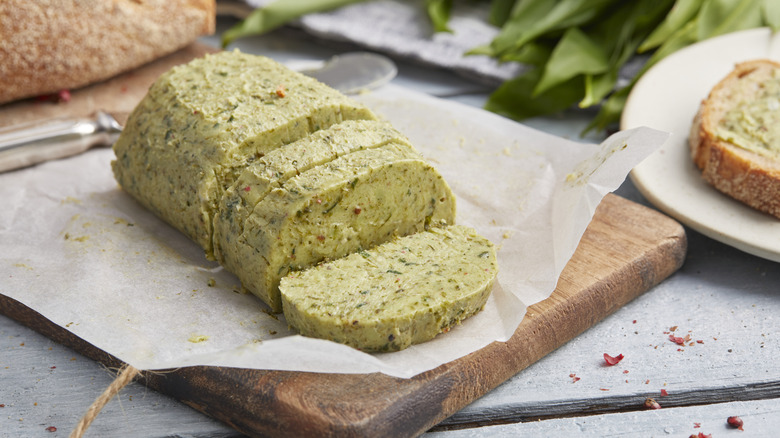
This simple technique is ripe for experimenting, especially when it comes to the type of butter you're playing with. While Lawson likes to use unsalted butter when double buttering so she can finish the dish with crunchy sea salt on top, there are all kinds of ways to have your toast and eat it too.
Compound butter can certainly elevate your next toast moment. Since the butter is flavored with everything from chopped-up spring herbs and miso to cinnamon and honey, the flavor remains concentrated on top and those flavorful spices are the first to tingle your tongue and pack a punch.
The secret here is restraint, not a butter free-for-all. Using two thin layers creates a balanced result that's rich without becoming greasy. And please, no margarine here. A high-quality butter, like European or cultured butters with a higher butterfat content, is a must. While the simplicity of buttered toast can't be beat, there's nothing wrong with transforming an ordinary breakfast into something a little more special.