

Consumer Reports Found Arsenic In All 52 Rice Products It Tested — Here's What They Say Needs To Happen Next
If rice is a staple in your kitchen, a recent Consumer Reports investigation may have you rethinking your next serving. The independent organization, which evaluates consumer goods, tested 52 rice products to assess arsenic levels, as well as to determine the best way to wash and prepare rice to reduce the risk of toxicity. Because rice is grown in paddies, or flooded fields, studies have found that it absorbs natural arsenic from the soil at 10 times the rate of other grains. Both white and brown rice may contain troubling arsenic levels, though brown carries a much higher risk.
In the Consumer Reports study, investigators found all 142 samples of rice tested contained arsenic, along with cadmium and mercury. Arsenic is a chemical element called a metalloid. It occurs naturally in soil, water, and air, but can be toxic if consumed in large amounts. Arsenic exists in two forms: inorganic, a highly toxic form found in groundwater and rocks; and organic, naturally occurring in seafood and plants in less harmful amounts.
The FDA regulates arsenic levels in some foods and has established acceptable levels for certain products like infant rice cereal, which cannot exceed 100 parts per billion (ppb) for inorganic arsenic. However, the FDA doesn't set limits for all rice products, and any exposure to inorganic arsenic carries risks. The Consumer Reports investigation discovered that several samples of the rice products tested averaged inorganic arsenic levels higher than the 100 ppb mark. "In 42% of the products, the average inorganic arsenic levels were high enough that an adult eating just one serving a day over time would have a significantly increased risk for skin cancer, bladder cancer, and type 2 diabetes," said James E. Rogers, director of food safety at Consumer Reports, in an article outlining the findings.
Toxic heavy metals were found in all rice samples
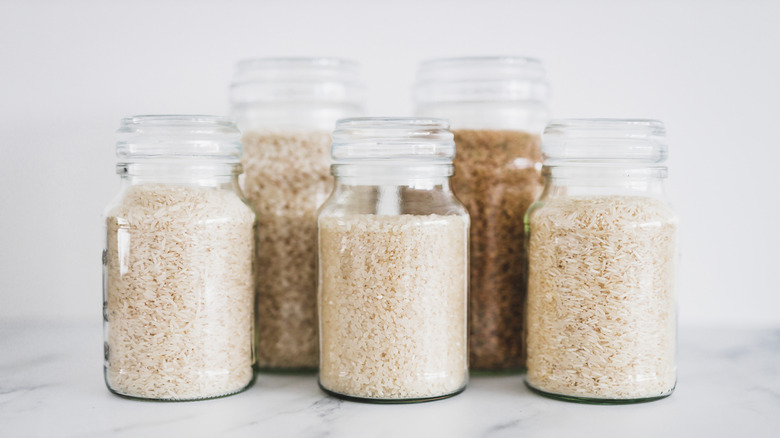
To perform its tests, Consumer Reports took samples from six types of rice across 52 products: white, brown, basmati, jasmine, arborio, and sushi. Investigators also took samples from microwavable rice and rice side dishes, and performed expert laboratory tests to determine levels of arsenic, cadmium, lead, and mercury. They then calculated the exposure risk to children and adults based on the products' recommended serving sizes. The agency discovered that all rice samples tested contained toxic heavy metals like arsenic, mercury, and cadmium, while close to half of the samples also contained lead. Heavy metals, which are still present in popular baby foods, can cause nausea, vomiting, diarrhea, dehydration, chills, and neuropathy. Extreme levels can lead to anemia, respiratory problems, organ damage, abnormal heart rate, and brain damage.
Test results showed that Mahatma Jasmine Brown Thai Fragrant Whole Grain Rice contained the highest levels of inorganic arsenic at 155 ppb, while Lotus Foods Organic Brown Basmati Rice had the lowest of the brown rice samples at 53 ppb. CR found that the white rice brand that contained the highest concentration of inorganic arsenic was Carolina Gold Extra Long Grain Parboiled Rice with 108 ppb. Royal Basmati Rice tested at the lowest levels, with 32 ppb detected.
Of the rice products that come in microwavable pouches, Seeds of Change 90 Second Organic Jasmine Rice (white) contained inorganic arsenic levels of 40 ppb, while Lundberg 90 Second Organic Jasmine Rice had levels of just 10 ppb. Ben's Original Long Grain & Wild Rice seasoned side dish had higher levels of inorganic arsenic than the other five boxed products the agency tested, with 167 ppb.
How to buy, wash, and prepare rice safely to reduce risk
With several varieties of rice testing high for inorganic arsenic and other heavy metals, the consumer organization recommends that regulators take action to set limits on more rice products. In the meantime, Consumer Reports recommends that adults limit rice consumption to ¼ cup (measured dry) per serving, eating no more than five servings of white basmati or sushi rice per week or 2 ¾ servings of any other type of rice. The agency suggests that shoppers seek out white rice grown in California, India, or Pakistan because of soil types that naturally contain less arsenic, as well as to buy brown basmati rice over other varieties.
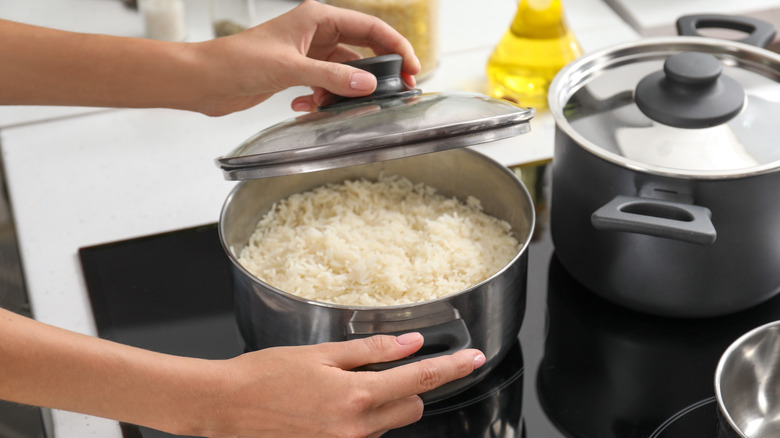
CR also performed tests to determine which rice cooking method eliminated the most arsenic. Though rinsing rice is more crucial than you might think, experts found that the best way to cook rice is to parboil it. To do this, bring a pot of water to a boil, add the rice, and cook it for five minutes. Remove the pot from the heat and drain the water, then add fresh water and cook it for the remaining recommended time. Investigators found that this method reduced the amount of inorganic arsenic by half or more. Soaking brown rice before cooking may also remove some arsenic.
The agency also recommends avoiding boxed rice or rice side dishes. These products were found to have a higher level of lead due to the inclusion of pre-made spice mixes. Overall, Consumer Reports stated that the results of its testing were expected, as it had conducted previous tests in 2012 and 2014 and obtained similar results. However, it cautions that these "findings were a spot check of the market and should not be used to draw definitive conclusions about specific brands" (via Consumer Reports). Properly preparing rice and eating it in moderation should significantly reduce your risk of arsenic exposure.