

For The Crispiest Fried Eggs You've Ever Had, Sizzle Them Thai Style (It's Easy)
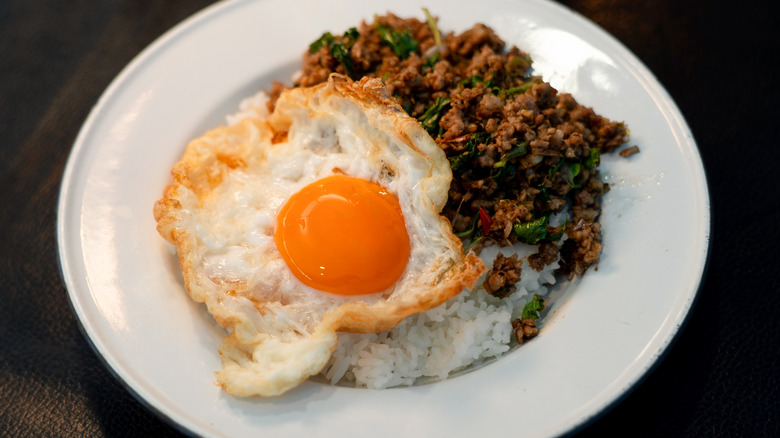
Ever wish the fried eggs you make at home were a little crispier? If the answer is yes, you should consider sizzling them Thai-style to make kai dao (ไข่ดาว), a Thai fried egg. What makes a kai dao different from your typical sunny-side-up or over-easy fried eggs is the extra-crispy, crunchy edges and the creamy, runny yolks in the center.
Thai fried eggs are a staple in Thai cuisine and home cooking; however, the origins of this dish are not clear. It is possible it's a creation of Thai street vendors. The Cantonese have their own version of kai dao called Cantonese fried eggs or purse-fried eggs (荷包蛋). You often find these atop instant ramen or served with white rice and luncheon meat in Cantonese diners in Hong Kong (or cha chaan teng).
To achieve 'crispy-maxxing' of the egg whites, you need to sizzle an egg in at least two tablespoons of hot neutral oil. You may want to consider using a neutral oil with a high smoke point, such as avocado oil, and a seasoned wok. The egg will cook up quickly, in about a minute, or until golden-brown and crispy. There's no need to flip the egg over in the pan. If you wish to cook the yolk a little, spoon the hot oil over it while it cooks.
Thai fried eggs are a staple in Thai cuisine for good reason
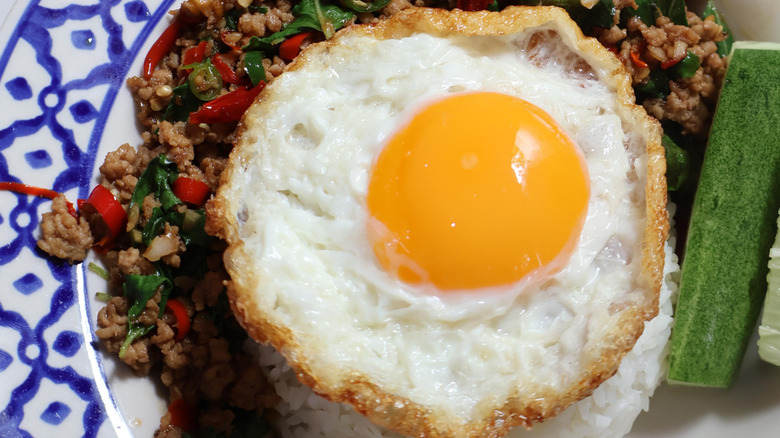
One thing to note is that since you will be using more oil to sizzle the eggs, you may want to use a paper towel to absorb some of the excess oil before serving the eggs. Simply place a paper towel over a plate and lay the cooked Thai eggs on top. The paper towel will absorb the oil.
Then, once ready to serve, Thai home cooks may drizzle a little fish sauce over the egg. If you're not a fan of fish sauce, soy sauce, or sea salt flakes would work to enhance the egg's natural umami.
While it is perfectly fine to enjoy a kai dao on its own, you'll often find it atop rice or as an accompaniment for different delicious Thai dishes. One of the most classic pairings is pad kra pao, a spicy holy basil stir-fry. The crispy egg whites add texture to rice dishes, while the rich, melty yolk adds creaminess and helps temper the bold heat, sweetness, and spiciness of many Thai dishes.