

The 1906 Best-Selling Book About Meatpacking That Horrified Americans
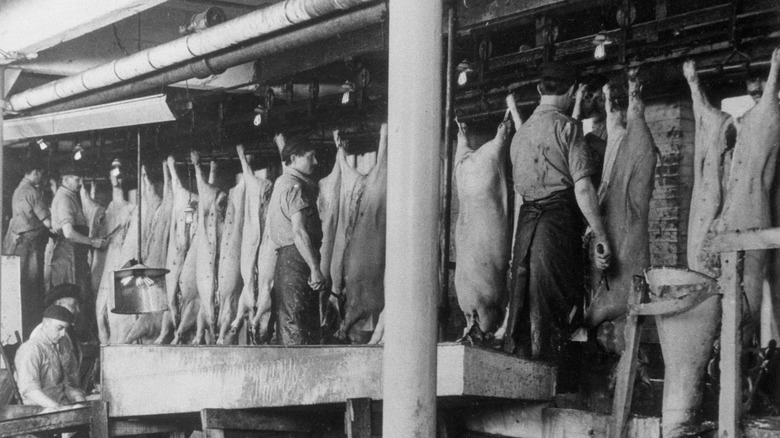
When journalist Upton Sinclair began investigating turn-of-the-20th-century slaughterhouses and meat packing facilities, his goal was to draw people's outrage towards the deplorable treatment of the workers in that industry. Instead, when America read "The Jungle" — the book that collected his monthly series of articles on the subject — in 1906, all anyone could focus on was how disgusting, and apparently unregulated, the meat processing industry was.
The average person might not know the difference between FDA and USDA food regulations, but we trust that both agencies are diligent in making sure that meat is processed as safely and as sanitarily as possible for our eventual consumption. We certainly assume that we don't have to worry about the kinds of things that were described in the page of "The Jungle," from walls and floors literally plastered with flesh and blood to tuberculous-stricken workers handling and coughing all over the meat. Those disturbing facts, and Sinclair's unflinchingly vivid description of them, would soon get the ball rolling on major reform in the meat processing industry — as well as eventual regulations signed off on by two different presidents of the United States.
Two different U.S. presidents signed bills inspired by 'The Jungle'
There have been a number of non-fiction books that exposed shocking details about the food industry. For instance, Eric Schlosser's "Fast Food Nation" — which was later adapted into one of the best food movies – revealed how the mass production of low-cost food products had fundamentally changed the way Americans eat. But few food authors can claim to have forced the U.S. government into action in quite the same way Upton Sinclair could with "The Jungle."
Just before "The Jungle" was published — but after the publication of Sinclair's original articles — Theodore Roosevelt was already in the process of backing laws that guided food safety. After a few meetings with Sinclair, Roosevelt sent investigators to meatpacking plants to confirm Sinclair's findings. The investigators not only corroborated everything Sinclair had written, but they said things were actually even worse than the book described. On June 30, 1906, the U.S.'s first-ever comprehensive food safety laws were signed into law.
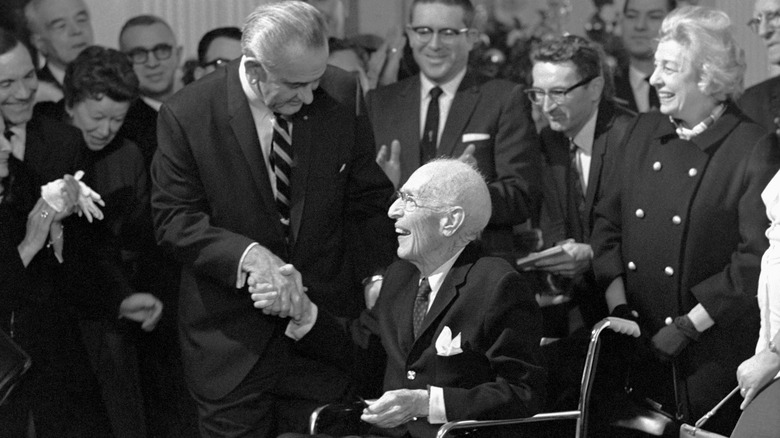
Unfortunately, it would take another 61 years for those laws to fully take effect. The regulations, as they were originally written, left a lot of room for loopholes. And though he was among the presidents with bizarre eating habits — namely, having a dedicated Fresca button installed in the Oval Office due to his frequent consumption of the soft drink — President Lyndon B. Johnson closed those loopholes with the 1967 signing of the Wholesome Meat act. He invited a then-89-year old Sinclair to the White House to mark the occasion.