

There's No Need For A Microwave: This Heats Rotisserie Chicken 10X Better
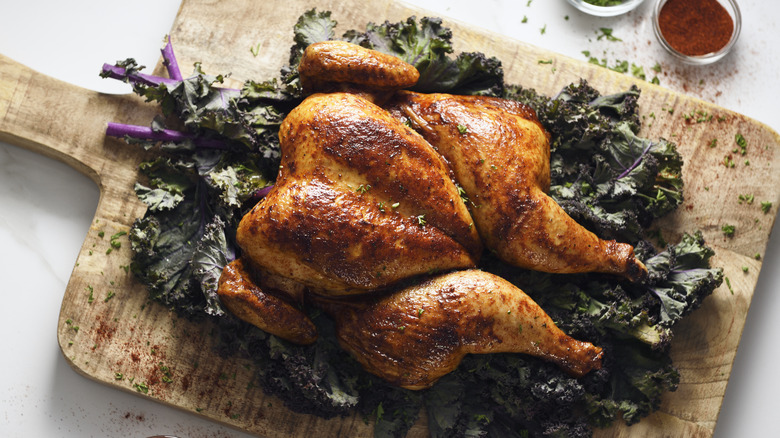
Returning leftovers to something texturally palatable is genuinely challenging, and a lot can go wrong: Meat can dry out or turn rubbery, sauces can separate or make things soggy, and once-delicate layers can collapse into sad mush. Microwaves are fast and convenient, but reheating your rotisserie chicken with a more old-school method — a cast iron Dutch oven warmed up in the big oven — will give you a better bite. Every ingredient responds differently to a second round of heat, and lean proteins like rotisserie chicken can be especially unforgiving.
Chicken meat is comprised, in part, of bundled proteins, and when it's cooked, those proteins unfold and reorganize before the wet, translucent muscle coagulates into the firm, opaque texture we want in cooked meat. Those tightening muscle fibers squeeze out some of the water they hold, and every time you apply heat, more moisture is lost. When heat approaches too aggressively, the proteins tighten faster, expelling moisture before it has a chance to redistribute through the meat, which is how would-be tender, juicy chicken turns dry.
The trick with reheating is to raise the temperature enough to make the meat enjoyable again, without forcing the proteins to contract any more than absolutely necessary. A Dutch oven is well suited to that balancing act — it's why they're often used to roast chickens from scratch, actually. In an oven, the thick cast iron material absorbs, then holds onto and emits heat slowly and evenly. Add a splash of chicken stock or water, keep the lid on, and you'll create a perfectly humid cooking environment that lightly steams the meat, which limits moisture loss as the chicken warms.
Reheating with a Dutch oven still requires some care
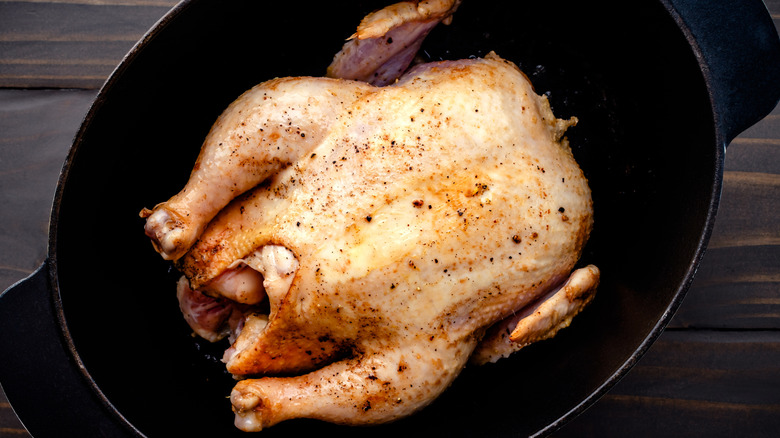
When using the Dutch oven for this task, there are a few other tricks that can ensure a nicely textured, evenly reheated rotisserie chicken. If you go too hot or too long, of course, you can still overdo it. Around 300 to 350 degrees Fahrenheit is usually plenty. Anything lower will take longer, though if your bird is on the dry side to start with, dialing it down a few notches, 25 degrees Fahrenheit or so, can be worthwhile. You're trying to warm the bird gently, not rush it to be too hot or entirely double-cook it.
Whenever possible, reheat the chicken whole instead of carving it into parts, since exposing more cut surfaces gives moisture additional opportunities to escape. Use just enough liquid to generate steam without simmering the meat, about ½ cup. If you still have the jiggly, coagulated juices collected in the bottom of the rotisserie tray, use that — it's gelatinized gold, dissolved from the bird's connective tissue, and will melt back into a rich cooking liquid as the pan warms.
One final wrinkle is that the meat and the skin actually need opposite cooking environments for an optimal eating experience, but you don't have to sacrifice one for the other. The meat needs moist heat that slows evaporation as it warms, while that type of steam makes the skin soft and flabby. For crisp skin, you need dry heat. So, keep the lid on for most of the cook, then take it off for the last five minutes so the skin can dry and tighten up.
Microwaves aren't ideal for rotisserie chicken
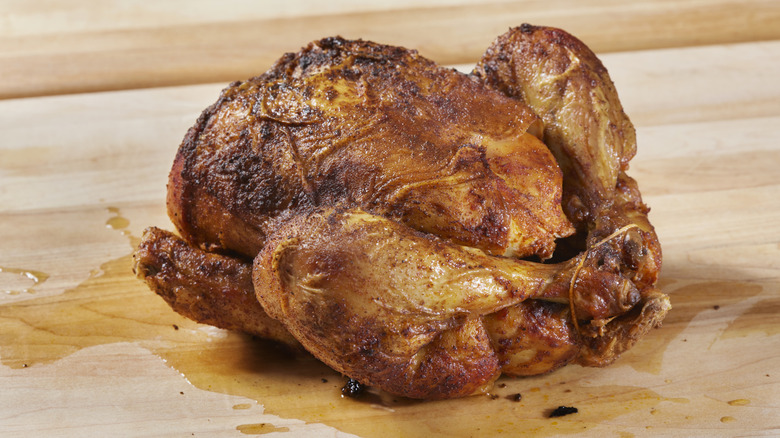
Microwave ovens work by a different kind of heat transfer than Dutch ovens. Rather than heating up the surface of the pan or warming the air around the food, microwaves excite water molecules inside the meal itself. That's great for something that starts out wet, like a bowl of soup, but the issue with a rotisserie chicken is that it isn't uniform. Dense, drier breast meat; bony little wings; juicy dark meat; and collagen-rich skin all have different moisture levels and will absorb and distribute heat differently. This variation increases the likelihood that one section will overshoot the ideal temperature while other areas — the ones with less water — may be underheated.
Some foods fare better than others in the microwave, and when dinner needs to be plated in 10 minutes flat, its high-tech convenience wins out. But if you have the time and want your rotisserie chicken to taste like it just came home from the grocery store, a heavy Dutch oven gives your bird a much better chance of maintaining the succulent qualities that make this meal so appealing. Remember: They're already well cooked, which means they need a light touch. There's little left to improve, but lots to lose.