

Stop Wiping Nonstick Pans With Paper Towels, Because You're Only Ruining Them
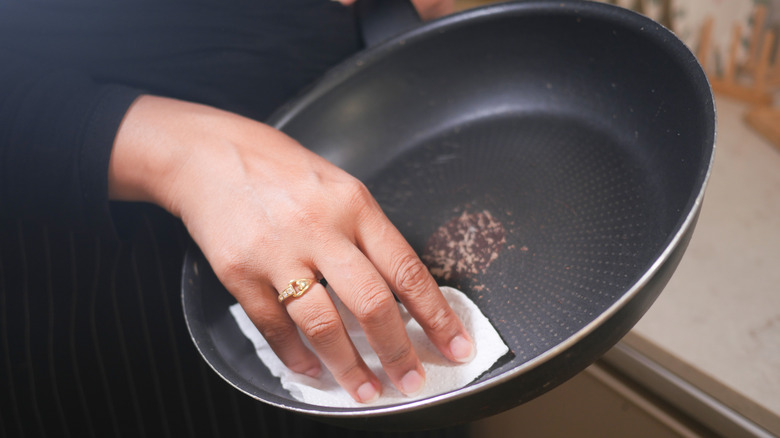
As beguilingly convenient as they are in the kitchen, there are many common mistakes people tend to make with nonstick pans, from applying too much heat to using them with abrasive metal utensils that can cause damage to the coated surface. You're probably aware of some of these and do your best to avoid them — so much so, you may be overlooking a deceptively simple error. When it comes to wiping down your cookware, do you instinctive reach for that handy roll of paper kitchen towel? You're not alone; the United States goes through more of the stuff than any other nation, and you may be shocked by how much cash you can save by quitting paper towels. Nevertheless, that's not the only reason to resist this domestic staple. You need to stop wiping your nonstick pans with paper towels, as you're only going to ruin them.
This may seem counter-intuitive. Surely a paper towel's absorbency makes them perfect for drying off a wet pan or soaking up leftover grease? And isn't it soft and un-abrasive? Don't be fooled. Paper towels are inefficient when it comes to the more persistent kinds of grease that may be leftover in your pan after cooking, often simply just moving it around instead of soaking it up. Once you've noticed this, you may find yourself scrubbing away at this greasy residue more vigorously. Unfortunately, this will likely do harm to the coating that makes the pan nonstick in the first place, cutting down its useable lifespan. Additionally, a paper towel may leave behind minute traces of food that, while you may not see them, could start to burn the next time you use the pan.
How to clean your nonstick pans without paper towels
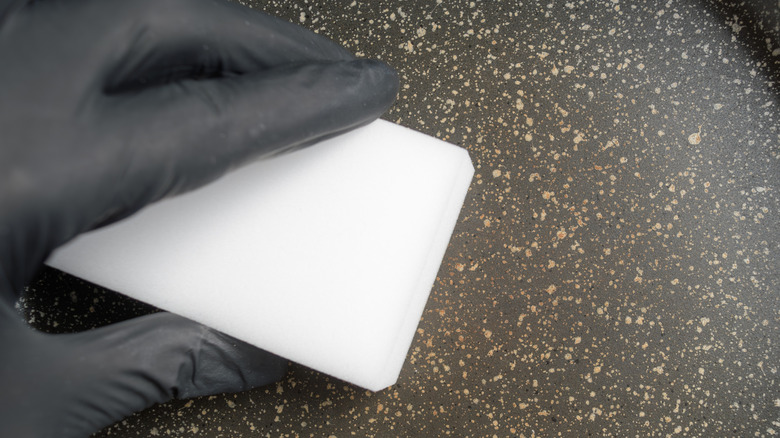
So, if you have abandoned paper towels at last, how should you be cleaning your nonstick cookware? First and foremost, stick to handwashing. We will not deny what a lifesaver the dishwasher can be — nothing spoils the end of a lovely dinner party like being confronted with a sink full of dirty dishes; letting technology take care of them saves the night. But just as you wouldn't necessarily trust the dishwasher with the good china, it's best to keep your nonstick pans away from its high temperatures and any powerful detergents, as they can do damage to the nonstick coating.
When handwashing your nonstick cookware, use hot water, a mild washing liquid, a soft sponge. As you might already have guessed, steel wool or anything similarly abrasive is to be avoided. The coating of nonstick pans is often made with chemicals called per- and polyfluorinated compounds (or PFAs), sometimes referred to as "forever chemicals". There have been various concerns raised about the health implications of PFAs, and using harsh methods to clean your nonstick pan may release particles of these chemicals. Instead, be gentle as you wipe away any grease or food debris, rinsing the pan with hot water once you are done, and wiping dry with a soft cloth.
While the attractions of a nonstick pan are many, the extra effort needed to take care of them may prompt you to start considering alternatives. If so, feel free to review our five tips for choosing the best cast-iron skillet, a worthy addition to any kitchen that brings with it a certain old-school charm.