

What's The Average Lifespan Of A Tomato Plant?
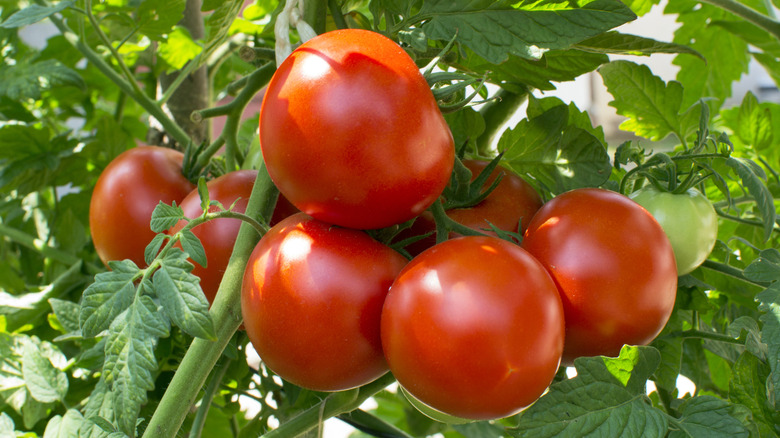
Many plants grown by home gardeners are annuals, living out their bountiful lives at a breakneck pace and not surviving longer than a year. Annuals include watermelons and certain types of squashes and beans. Gardeners often treat tomatoes the same way, so the average tomato plant only lives for one growing season, which is around 8 to 12 months. With the right care, though, this (technically) perennial plant can keep producing tomatoes for up to 7 years.
Commercially available tomato plants are broadly split into two types: indeterminate and determinate. Indeterminate varieties steadily grow new vines throughout the growing season, gradually producing fruit the entire time, whereas determinate plants grow to be a few feet tall and produce one batch of fruit all at once. While most people only grow tomatoes for one season, some home gardeners have found that even determinate tomatoes can easily live for over a year, given the right growing conditions.
Exactly how long any tomato plant will live depends on several different factors, with the biggest being temperature — tomatoes fare poorly in cold weather, and frost will kill them. This means that if you're growing tomatoes in a hot climate, it might be easier to keep them alive. But that's not to say you can't "overwinter" your tomatoes if you live somewhere colder, especially if you have a greenhouse to keep them in.
How to keep tomato plants for more than a year
If you plant your tomatoes in pots, you can keep them alive over winter by simply bringing them indoors — just make sure they get plenty of light. Overwintering can be helpful to give your plants a head start, and help you avoid the mistake of planting your seeds too late (late planting means late fruit development). The benefit is a harvest of sweet, juicy tomatoes earlier in the year, but you need to put in some effort for this to work.
Some gardeners advise against overwintering your tomatoes. Older plants can easily grow unruly, and can potentially reintroduce pests or diseases from last season back into your garden. As one gardener says on Reddit, "In a typical setting, it's more trouble than it's worth (unless you want to do it just for fun)." You shouldn't expect any fruit during winter either, because tomatoes need 6 to 8 hours of daily sunlight to produce fruit. But don't be discouraged. If you want to keep your green thumbs in practice, there's a handy compromise.
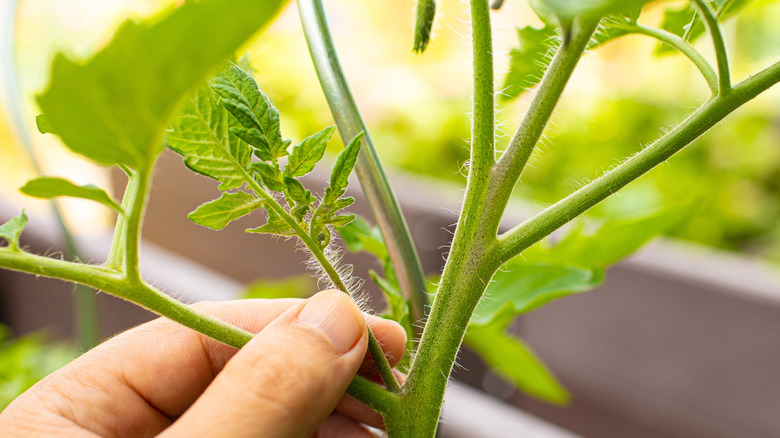
Instead of keeping your entire plants through winter, you can grow cuttings or suckers. It's easy to propagate tomatoes this way and get the same head start on the growing season without quite so much trouble. Look for small, healthy stems growing where your plants branch out, and carefully snap or cut them. Place these directly into soil and leave them somewhere that receives bright light. These suckers will grow as clones, so they're technically the same plant — in a way, this means you can keep the same tomato plant growing for as many years as you want.