

Does Uncooked Rice Expire? Some Types Don't Last As Long As You'd Think
Items like rice, flour, and pasta are generally considered pantry staples. They're something you can always have on hand because they don't require refrigeration and have a very long shelf life, happy to stand by until they're needed for a last-minute dinner. They can't be stored indefinitely, however, and in the case of rice, the shelf life might be shorter than you think.
Depending on the type of rice you have, it will last in the pantry anywhere from six months to two years. White rice lasts the longest, with a shelf life of two years unopened in its original packaging, or one year after opening. The label, white rice, refers to any rice that has been milled and polished, and includes varieties such as short grain, long grain, basmati, Arborio, and sushi rice.
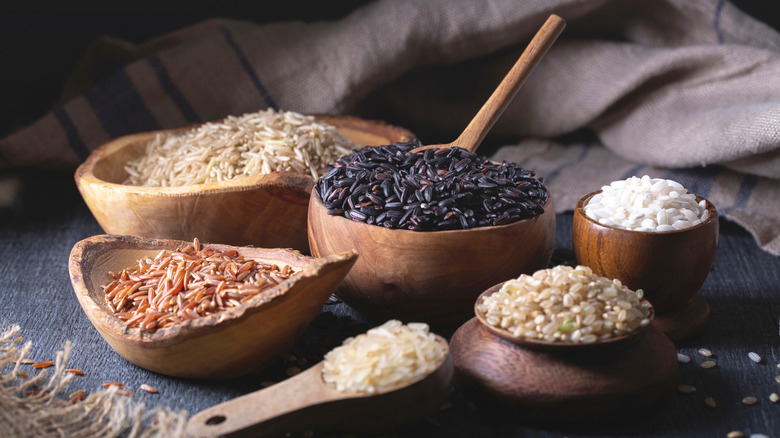
Brown rice has a shorter shelf life, along with black and red rice. These whole grain rices are minimally processed, leaving intact the hull and bran. These contain natural oils that can go rancid with age and will give your rice an unpleasant taste. For this reason, brown rice is usually best within six months, or as little as three months if stored above 50 degrees Fahrenheit.
Wild rice is not actually rice — it's the seeds of an aquatic grass that is entirely unrelated to regular rice. Although it's not milled like white rice, it has a lower oil content than brown rice and can be stored up to two years unopened, or a year if the packet has been opened. It's important to note that the variety doesn't have any impact on the shelf life of cooked rice. Whether it's white, brown, or wild rice, any leftovers should be refrigerated immediately and consumed within four to six days.
How to store rice
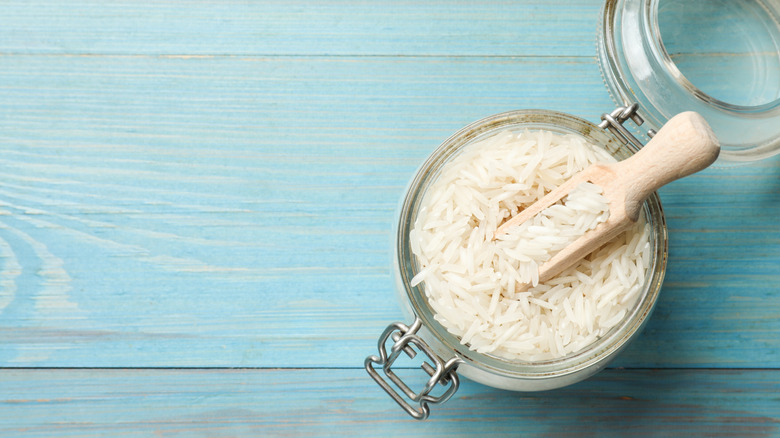
Storing rice correctly means protecting it from the factors that cause it to degrade, namely oxygen, heat, moisture, and pests. An unopened packet of rice should protect the contents from moisture and pests, but check carefully for any holes or tears. After opening, it should be transferred to an airtight container. It's best kept in a cool, dark place such as the pantry.
Storing rice in the refrigerator can extend its shelf life, but you need to be wary of moisture. For all varieties of rice, the most important thing is to keep it dry. While pests or a stale taste are merely unpleasant, mold growth on rice can lead to food poisoning or weakening of your immune system if consumed.
White rice is less prone to rancidity and, for this reason, can last up to 30 years, but only with very specific storage conditions. Keeping rice safe to eat for this amount of time requires sealing in food-safe aluminum cans or Mylar bags, and the addition of enough oxygen absorbers for the amount of rice you have. It will also mean freezing the rice before sealing to kill any pests.