

Be Wary Of Lighting When Buying Beef. Here's What To Check Before Shelling Out Money
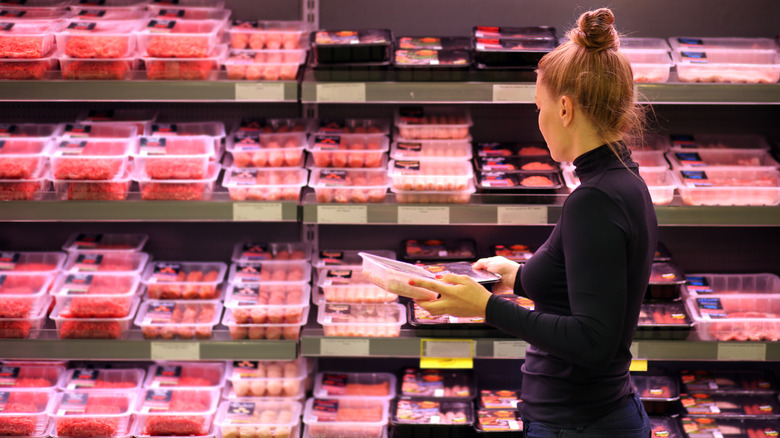
A good dinner starts with good ingredients. While a trip to the butcher often yields the highest quality meat, many people only have time or access to a grocery store. Unfortunately, these sneaky supermarket chains have got selling down to a science, using plenty of tricks that make you buy items you might not really want. To bring home the best cuts, your first step should be looking past the smoke and mirrors of the meat department's carefully constructed lighting.
Supermarket meat counters have been known to use specialized lights that make the products look fresher than they actually are. To get an honest look at the actual color and quality of the meat, take the package and inspect it under the lights of a different section of the store. Now, with a better idea of the product's actual appearance, you can determine the true color of the meat.
Ideally, you want your meat to be a dark red color. When fresh meat is first cut, it initially has a deep purplish-red hue due to a lack of exposure to oxygen. Once it comes into contact with the air, it shifts to a bright cherry-red, and then eventually to a dull brown. While a brown color doesn't always indicate that meat is spoiled, it usually means it's closer to expiring. If you notice any funky smells or unnatural sheens accompanying the pack, you should absolutely pass on it.
What to check when buying meat from the grocery store
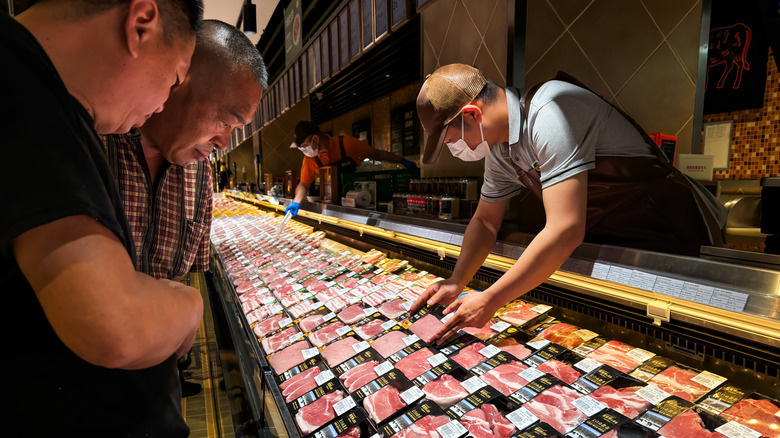
Once you've made it past the optical illusions, there are a few other factors to check in the store before shelling out the big bucks on meat. Always look for the sell-by date and the country of origin. If the store doesn't explicitly list where the beef came from, that could be a red flag for poor quality.
Your choice of grocery store can also make a difference. According to our ranking of grocery store meat selections, chains like Trader Joe's do not always disclose the country of origin for their meat products, while Whole Foods and Sprouts' meat selections have a much more reliable track record.
It also helps to understand the official USDA quality grades for beef cuts. "Prime" is the most expensive and highest quality cut you can get. "Choice" is the middle-tier option (and oftentimes it's the best cut you can find in a chain store), while "select" is a lower-quality but more affordable cut.
Lastly, try to avoid pre-marinated cuts. Grocery stores often use marinades to extend the life of older meat that's about to expire, and that's not a gamble you want to make for dinner. If you keep these tips in mind next time you're at the meat section, you'll be shopping for cuts with confidence.