

Here's How Many Pounds Of Pork Are Produced From One Pig
Whether you're picking up a packet of supermarket sausages or heading to the butcher for a crown pork roast, it's easy to forget these cuts are just a small part of a much larger animal. If you're considering buying pork in bulk as a whole or half hog or just have a little curiosity about where your food comes from, you might be wondering just how much meat you get from a pig.
The answer, of course, depends on the size of the pig. Hogs are generally sent to slaughter at between 240 and 300 pounds, but 270 pounds is considered ideal market weight. From a pig of this size, you can expect around 154 pounds of retail cuts, or 57% of the original weight. So where does the rest go?
Around 28% of the pig is considered inedible and removed — 75 pounds in this scenario. This includes the internal organs, blood, hair, head, feet, and sometimes skin. You're then left with what's known as the dressed carcass, which in this case, weighs around 195 pounds.
More weight is lost as the hog is broken down into pork retail cuts. Excess fat and skin are trimmed, and bones are removed from some pieces. The chilling process also results in moisture loss, which will be reflected on the scale. The precise weight of take-home meat depends on the fat and muscle makeup of the pig and if you've asked for any specific boneless cuts.
Primal and retail cuts of pork
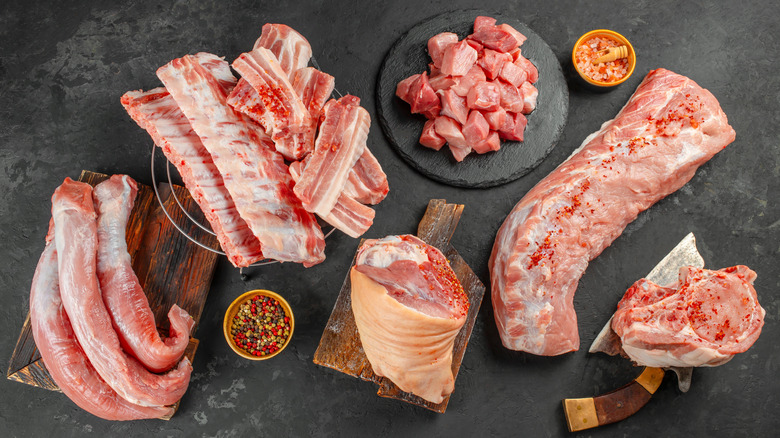
A pig carcass is initially broken down into primal cuts. These are large sections of the pig often sent to butchers or supermarkets, who then cut it down further into the pork that ends up on your plate. There are generally four primal cuts: shoulder, (rear) leg, loin, and belly. Some butchers consider the head and hock (the lower leg) to also be primary cuts.
The shoulder is often broken down into the sub-primal Boston butt and picnic shoulder cuts. The shoulders are heavily muscled and can be tough but make good cuts for braising pork. The rear legs are usually cured to make hams and prosciutto but can be cut up and sold as ham steaks or pork cutlets.
The loin primal cut gives us some of the most popular cuts of pork, known for being both tender and lean. Pork tenderloin, various types of pork chops, and loin steaks are all cut from here. The belly is where the pig carries a lot of its fat, and as we know, fat means flavor. From the belly you can get bacon (fresh and cured), pancetta, and spareribs.
Also included in the final weight are pork products like lard and sausages. A pig can yield up to 25 pounds of back fat to create lard, while the pork cut trimmings used to make sausages account for around 10 pounds.