

Love Home-Cooked Meals More Than Dining Out? There's A Scientific Reason For That

There is no doubt that a home-cooked meal is a wonderful thing. Even if you could order the exact same food — down to the last aromatic molecule — from a local takeout, it simply doesn't have quite the same charm. It might taste and smell every bit as good, and fill your belly in just the same way, but there is something almost intangible about home cooking that puts it a level above. But while it might seem like an intangible je ne sais quoi to us, the scientists of the world have a pretty good idea of at least one explanation, something called the IKEA effect.
Basically, the IKEA effect is the idea that we, as humans, consider things to be more valuable if we ourselves have put effort into creating them. The name is a reference to the Swedish furniture company, because most of its products arrive in flat-pack boxes and must be built at home by customers. Studies have shown that this increased sense of value applies not just to furniture, but across a wide variety of circumstances — everything from building LEGO sets to coloring paint-by-number canvases — and the products of your kitchen are no different. There are many factors that influence our perceptions of food, but not all of them come from the external world. How you experience the foods you eat is heavily influenced by your internal state as well.
Where you can already spot the IKEA effect in your kitchen
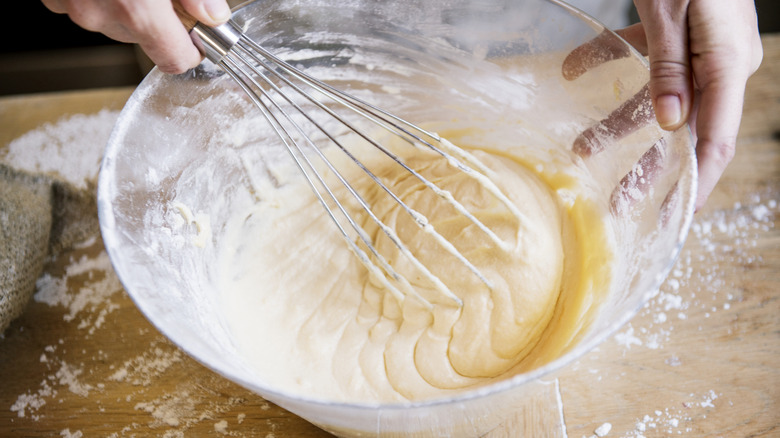
There is one story in particular that is nearly always referred to when the IKEA effect is applied to food. As it's told, back in the 1950s, General Mills was searching for a new marketing angle to help sell more of its instant cake mixes. The company reached out to Ernest Dichter, a psychologist specializing in applying Freudian principles to advertising. His suggestion was that cake mixes requiring only water made bakers feel guilty for all of the work they'd skipped. Requiring the addition of fresh eggs, however, made these same bakers feel like they were doing the real thing, just with a few steps removed.
As illustrative as this anecdote is, it is not the whole story. Like many Freudian prescriptions, it may have been built somewhat haphazardly on a nugget of truth. Fresh eggs generally make better cakes, and instant cake mixes continue to do just fine in the marketplace. But it does still shed light on the situation, perhaps because it is so easy to understand — all you need is an imagination. Pouring a cake mix into a cup with some water and microwaving it for a few minutes doesn't provide the same satisfaction as constructing a cake with a few fresh ingredients. The latter example opens the door to much more pride in the finished product, particularly when single-ingredient upgrades to boxed cake mix come into consideration.
This same effect could also be seen as a partial explanation for the success of the many brands of meal delivery kits. It would be faster, simpler, and sometimes nearly as cheap to just order takeout, but the process of cooking the meal yourself gives it an extra dash of savor.
How to use the IKEA effect to your culinary advantage
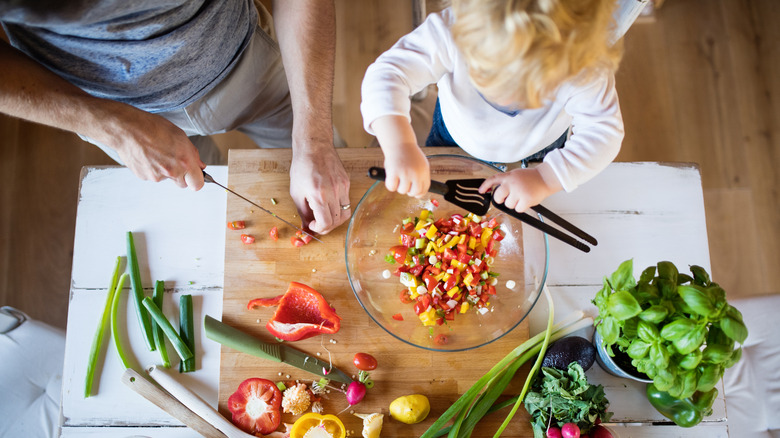
Now that we understand the principle of the IKEA effect and how it shows up in the kitchen, it is time to start talking about how we can use it to our advantage. For example, let's say you are having someone special over for dinner. It's easy to think that it would be best to pick a nice menu and prepare it for them, so they can just show up and eat. It fits a certain narrative, but the truth is that if you involve your guest a bit in the cooking — even if it's just chopping some vegetables or dressing a salad — they're likely to enjoy the meal more.
Another area ripe for exploration is getting the kiddos to eat their dinner. A 2014 study in Appetite showed that involving the little ones in the cooking process can significantly increase the quantity of food that they eat — about 25% more calories overall, and a whopping 75% more salad. Not every experiment of the kind has shown such strong results — vegetables are notoriously tricky — but it's certainly worth a shot, so long as they're old enough. Apparently, the IKEA effect doesn't show up until children are around five years old. Before that, we haven't yet learned to place so much value on our creations, so this trick won't do much good.
There is much more to the value of a home-cooked meal than just the pride that we feel in having made it ourselves, but that sense of accomplishment is a very real seasoning. Plus, this IKEA effect is an invitation to bring your loved ones into the kitchen with you. Not only is it quality time spent together, but you'll all enjoy dinner more as well.