

Bartenders Roll Their Eyes When Customers Order 'A Beer' — Here's Why
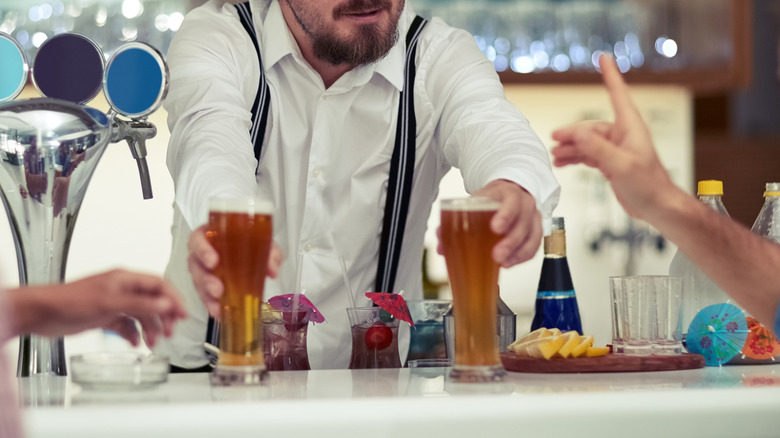
There are many things the unwary drinker can do that will frustrate a bartender, from sitting directly in front of the bar's well to complaining about the speed of service on a busy night. However, one irritatingly common habit that is virtually guaranteed to make a bartender roll their eyes is ordering "a beer" without giving any further hint of what brand or type. Speaking as a former bartender, I implore you — please, please don't do this.
The reasons why should be obvious — it's the bartender's job to give you what you want, not to magically divine what you want based on the most minimal of prompting. The bar may stock dozens, or even hundreds, of different beers, and the person serving you won't want the responsibility of picking something you might not enjoy. It's like going into a bakery and asking for "one bread, please" — you can't be too shocked if the poor employee behind the counter needs a few more details.
Popular fiction may bear some of the blame for this phenomenon. How many times have you seen a character in a movie or TV show order "a beer," only for the bartender to serve them precisely that with no follow-up questions? This happens so often it's become a much-derided trope, but there is some justification for it. Identifying the beer through dialogue may give the impression of product placement or interrupt the narrative. For example, the conclusion of the classic 1958 war film "Ice Cold in Alex," in which the protagonists reach the end of their desert journey and finally order the ice-cold beers they've been dreaming of, would arguably be less effective if they spent time explaining exactly what lager they wanted. Unfortunately, real life works differently than in the movies.
How specific do you need to be when ordering beer?
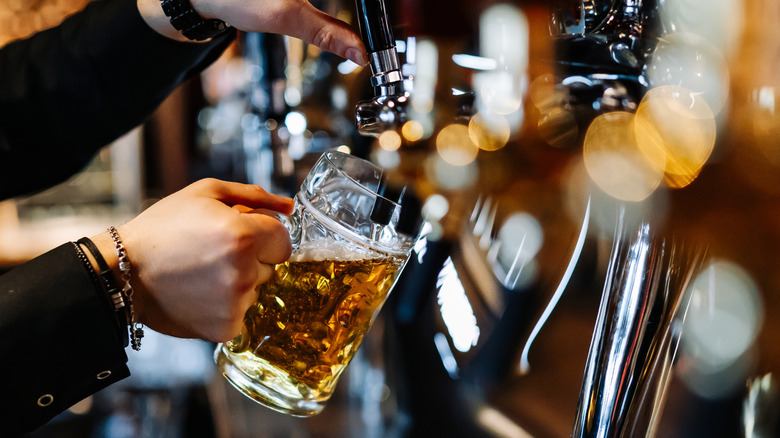
There are some contexts where total specificity isn't necessary when ordering beer. In Scotland, where I live and tended bar, if you simply request "a pint of lager," it's not uncommon for the bartender to unquestioningly pour something inexpensive that the bar has well-stocked. In my experience, this would usually be Tennent's, Scotland's best-selling pale lager, which is unremarkable but nevertheless perfectly inoffensive (and particularly well-suited for making the no-fuss beer-and-whiskey cocktail of a Boilermaker). I cannot say for certain if a similar convention applies in the United States, but out of solidarity with American bartenders, I'd advise telling them at least what type of beer you're after.
Ordering other drinks in this manner can get trickier. Ask for a gin and tonic without specifying the brand of gin, and the bartender will likely use the bog-standard gin kept in the bar's well, assuming that if you wanted something top-shelf, you'd have asked for it. Order a single malt Scotch, however, and the bartender may take this as permission to reach for the good stuff, which is fine until you discover how much it costs.
It's a difficult balancing act — many bartenders will be happy to recommend a beer if you give them some idea of what you're in the mood for, but at the same time, working in a bar is a busy job, and the person doing it may not have time for a lengthy discussion as you mull over your order. If you are uncertain, ask if the bar allows you to sample a beer before ordering. Even if this is not an option, try to be as polite and specific as possible — trust me, your bartender will be grateful.