

Get Your Grill Grates Blazing Hot In Less Time With More Airflow: Here's How
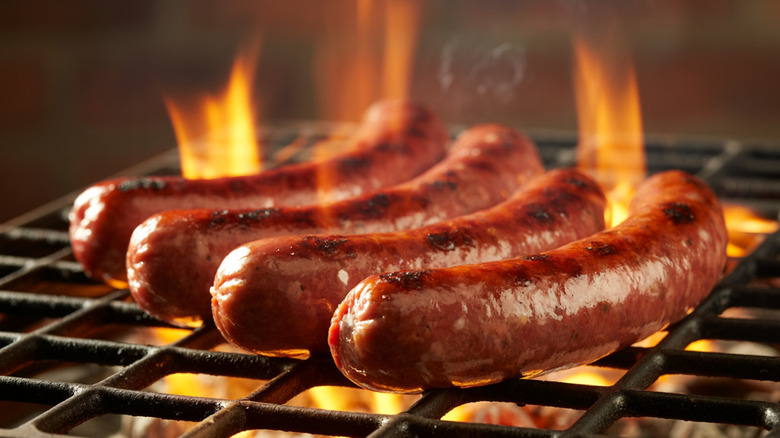
Cooking with a grill can take some adjusting, especially if you're used to cooking in a traditional indoor kitchen. This is because, unlike cooking with a regular oven or stove top, there are different factors to consider — and this goes beyond figuring out what kind of grill you use. Whether you're grilling over wood pellets, charcoal, or with gas, reaching, managing, and maintaining your grill temperature is a key for success.
Pit masters can be pretty passionate about which grilling tips and tricks they see as tried and true, and we love hearing them all. One recently caught our attention, and it involves increasing the airflow immediately after lighting the grill, to help add oxygen and literally fuel your grill's flames. All you need is a small piece of wood or a wood chip on a charcoal grill to crack the lid open about a half an inch, the open space let's more air in, encouraging a hotter fire.
Why cracking open the grill lid works
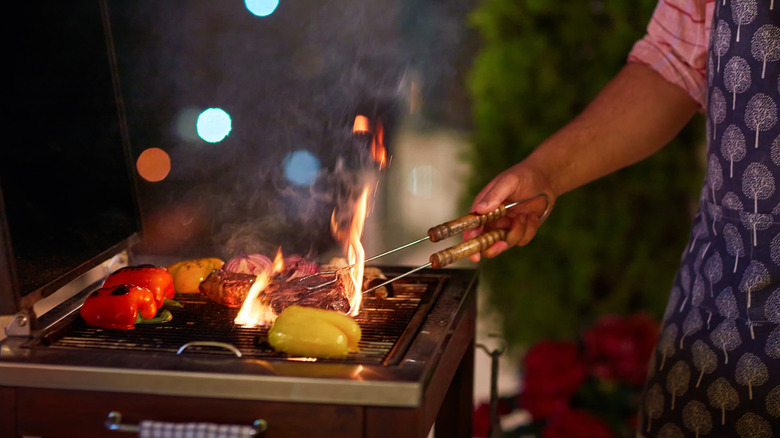
In essence, this extra piece of wood works because it functions as a larger, extra damper to your grill, which is the added vent mechanism that allows the user to control airflow — and airflow, of course, is key for increasing your grill's heat. But along with creating a larger fire, controlling the airflow is also critical for controlling your grill's temperature.
This is because oxygen (along with heat and fuel) is one of the three main components to start and maintain a fire. By cracking the lid open wider with this extra piece of wood, you're inviting in more oxygen, and more oxygen means a bigger fire. However, unlike adding heat or fuel, airflow is often the easiest to adjust and manage — especially when it's as simple as popping in a small piece of wood to prop open your grill's lid.
Once you've encouraged the flame to the right size and gotten your grill to the ideal temperature for whatever you're cooking, you can remove the wood to restrict airflow, adjusting and maintaining the temp as needed.