

Carbon Steel Vs Stainless Steel: Which Pan Is Best For What You're Cooking?
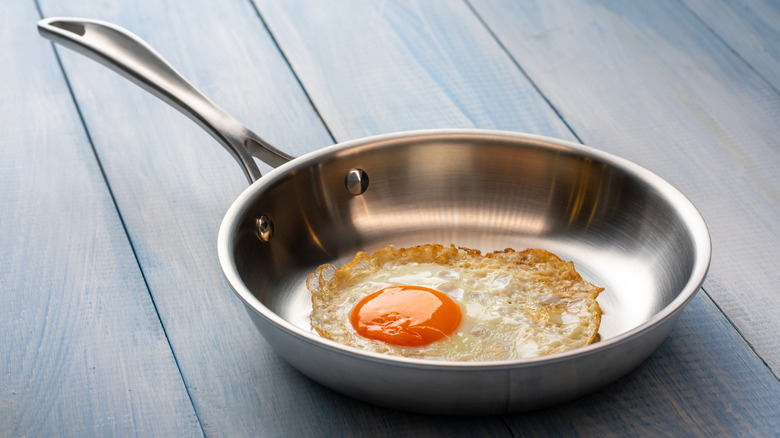
Choosing the right pots and pans to stock your kitchen can be overwhelming. From non-stick to aluminum to ceramic to enameled cast iron, there are seemingly endless options, all of which can be difficult to discern when to use them. Many cooks are trying to phase out non-stick and Teflon-coated pans due to fear of chemicals leeching into food, but finding a comparable alternative can be challenging, and personal preference also needs to be considered.
In general, a quality, heavy-bottomed stainless steel pan is a workhorse and something I'd recommend for those beginning to cook, as seasoning a carbon steel skillet can be a bit more work upfront than some people are willing to deal with for a skillet. Carbon steel is also heavier than stainless. However, once you get the hang of using a carbon steel skillet and are able to properly maintain it, you might never go back to stainless steel.
Both types of pans are fantastic for high-heat searing and cooking, as they both retain heat well, but there is a bit of scientific magic (and patience) that goes into a stainless steel pan functioning as a non-stick pan. For searing a steak or chicken thighs, I'll always choose my carbon steel skillet, but a stainless steel skillet would work just as well here, once it's heated up to a proper temperature. Both types of pans are also oven-safe, perfect for searing on the stovetop, and finishing dishes in the oven.
Both pans are capable of greatness
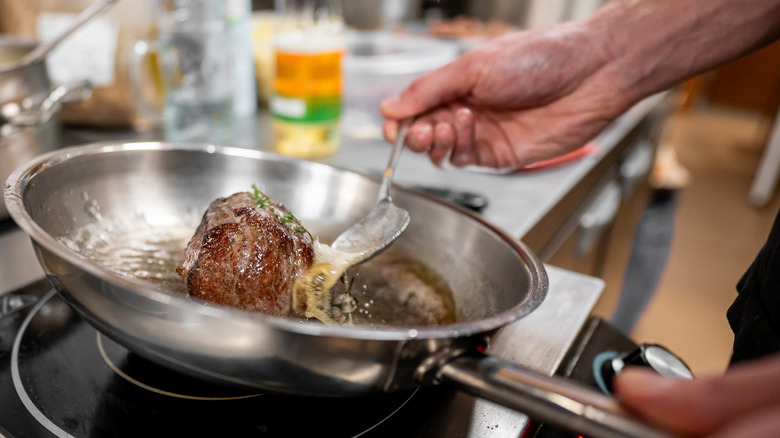
The one instance where I would not recommend carbon steel over stainless steel is for dishes or sauces that are very acidic. Tomato sauce, for example, I would only cook in a stainless steel pot or an enameled Dutch oven, as the acidity in the sauce can corrode the patina (also known as the seasoning) on carbon steel, similar to cast iron. If you want to make a quick pan sauce with lemon juice after searing chicken breasts, a carbon steel skillet will still work, but it's something to keep in mind when cooking with acid.
Stainless steel pans are incredibly easy to clean, as you don't need to take any special care of them. You can use hot water, dish soap, and a soft sponge to clean them like you would most other dishes. Carbon steel pans, however, are a bit more fussy to clean. Similar to a cast iron skillet, it's best to avoid using dish soap to clean carbon steel pans, and you should absolutely avoid harsh and abrasive cleaning tools like steel wool, as they may strip the seasoning off.
However, if you do wind up using a bit of soap, it's not going to ruin the pan, but it may cause the need for re-seasoning sooner than if you washed the pan without soap. But unlike cast iron pans which people tend to re-season regularly with oil after washing, carbon steel doesn't need re-seasoning as often. You can go months without needing to worry about it, making it my favorite choice for everyday cooking.