

One Of The All-Time Best Gas Station Snacks Predates Automobiles By Centuries
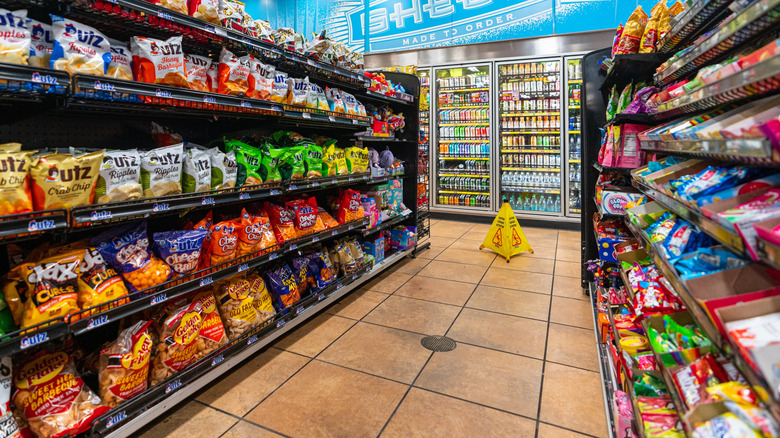
Gas stations are a ubiquitous and unavoidable part of American life. Whether road tripping, commuting, or driving for any purpose, you can't avoid gas station snacks. And truthfully, long-haul driving would be less fun if you did. But gas stations haven't always been roadside snack centers; they've evolved into this role in the years since the invention of the automobile and American motorization. Throughout the decades, some snacks have become so synonymous with gas stations that you can't imagine they weren't always together. Jerky is sort of like that, although, it has been feeding travelers long before the existence of cars.
When Tasting Table rounded up the all-time best gas station treats, jerky was a must-have. It's inevitable, nearly guaranteed presence on gas station snack racks is only one reason why it made the list. Variability is another. You can have jerky made from anything these days — pork or chicken, beef, turkey, venison, and bison. The brand Epic Provisions has even made a type of salmon jerky widely available. Jerky has always been an important food source for people on the move, especially in the Americas. The Indigenous peoples of North, Central, and South America weren't the only ones in the world to dry meat for preservation. However, it's widely agreed that the word for jerky comes from Quechua, an indigenous language in the Andes. The act of making ch'arki was important to Andean cultures since it preserved llama and alpaca meat through fallow seasons. Jerky has a traditional appearance in North America as well, including the Lakota and Cree tribes, as well as Toyah who would preserve bison meat into pemmican.
Jerky makes pemmican, but pemmican made jerky
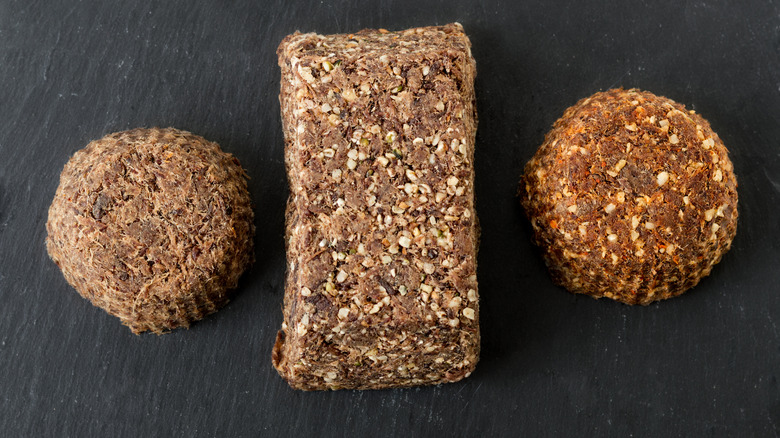
In North America, pemmican has been an important part of Native American foodways for centuries, as it remains so today. Pemmican was a simple food meant to sustain, a mix of fat, powdered meat, and a dried fruit like currants or chokecherry. Once mixed, the meat could be shaped into patties or cakes and preserved for a period of weeks or months (depending on the season). You may be wondering, powdered meat? How? That's where jerky comes in. To turn a meat into powder, pemmican makers would slice long thin strips of meat, like bison, and dry them in the sun. Sound familiar? Only after the jerky was made could the meat be pounded into small pieces and then mixed with rendered fat and berries.
As for how fat was rendered pre-Colonialism, archeology has shown that ceramics were used long before North America was introduced to iron or steel cookware. These would have been common tools for cooking down suet until it could be added into the pemmican mix. Unlike jerky, which still keeps pace with the modern marvels of transportation, pemmican consumption faded with the expansion of colonization across America. The decline of pemmican can be attributed to Western expansion, as well as the near extinction of bison, a primary meat source for the snack.