

The Expiration Date On Eggs Isn't Set In Stone — Here's When They're Still Safe To Eat
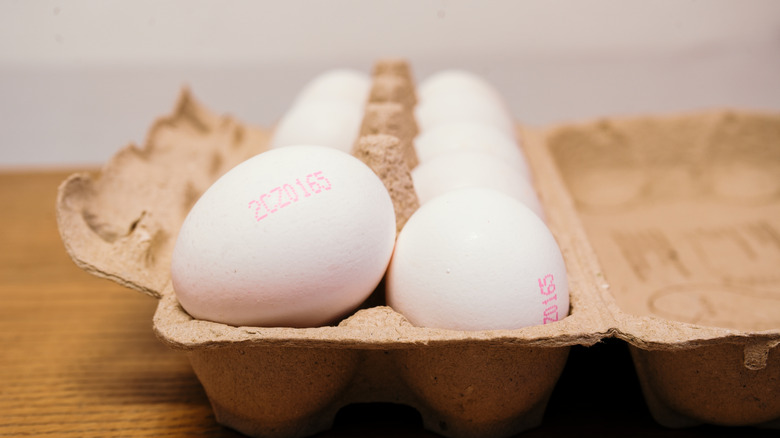
Practicing good food safety in the kitchen is undeniably the best way to avoid getting ill, but the downside to being overcautious is that it can lead to unnecessary food waste. If you're ditching eggs once they reach the expiration date on the carton, you're most likely throwing away perfectly good food.
The expiration date is more of a guideline – they are there to tell you how long the eggs will be at their best, not for food safety. There's no federal requirement to include an expiration date on egg cartons (though some states may have their own rules). What's more important is the packing date, which will be a three-digit code known as the Julian date. Eggs have a shelf life of four to five weeks after they've been washed and packed for selling. So count forward from this date, and if it's within the timeframe, you should still be good to go, even if the expiration date has passed. This, of course, assumes that you are storing them in the refrigerator and that the shells haven't been damaged.
One of the main concerns people have with eggs is the risk of salmonella, but this has nothing to do with whether eggs are old. It's caused by bacteria that's often in the egg or on the shell from the beginning. The low temperature in the fridge might slow down bacteria growth, but salmonella is only killed by cooking eggs all the way through – there's a risk when eating raw eggs of any age.
Checking and using older eggs
Eating spoiled eggs can certainly make you sick, but it's unlikely you'll do it without noticing. Eggs that have gone bad will have an unpleasant sulfurous smell, which you may be able to detect even through the shell. Crack an egg into a dish, and you'll see the whites of spoiled eggs will often take on a pink or green hue.
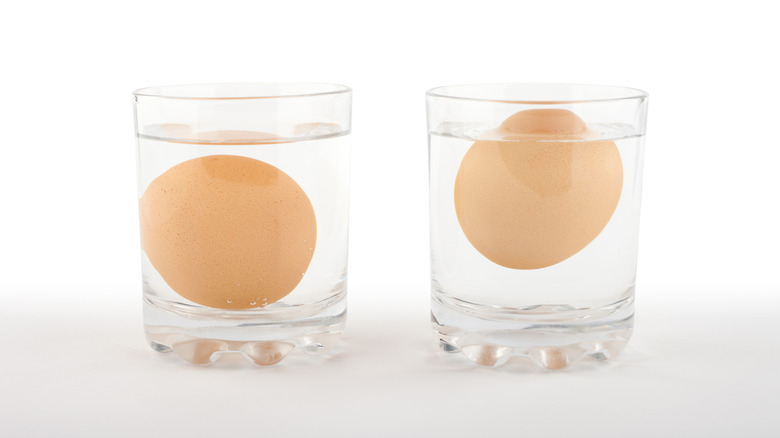
If you're planning to boil eggs, you can check for freshness without cracking the shell with the egg float test. When placed in a glass of water, fresh eggs will sink to the bottom. As eggs age, the air pocket inside expands, causing them to float to the top. Eggs that float aren't necessarily rotten, but should be checked further before eating.
While you might think that fresher is always better, there are some instances where older eggs are preferable. Older eggs are easier to peel when hard-boiled, thanks to the larger air pocket. You'll still get good results using older eggs for omelets, frittatas, and baked goods where the egg acts as a binder. Where you really need fresh eggs is for meringues or leavening. As eggs age, they become runnier, making it hard to achieve that airy structure. For the same reason, fresh eggs are better for poaching or frying as they'll hold together better during cooking.