

The Best Way To Clean Potatoes Without Scrubbing Off The Skin
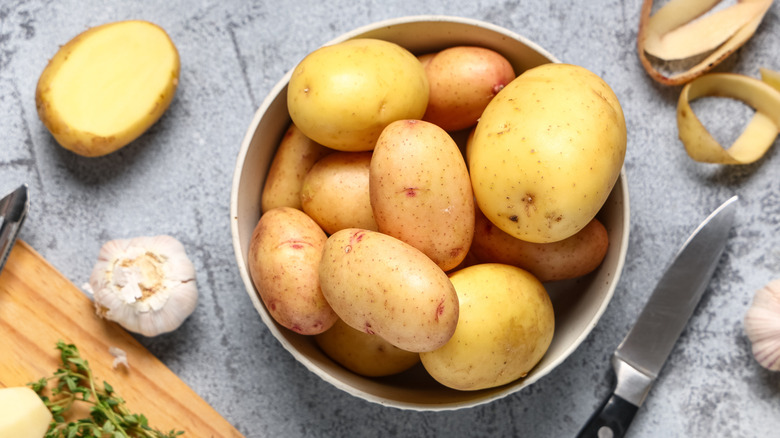
Dirt and debris are pretty much inevitable where potatoes are concerned. That's the reason you have to scrub the skin — or peel it — when you make potato recipes, meticulously ensuring nothing could render the dish unsafe to eat. As it turns out, you might not have to do all that much. Just soak the potatoes in cold water first, then gently scrub and rinse afterward for a much easier time in the kitchen.
Generally speaking, it's always recommended to wash fresh produce, whether you plan on eating the skin or not and certainly before cutting into it. Doing so removes dirt, soil-borne bacteria, and pesticides that may linger or could potentially penetrate the flesh. However, there's no need to use soap or other commercial produce wash. Cold water alone is sufficient for soaking and rinsing potatoes. This will help the contaminants loosen and separate, reducing your usual effort when scrubbing the skin later on.
Moreover, you really shouldn't peel potatoes anyway, and this cleaning method is a hygienic way to make sure you don't have to. The skin holds a good deal of a potato's nutrient value. Not only that, but roasting turns the skin into a thin layer of crispness that's both fun on the palate and great for retaining the moisture within. With the skin clean, you won't need to think twice before cooking skin-on potato dishes.
Clean your potatoes the right way
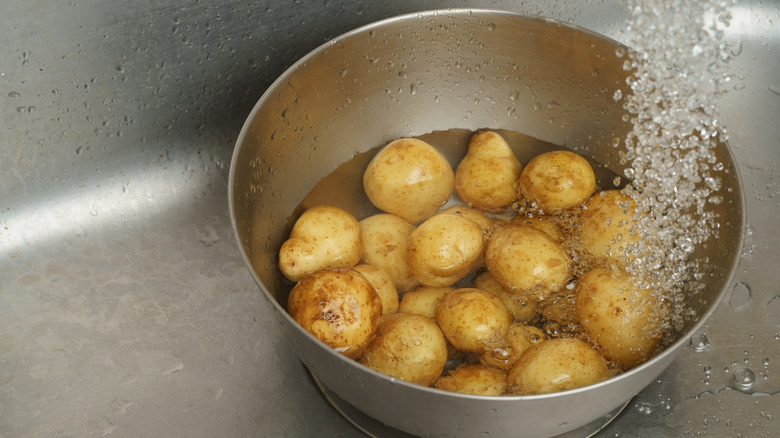
The cleaning process is relatively simple, and it's also the easiest way to wash a bunch of potatoes at once. Start by filling a container or a clean kitchen sink with cold water, then submerge the potatoes in it. Soak them for 15-30 minutes. You might notice dirt, debris, and other external contaminants sinking to the bottom after a while. Once done, drain the water and gently scrub the potatoes with a clean vegetable brush, towels, or even exfoliating gloves as you rinse. While you're at it, slice off any visible sprouts or bumps, as well. This will help remove impurities still trapped in little crevices.
With a basket full of damp potatoes, your work is not done yet. Because potatoes can be prone to bacteria and mold, especially when stored in areas that trap moisture, you should not wash them until right before cooking, and make sure to dry them properly. Gently pat potatoes dry with paper towels and leave in a well-ventilated area while you prepare other ingredients. Food safety aside, readying potatoes this way can be the crucial difference between delicious, crispy-skinned potatoes and ones that come out of the oven unpleasantly soggy.