

What Exactly Is Baker's Ammonia, And Why Don't People Use It Anymore?
We may receive a commission on purchases made from links.
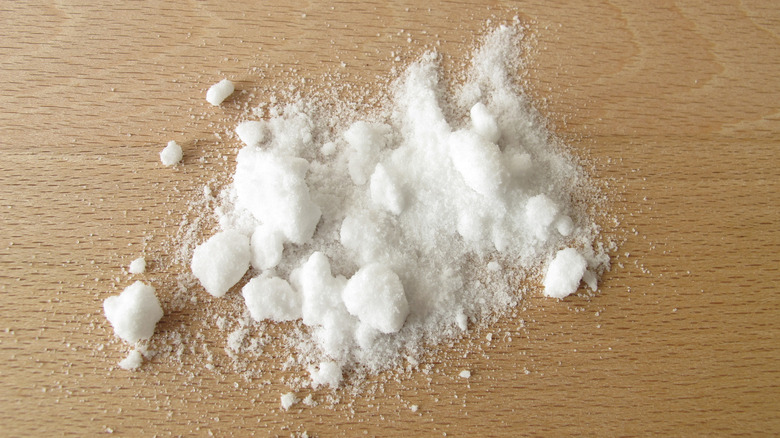
If you've ever used a vintage cookbook or tried to recreate an old family recipe, you may have come across a strange-sounding ingredient called baker's ammonia. This is not, in fact, some sort of toxic gas or cleaning product, but a leavening agent that was utilized before the invention of baking soda and baking powder.
Baker's ammonia, also known as hartshorn or ammonium carbonate, was popular in the early to mid-19th century, when it was used to help baked goods rise in the oven through the release of gas bubbles. At first, it was made from deer horns, but, over time, it was chemically produced (and it still is today, so there's no need to worry). Outside of the kitchen, baker's ammonia was useful for waking people up after they fainted. This is because it has a very strong smell that only disappears after it evaporates in the oven.
This pungent aroma is one of the reasons why baker's ammonia fell out of favor over the years – the other is the invention of baking soda and baking powder in the 1850s. These two products worked better in baking. They are generally neutral and provide more consistent results, while baker's ammonia could affect the cake's flavor. However, baker's ammonia is still sometimes used today, and it can lead to some phenomenal results. If you've ever had German springerle cookies, you'll know what we mean.
What is baker's ammonia used for?
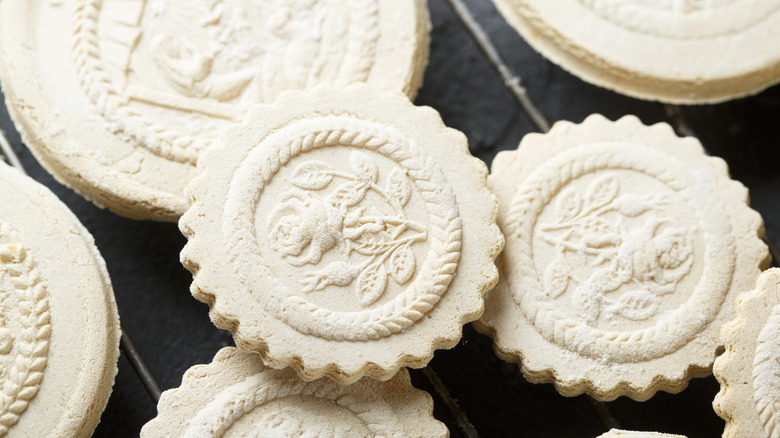
Baker's ammonia is commonly used in traditional European baking, mainly for biscuits, cream puffs, and crackers. More specifically, you'll see it used for things like springerle, German spice cookies, and Swedish dream cookies. These are very dry, thin baked goods where the ammonia (and its aroma) tends to disappear during baking.
What it leaves behind is a lighter crumb and a unique, crispy texture that's hard to recreate, but if you're making something like sugar cookies with royal icing, baker's ammonia can be used instead of baking powder — rely on 1:1 ratio. Another advantage of baker's ammonia is that it doesn't leave behind alkaline-like flavor like baking soda and powder sometimes do, and it holds the shapes of cookies wonderfully. It can also lead to better browning, and it works faster than other leavening agents.
However, it should only be used for smaller, low-moisture baked goods, never for cakes or breads, where it can become absorbed into the dough and leave behind an unpleasantly bitter flavor. Baker's ammonia can be a little hard to track down these days, but it is available from Amazon if you want to try it out.