

Are Soft-Sided Coolers As Good As Hard Coolers? What To Know Before Packing Up
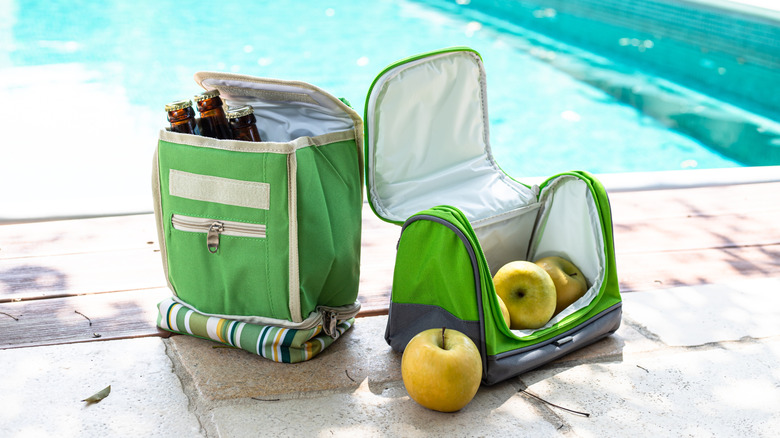
A good cooler is a non-negotiable for enjoying fresh food on the go, so you want to put some thought into finding the right one. Looking beyond the many brands and styles, coolers fall into two main categories: soft-sided and hard-sided. But is one better than the other? The short answer is that soft-sided coolers don't insulate as well as hard-sided coolers. Standard rigid coolers can keep ice intact for up to two days under the right conditions, while with soft-sided coolers, you're looking at a maximum of around 24 hours.
Styrofoam coolers offer about the same insulation as soft-sided coolers, and a premium hard-sided cooler could maintain ice up to seven days. However, insulation is not the only thing to consider before buying a cooler. Soft-sided coolers have the advantage of being lightweight and flexible, which you'll be grateful for when it comes to carrying them or squeezing them into the car. Hard-sided coolers win out for durability, and even with a few dents and scratches, they'll maintain their functionality. Plus, they can do double duty at a campsite, serving as an extra seat or table.
You also need to consider how long you realistically need to keep things cold for. If you're camping for days with no access to refrigeration, then you'll need the staying power of a hard-sided cooler. For a spring picnic or a beach outing, you only need to keep things cold for the day.
How to pack your cooler to keep the contents fresh for longer
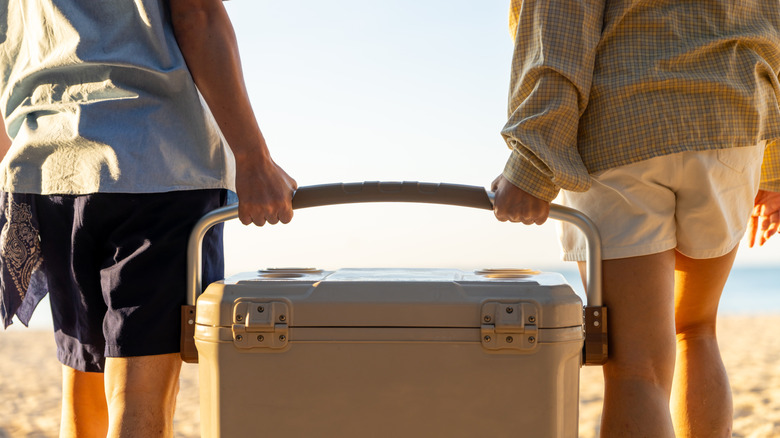
Regardless of which style or brand of cooler you have, how you use it can make a big difference to its efficiency, and it all starts with the preparation. You'll likely chill your drinks and food, but you should also be chilling your cooler in advance. To do so, you'll just need some extra ice, which should be replaced with a fresh supply when you're ready to head out the door. Consider freezing water bottles or other non-carbonated drinks such as juice, which will act as ice packs.
The type of ice you use will also make a difference. Block ice takes the longest to melt, but ideally, it should be used in combination with smaller ice cubes to fill any gaps. Air in the cooler will speed up the rate at which the ice melts, so you should always overpack your cooler to keep food fresh all day rather than underpack. Then, once you've reached your destination, find a cool spot out of direct sunlight to store it. A wet towel draped over the top will also protect it from the sun.
As the ice in the cooler inevitably starts to melt, don't be tempted to pull the draining plug unless you have items that absolutely need to stay dry. The cold water will do a much better job at retaining low temperatures than the warm air that you would be letting in.