

The Chocolate Chip Cookie Mistake That Starts With Your Chocolate
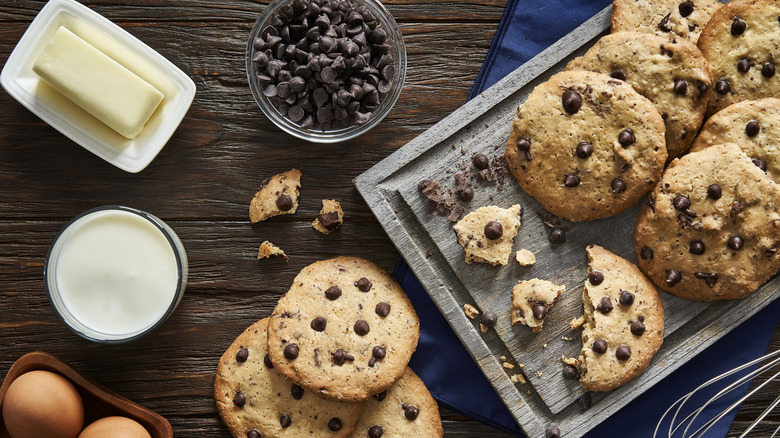
Chocolate chip cookies are a crowd pleaser, but there's a lot of variance between even the best batches being bandied about. And there's absolutely no denying that most people's chocolate chip cookies suffer from, in the words of Djo's Joe Keery, "being basic." Leaving you with a sweet tooth temporarily quelled but nothing much to write home about. While there are entire sections of the internet examining how to bake the perfectly textured treat, the chocolate chip cookie mistake that holds most folks back starts with your choice of chocolate.
When it comes to America's favorite cookie, the primary focus is on the chips. But just because chips are in the name doesn't mean you have to actually use traditional chocolate chips. In fact, while they make a decent (read "basic") chocolate chip cookie, the quality and percentage of chocolate you use, and yes, even its shape, can dramatically affect the final product.
According to the experts over at King Arthur Baking Company (KABC), chocolate chips are designed precisely not to melt, which affects the overall texture. As KABC explains, cookies with traditional chocolate chips don't spread out as much as their chopped chocolate or chocolate disc counterparts.
It's something celebrity chef Jacques Torres (whose own chocolate chip cookie recipe is featured on The New York Times Cooking website) feels strongly about, saying in a Goldbelly interview, "I think chocolate is the most important ingredient." And who doesn't love a big chewy cookie with pools of melted chocolate, layered in a dense strata throughout?
Chocolate: Does it have to be chips?
The historic candy origin of chocolate chips was, as PBS painter/instructor Bob Ross used to say, a "happy little accident," that introduced folks to what has become a nostalgic, time-honored recipe. To understand a bit more about the chips themselves and the key reason these mini-morsels refuse to fully melt, we need to look at stabilizers. Stabilizers like soy and sunflower lecithins (and PGPR), in combination with an overall lower cocoa butter content, are what allows the chips to hold their shape and adds to their melt-point resiliency. This makes the chocolate take longer to melt, creating tiny pockets of melted chocolate within the dough, which re-solidifies as they cool. The chips retain their shape and aid in propping up the dough for less spread and that classic home-baked look.
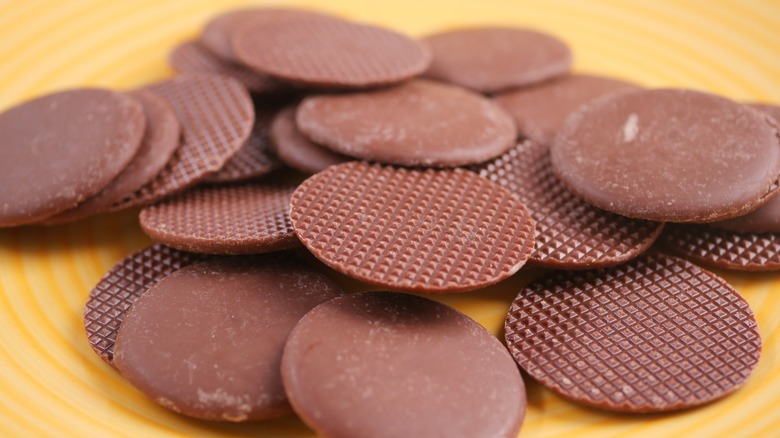
But for those who decide to opt for high-quality chocolate discs (callets, feves, pistols, and wafers), or even chocolate chunks, or hand-chopped chocolate bars in place of chips, you'll be rewarded with a cookie that delivers on all fronts — crispy-edged, chewy centers, and thick, melted puddles of smooth, rich chocolate dominating your cookie. But it's not just the form of chocolate, it's the amount of cacao, hitting that sweet spot somewhere between 60-70% cacao. Torres recommends 60% Belgian chocolate discs. Of his signature cookies, he says, "It's a lot of chocolate with a little cookie dough around it."
So, is it better to bake with chocolate chips or discs? The answer best lies with the baker and their tastes.