

How The Tradition Of Fried Fish And Spaghetti Made Its Way From The Deep South To The Midwest
We may receive a commission on purchases made from links.
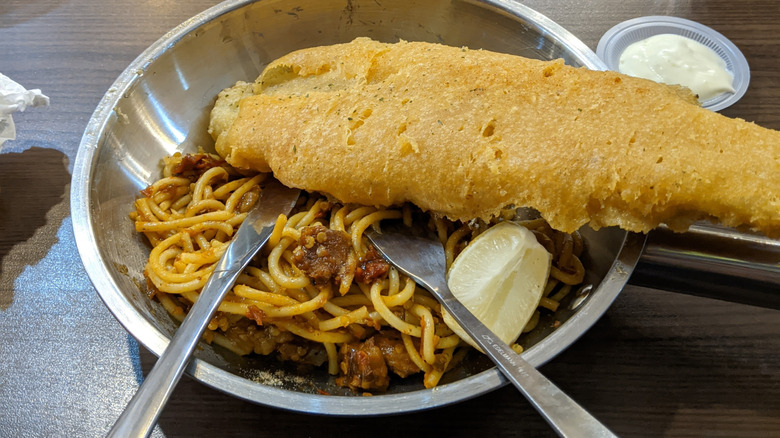
A plate of crisp fried fish, lightly breaded and hot from the oil, is a meal enjoyed all throughout the country and the world. Likewise, spaghetti with red sauce is a comfort food classic nationwide. Combining these two on the same plate, however, that is not quite so common — depending on where you live, anyway. It would likely raise a few eyebrows in many places, but in both the Midwest and the Deep South, fried fish and spaghetti is a meal that just makes sense. To explain the origins of this pairing, as well as how it found its way to these distinct parts of the country, we sat down with Chef Jennifer Hill Booker, food advocate and author of "Field Peas to Foie Gras."
"Fried fish and spaghetti is the delicious convergence of Italian immigrants migrating through the Mississippi Delta, meeting the descendants of West African slaves," Booker explains. Like many other dishes that fit under the "American food" designation, the combination of fried fish and spaghetti was a response to both what was available and the blending of different groups in the cultural melting pot. "These dishes became a regional staple as the fried fish spoke to both the Southern tradition of weekend fish frys and Italian Catholics having fish on Fridays," Bookers reveals. As for the spaghetti, she puts the starchy side down not just to the Italian influence, but also the fact that it's inexpensive, filling, and easy to prepare in large quantities.
Combining cultures for fried fish and spaghetti
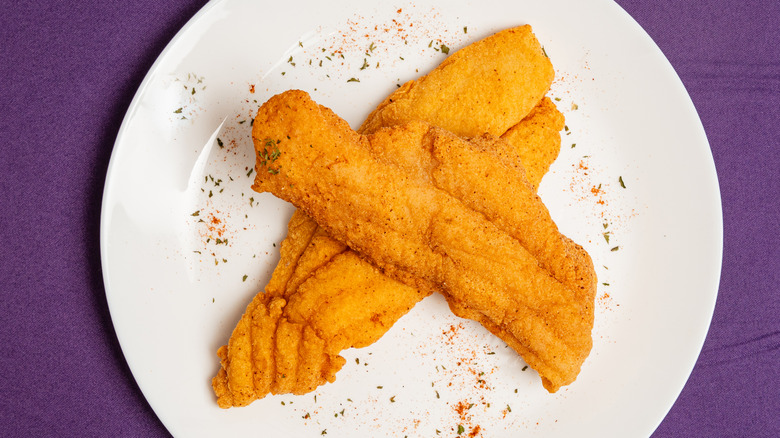
According to Booker, fried fish and spaghetti spoke in different ways to different cultures prominent in the Mississippi Delta. Due to the Catholic practices of many Italian immigrants, Fridays were a day to abstain from meat — and according to the Catholic Church, fish is not meat. For the Black population — largely descendants of slaves brought to the U.S. from West Africa — fishing was a traditional means by which they could supplement the poor diet that they were fed by slaveholders.
"The cooking technique of deep-fat frying was brought over to the American South by West African slaves," Booker explains. Combined with the ample access to fish along the Delta, you have the cultural origin of the Southern fish fry. Add in the pasta-making of the local Italian immigrant population, and the combination becomes the perfect way to feed a large group with foods familiar to both cultures.
"Traditionally, a favorite fried fish in the Deep South was catfish and perch," Booker adds. "Now, as well as then, the type of fish used really depends on what's available, affordable, and what you have a taste for." The perch in the Deep South are different from those in the Midwest, however. Fried perch is a favorite in the Great Lakes region, but the white perch popular in the Mississippi Delta — and the state freshwater fish of Louisiana — are actually a species of sunfish also known as sac-au-lait (meaning "sack-of-milk"), white crappie, and goggle eye.
The migration of fried fish and spaghetti
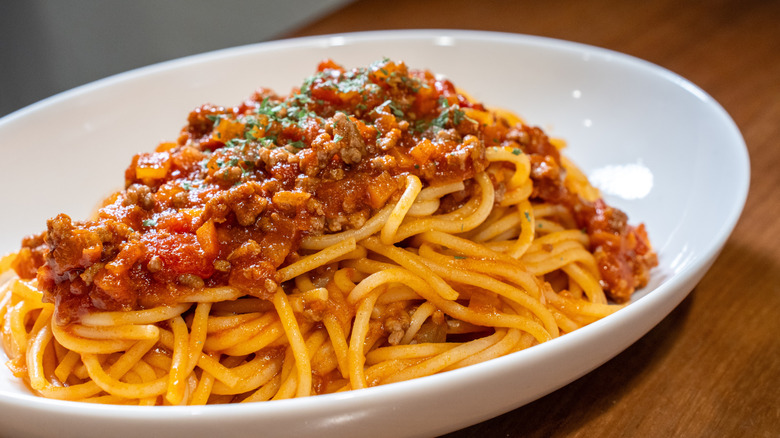
As for the pasta, Booker offers her insight. "Instead of the spaghetti being plated up and covered with sauce, you're more likely to see it being served in big baking dishes, mixed with red sauce, covered with mozzarella or American cheese, and baked in the oven," she explains. Particularly when cooking for large groups, as is often the case with fried fish and spaghetti meals, an easy baked spaghetti significantly streamlines the cooking and serving process.
This perhaps unlikely pairing caught on in the Deep South and cemented its place through time in the culinary traditions of the region and the people. "Fried fish and spaghetti has remained a fixture in Black culture," Booker says, with a special place at large events like family reunions and church potlucks. "As Blacks migrated to the Midwest during the Great Migration, the well-known tradition of pairing fried fish and spaghetti went with them." During this period, millions of Black Americans moved to other parts of the U.S., with significant numbers settling in Midwestern cities like Chicago, Milwaukee, and Detroit — and thus the pairing of fried fish and spaghetti found a new regional home.
Interestingly, these were also cities with significant populations of Italian immigrants, so the dish may have had an easier landing there. Over time, fried fish and spaghetti may have changed in some kitchens, but its roots have stayed true. "The fish may no longer be limited to catfish or perch, but is still highly seasoned, coated in cornmeal, and deep fried," Booker concludes, "while the spaghetti is baked in a large pan, after being boiled, sauced and covered with cheese."